Non Fiction
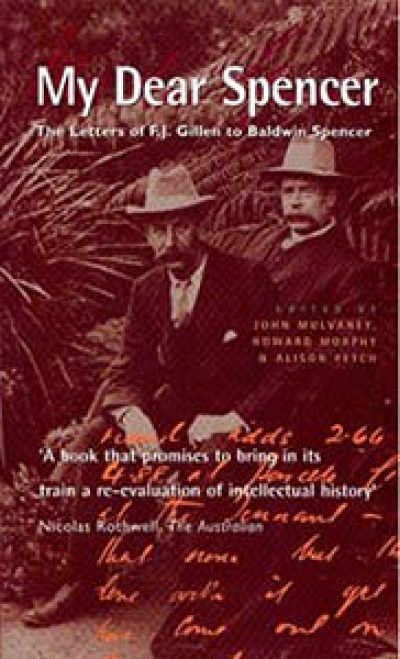
My Dear Spencer: The letters of F. J. Gillen to Baldwin Spencer edited by John Mulvaney, Howard Morphy, and Alison Petch
When Baldwin Spencer, the eminent Professor of Biology at Melbourne University, arrived in Alice Springs in 1894 as a member of the Horn party, the first scientific expedition to Central Australia, he knew very little anthropology. Edward Stirling, South Australia’s Museum Director who would write their chapter on anthropology, was not much better off. The man who was in the know was the man on the ground: Frank Gillen, the local Telegraph Officer, Magistrate, and sub-Protector of Aborigines. A genial, curious, open-minded fellow of Irish Catholic faith, Gillen had been in the region for nearly twenty years.
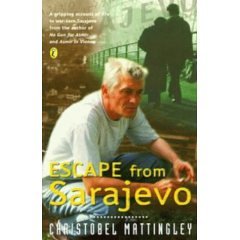
... (read more)In an interview in December 1995, author Christobel Mattingley said that ‘from the beginning’ she felt ‘that writing was my way of giving something back, helping other people to grow and expand and make the world a better place’. Her first book, No Gun for Asmir, about Bosnian refugee child Asmir and his family, had a remarkable effect worldwide, both emotionally and practically. The book was used by many people to exert pressure on various bureaucracies to allow Muris, Asmir’s father, to leave Bosnia. Now we have the story of Muris himself, in Escape from Sarajevo – a book Christobel Mattingley has dedicated in part ‘to all who teach children to make peace’.
... (read more)We meet in one of the ubiquitous coffee shops in Brunswick Street. I order a cappuccino, all milky froth. Hers is a short black; bitter and strong. Over the past decade our relationship has been desultory, unevenly balanced: we live in different states and she is a famous novelist. I have always been in a supplicant role. We have something approaching a friendship, maybe. Today she defers to me. She has just reviewed my book on the Orr case for the Times Literary Supplement. And liked it, she says. She wants my help.
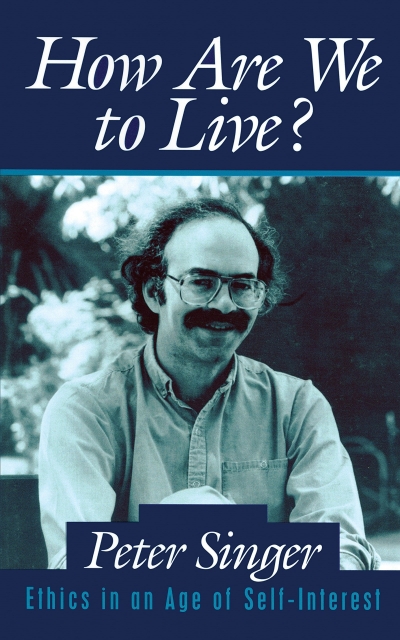
... (read more)How Are We To Live?: Ethics in an age of self-interest by Peter Singer
For over a decade, Peter Singer has been one of those public intellectuals we are supposed by some not to have. In the past, however, the problem with him has been that his thinking has often been about matters not seen to concern the public at large, animal liberation, for example. But events have hurried us all forward. Even a few years ago it was possible for mottoes like ‘greed is good’ or pronouncements like Mrs Thatcher’s that ‘there is no such thing as society, there are only individuals’ to seem not only provocative but hard-headed. The good life, we were, many of us, persuaded, was synonymous with goods, our heroes were experts in money-making – having and spending, ethics seemed to be a matter of preserving the appearances, not getting caught.
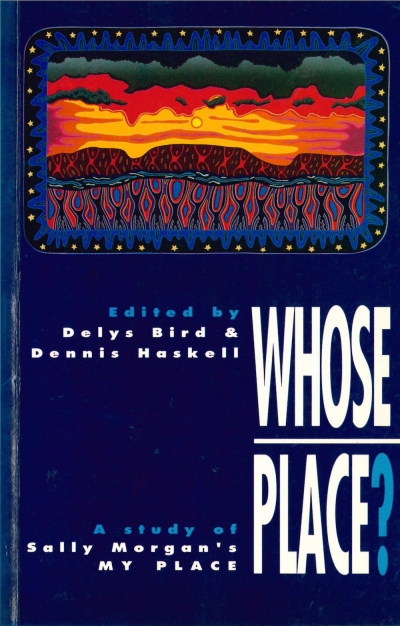
... (read more)Whose Place?: A study of Sally Morgan’s My Place edited by Delys Bird and Dennis Haskell
The first thing to be noted about this collection of essays is that it is aimed at a quite specific market – HSC/VCE students. There is a list of ‘Study Questions’ at the end, and the language of the essays is consistently pitched at an upper secondary school level. Readers who want more complex responses to My Place would be better served by consulting the eclectic bibliography to the text as a starting point.
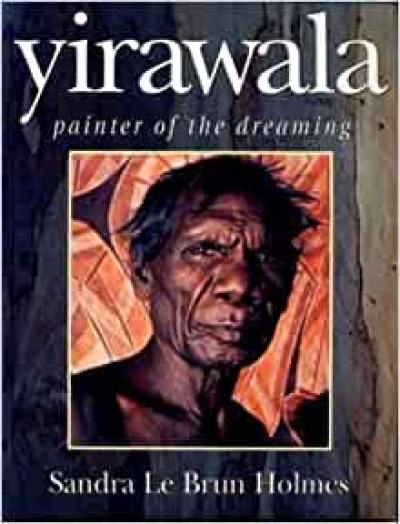
... (read more)Sandra Holmes’s Yirawala: Painter of the Dreaming is not a picture book or a ‘pretty story’. It does not tell balanda (white people) what they want to hear, nor does it euphemise the truth. The book is an inspiring, if harrowing account of Yirawala’s life and death, his religion manifest as art, and his struggle with balanda officialdom to regain title to his Dreaming country, Marugulidban.
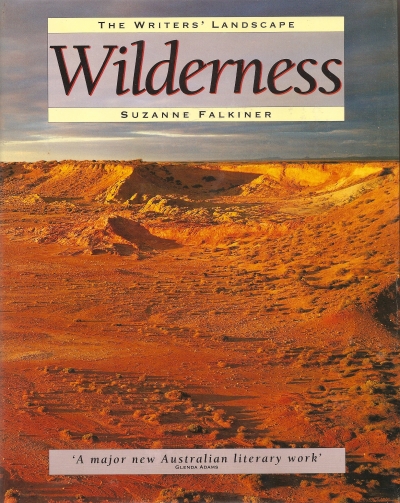
... (read more)Wilderness: The writer’s landscape, volume I by Suzanne Falkiner
Suzanne Falkiner’s Wilderness is a garden of delights. This is one of the most imaginative, innovative, and useful books on Australian literary culture to emerge for some time. The book represents the first volume of a two-part series entitled The Writers’ Landscape, and Wilderness traces the influence of Australian landscape on Australian writers.
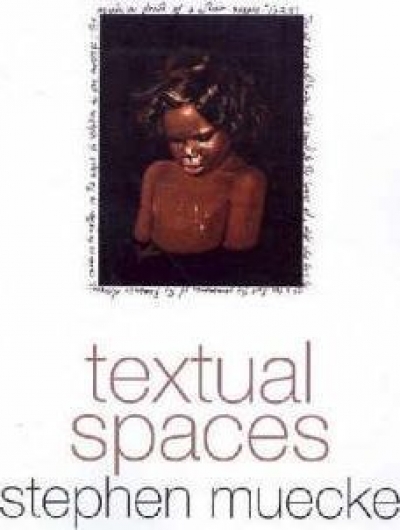
... (read more)Textual Spaces: Aboriginality and cultural studies by Stephen Muecke
Stephen Muecke’s Textual Spaces offers both new material and versions of some of the essays he has published on Aboriginal and cultural studies published through the 1980s. Many of these have already been very influential, but the welcome appearance of the book invites consideration of the continuities in Muecke’s arguments, the programme they suggest.
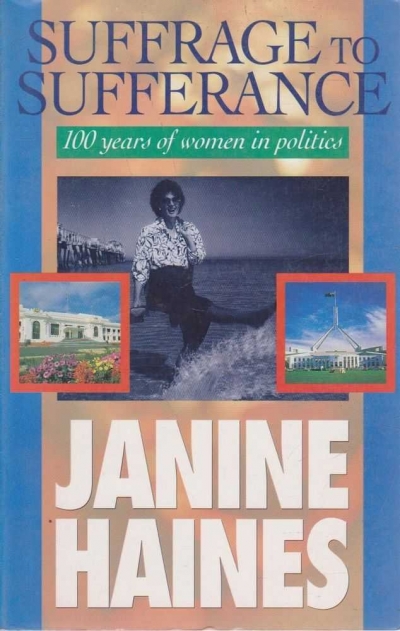
... (read more)Suffrage to Sufferance: 100 years of women in politics by Janine Haines
Janine Haines’s book, Suffrage to Sufferance is a good read. For women who are in public life and who insist on equality, it is a realistic and often humorous read. For those women who aspire to public life or simply equal rights, it is an entertaining – lost journalistic – account of where women’s aspirations might lead them. For men who understand or want to understand women’s drive for equality, there is an idea of the barriers, seen and unseen, that women face. And there is some sense of women’s struggle for political influence and recognition.
... (read more)Another book on George Augustus Robinson, the nineteenth-century oddity who toured Tasmania gathering Aboriginals whom he eventually incarcerated on Flinders Island? Historians from John West to Brian Plomley have written about his Tasmanian adventures; Robert Drewe and Mudrooroo Narogin have added interpretations of his singular career. Do we need another?
... (read more)