


Albanese’s ‘Australian Way’
Current Issue
- Events
- Book reviews
- Arts criticism
- Prizes & Fellowships
Sign Up For Our Newsletters
- Events
- Book reviews
- Arts criticism
- Prizes & Fellowships
Sign Up For Our Newsletters
Apple in China: The capture of the world’s greatest company by Patrick McGee
Apple is one of the world’s largest companies. Its market value reached $3 trillion in January 2022, having grown by more than $700 million per day since August 2011 when Tim Cook took over as Chief Executive Officer after an ailing Steve Jobs resigned. Apple began with Jobs and Steve Wozniak ‘tinkering in a garage’. Iconic products followed including the Mac, the iMac, the iPod, the iPad and, most successful of all, the iPhone. An early slogan aimed to align Apple with ‘the crazy ones. The misfits. The rebels. The troublemakers.’ For a company experiencing huge growth, that image was often at odds with the day-to-day commercial reality.
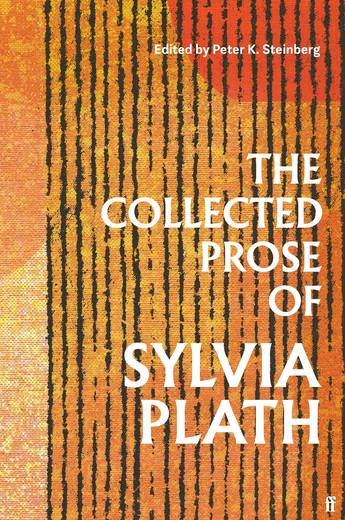
‘Archives and Hives: Three books which tell of Sylvia Plath’s spring’
For seven years after her 1963 burial, Sylvia Plath lay in an unmarked grave near St Thomas the Apostle Church in Heptonstall, West Yorkshire. The gravestone, when it came, bore her birth and married names, Sylvia Plath Hughes, the years of her birth and death, and a line from Wu Cheng-en’s sixteenth-century novel Monkey King:Journey to the West: ‘Even amidst fierce flames, the golden lotus can be planted.’
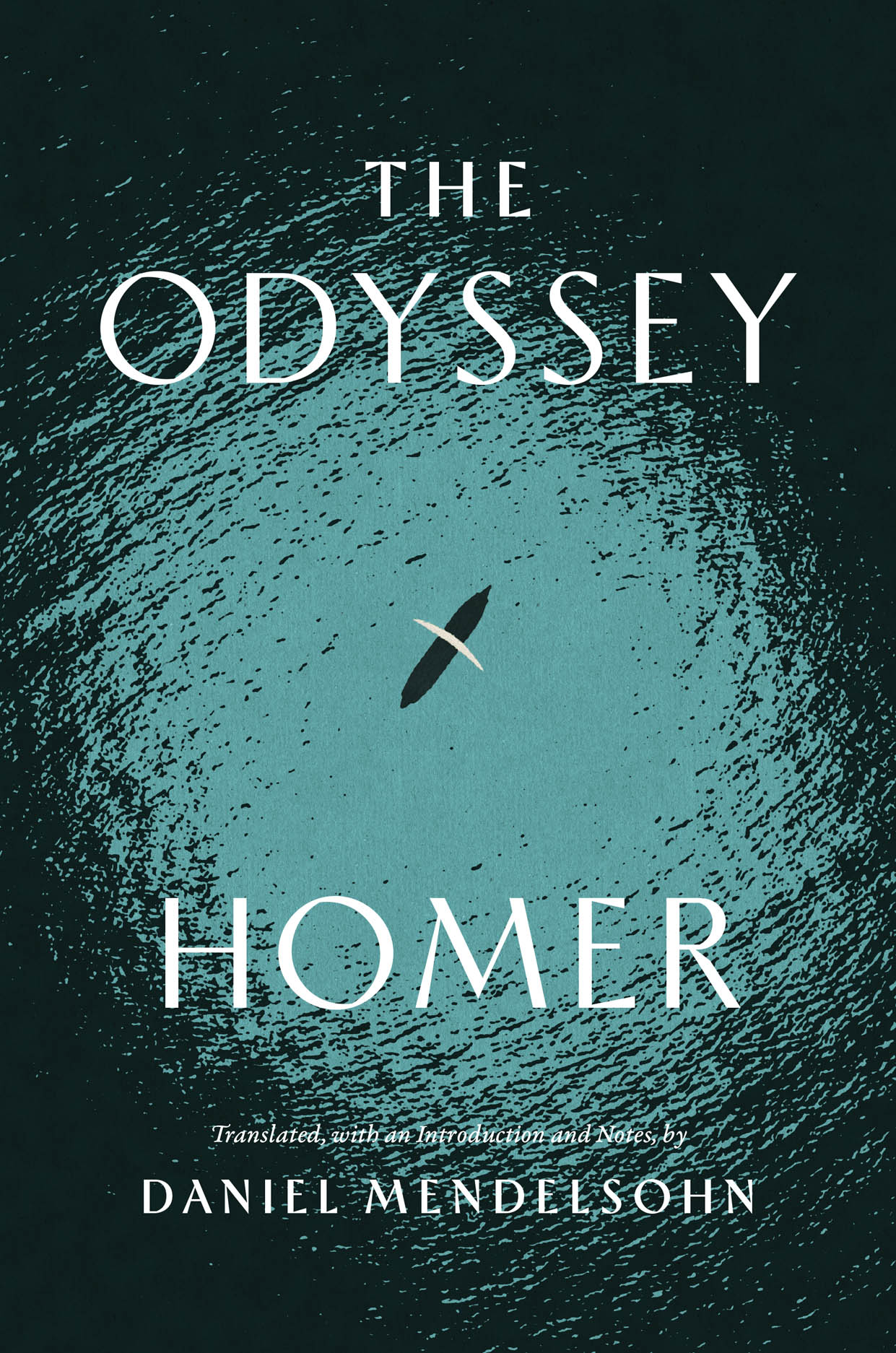
The Odyssey by Homer, translated from ancient Greek by Daniel Mendelsohn
After the horror of war, the difficulty of return – angry seas, lost comrades, plotters at home. Daniel Mendelsohn teaches at Bard College and writes for The New York Review of Books. His compelling new translation of the Odyssey acknowledges the themes of this story have been repeated over millennia: separation, trials, and reunion.
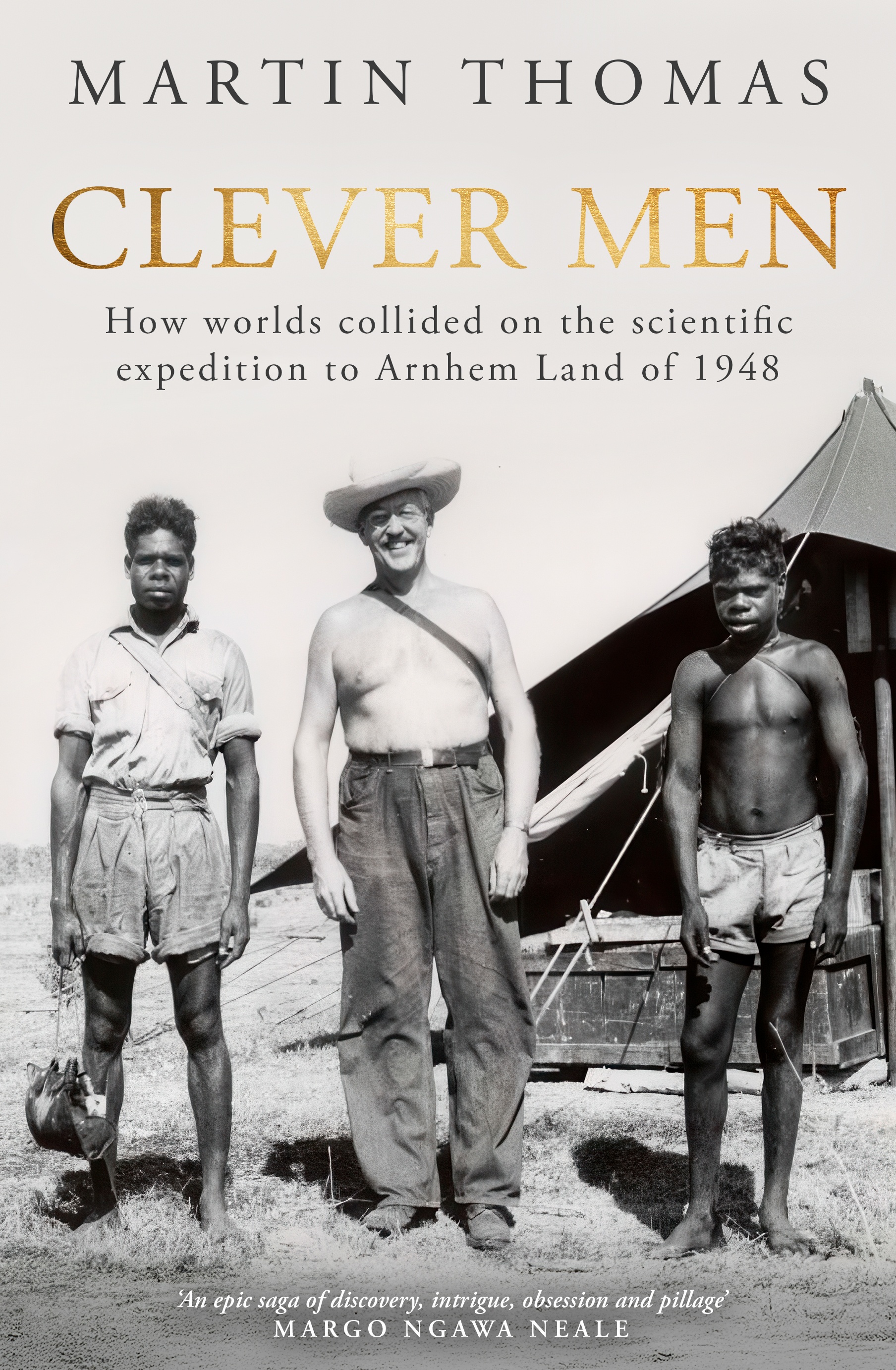
Clever Men: How worlds collided on the scientific expedition to Arnhem Land of 1948 by Martin Thomas
Soon after the conclusion of the 1948 Arnhem Land expedition, its leader, Charles Pearcy Mountford, an ethnologist and filmmaker, was celebrated by the National Geographic Society, a key sponsor of the expedition, along with the Smithsonian Institution in Washington DC and the Commonwealth Department of Information. In presenting Mountford with the Franklin L. Burr Prize and praising his ‘outstanding leadership’, the Society effectively honoured his success in presenting himself as the leader of a team of scientists working together in pursuit of new frontiers of knowledge. But this presentation is best read as theatre. The expedition’s scientific achievements were middling at best and, behind the scenes, the turmoil and disagreement that had characterised the expedition continued to rage.
Yilkari: A desert suite by Nicolas Rothwell and Alison Nampitjinpa Anderson
Outsiders, mostly white men seeking answers to burning existential questions, have long been ineluctably drawn to Australian deserts. The continental interior, with its deep-time mysteries, has lured not only explorers on fatal quests, but also lone anthropologists, philosophers, and other restless wanderers in search of themselves, burdened with their interrogations and yearnings for higher truth.
‘Albanese’s ‘Australian Way’: The rise of ‘progressive patriotism’ and its complex past’
‘To the victor belongs the spoils.’ The adage is attributed to William Macy, New York senator and defender of Jacksonian democracy. The aftermath of victory allows one to frame significance, settle scores, and proclaim lessons that will justify and guide a new government.
On Display: The story of Artbank, Australia’s most visible collection by Laura Couttie
This handsome book is a strange beast: half official report, half pitch to potential clients, half lavishly illustrated history of four decades of collecting Australian art. Clearly, this does not add up. Which is a pity, because Artbank is important to the current visibility, and popular success, of contemporary art in Australia.
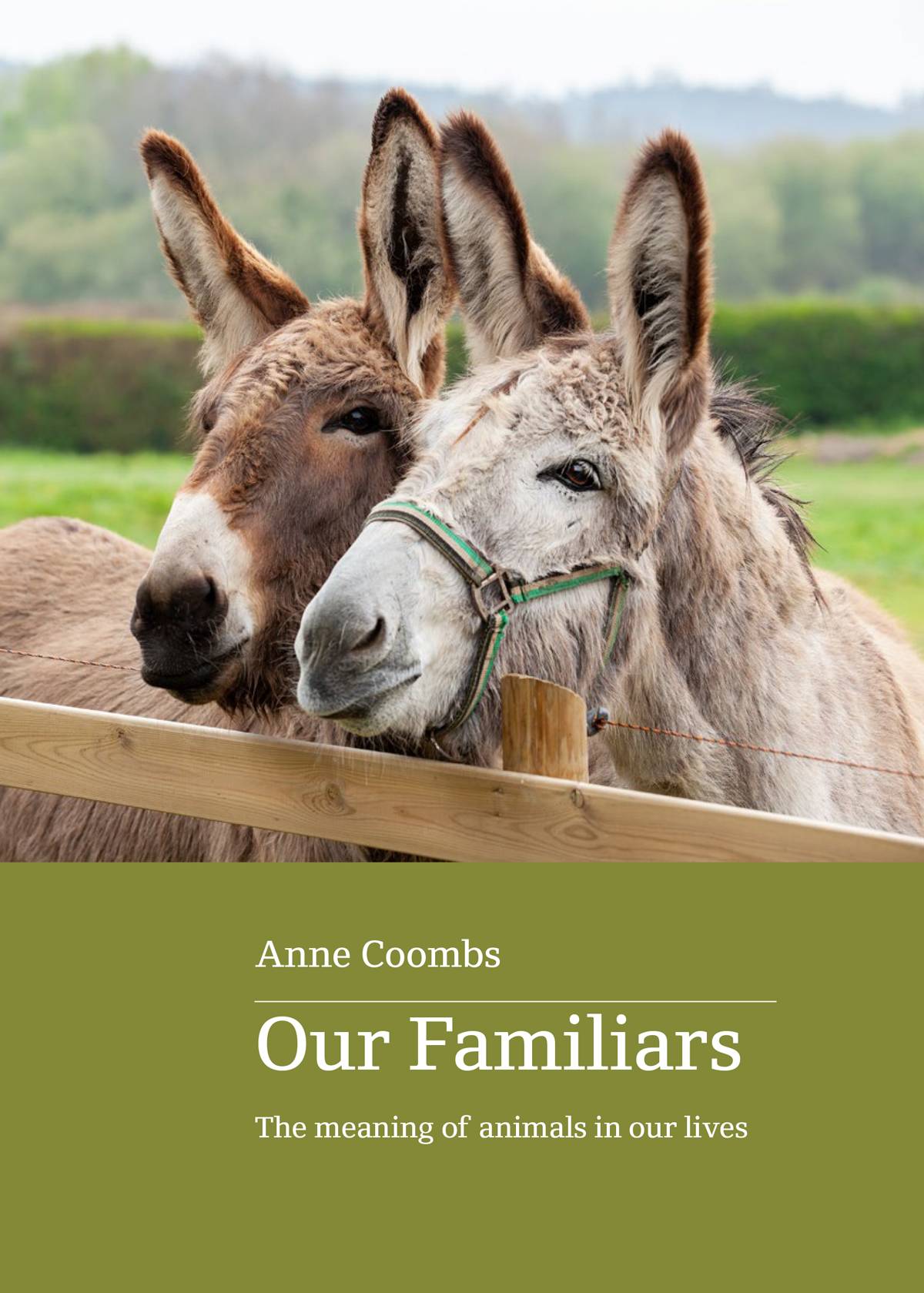
Our Familiars: The meaning of animals in our lives by Anne Coombs
The unbelievable lacework of it all – the patterns and linkages, the flickerings of knowledge and mystery, the astonishing shapes – is what Anne Coombs’s Our Familiars: The meaning of animals in our lives explores. This is a family book; specifically, a multi-species family book. Intimacies made between bodies is the soil in which the work is grown. And it comes from a writer who spent a lifetime thinking about, writing for, and working towards companionship, co-operation, and the safety of others. It is a posthumous publication too; a work fed and raised by Coombs, but finished, edited, and carried into the world by Susan Varga, Anne’s partner of thirty-three years, and close friend Joyce Morgan. Coombs died in December 2021, not long after the Black Summer fires and the Covid-19 pandemic – a time when all our interdependencies were raging (as they continue to).
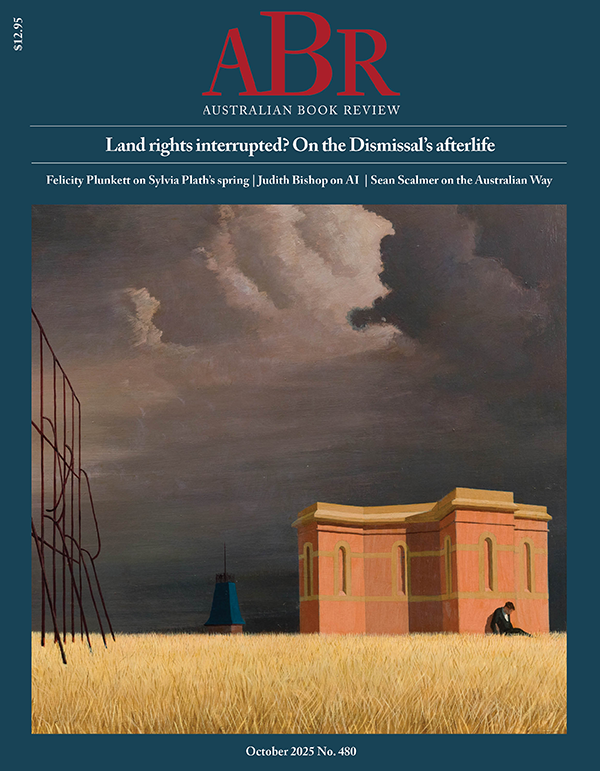
‘Land rights interrupted?: How Whitlam’s dismissal changed the history of First Nations land repossession’
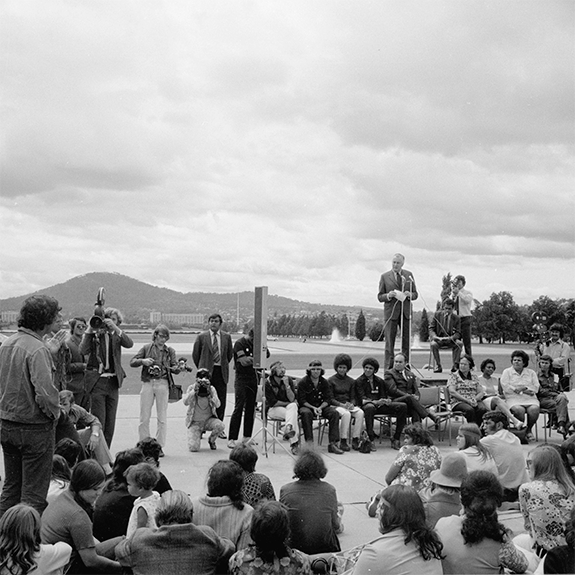
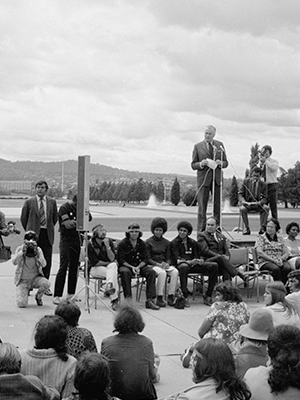
On the steps of Federal Parliament, a scrum assembled. Reporters jostled for position, enraged members of the public shouted over one another, advisers stood with faces drained of composure – even a comedian was caught in the fray. At the centre stood the tall and imposing figure of Prime Minister Gough Whitlam, listening as the governor-general’s official secretary read the proclamation dissolving Parliament. The moment, instantly mythic, would be remembered as ‘the dismissal’ – the most audacious constitutional rupture in Australian history, one that continues to haunt democratic life half a century on.
ABR Arts
Bruckner and Strauss: A thoughtful performance of works by two Romantic masters
Letter from Santa Fe: 'Marriage of Figaro' and Wagner’s 'Die Walküre' at the Opera House
‘Waiting for Godot: Keanu Reeves and Alex Winter reunite for Beckett’s classic’
Book of the Week
Clever Men: How worlds collided on the scientific expedition to Arnhem Land of 1948 by Martin Thomas
Soon after the conclusion of the 1948 Arnhem Land expedition, its leader, Charles Pearcy Mountford, an ethnologist and filmmaker, was celebrated by the National Geographic Society, a key sponsor of the expedition, along with the Smithsonian Institution in Washington DC and the Commonwealth Department of Information. In presenting Mountford with the Franklin L. Burr Prize and praising his ‘outstanding leadership’, the Society effectively honoured his success in presenting himself as the leader of a team of scientists working together in pursuit of new frontiers of knowledge. But this presentation is best read as theatre. The expedition’s scientific achievements were middling at best and, behind the scenes, the turmoil and disagreement that had characterised the expedition continued to rage.
From the Archive
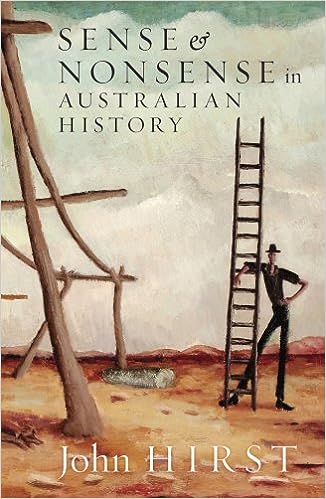
Sense and Nonsense in Australian History by John Hirst
John Hirst is a throwback. I don’t mean in his political views, but in his sense of his duty as an historian. He belongs to a tradition which, in this country, goes back to the 1870s and 1880s, when the Australian colonies began to feel the influence of German ideas about the right relationship between the humanities and the state. Today it is a tradition increasingly hard to maintain. Under this rubric, both historians and public servants are meant to offer critical and constructive argument about present events and the destiny of the nation. Henry Parkes was an historian of sorts, and he was happy to spend government money on the underpinnings of historical scholarship in Australia. The Historical Records of New South Wales was one obvious result, and that effort, in itself, involved close cooperation between bureaucrats and scholars. Alfred Deakin was likewise a man of considerable scholarship (and more sophisticated than Parkes), whose reading shaped his ideas about national destiny, and who nourished a similar outlook at the bureaucratic level.