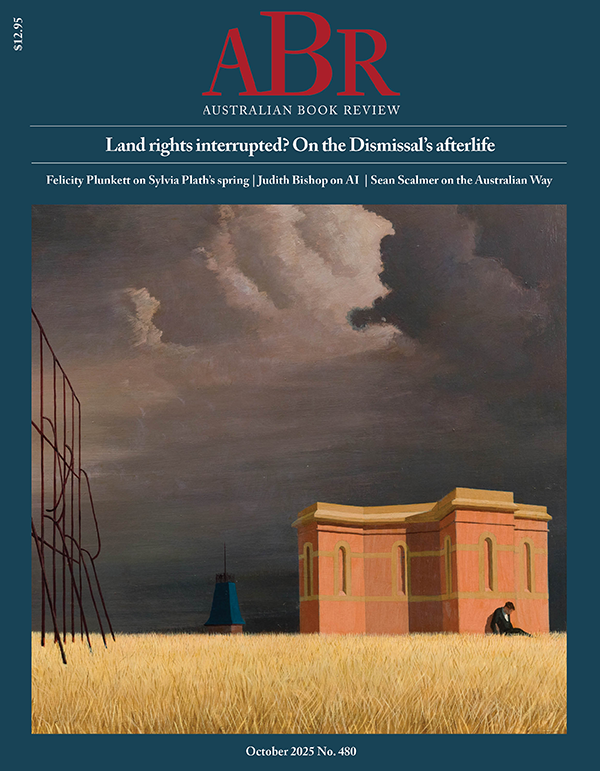



Albanese’s ‘Australian Way’
Current Issue
- Events
- Book reviews
- Arts criticism
- Prizes & Fellowships
Sign Up For Our Newsletters
- Events
- Book reviews
- Arts criticism
- Prizes & Fellowships
Sign Up For Our Newsletters
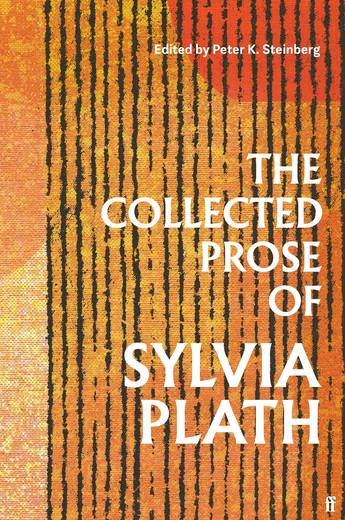
‘Archives and Hives: Three books which tell of Sylvia Plath’s spring’
For seven years after her 1963 burial, Sylvia Plath lay in an unmarked grave near St Thomas the Apostle Church in Heptonstall, West Yorkshire. The gravestone, when it came, bore her birth and married names, Sylvia Plath Hughes, the years of her birth and death, and a line from Wu Cheng-en’s sixteenth-century novel Monkey King:Journey to the West: ‘Even amidst fierce flames, the golden lotus can be planted.’
‘Alternate Names for Blak Mothers’
1. worlds inside brown eyes
2. a figure in a bed
3. stars in summer
4. women of clay
‘Questions for Mai: Joshua Reynolds’s portrait and the memory of Empire’
Zoom in. The most unusual detail in this painting is the left hand, with tattooed dots carefully spaced across its back and knuckles. The fingers themselves are poorly done. The thumb and pointer are folded into the figure’s thick cloth folds, but the other three digits lie on the material like tapered slugs. Today they might be held up as evidence of AI image generation – bad hands are the quickest tell. In the eighteenth century, to the initiated, bad hands were a sign that the work came from the studio of Sir Joshua Reynolds.
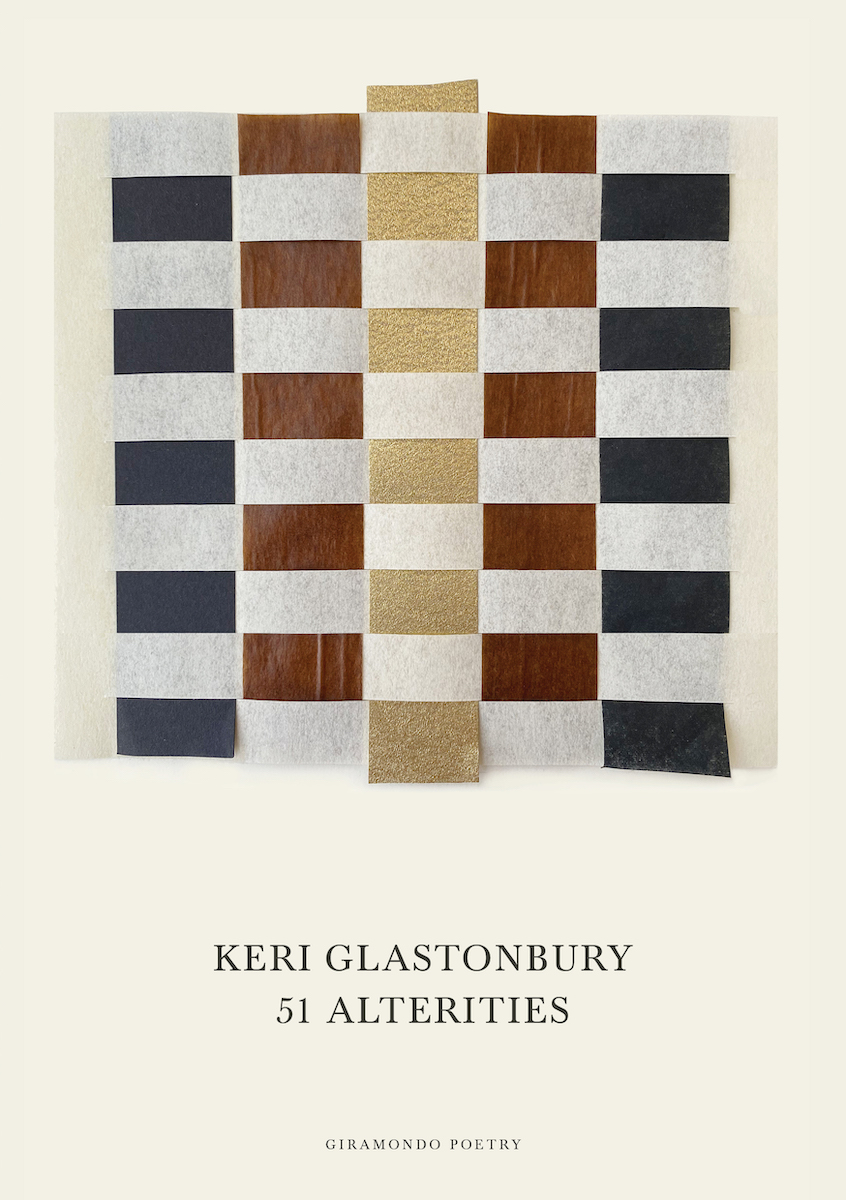
51 Alterities by Keri Glastonbury
The title of Keri Glastonbury’s latest collection of poems, 51 Alterities, evokes the title of 81 Austerities (2012) by the English poet Sam Riviere. Glastonbury’s collection is, according to its author, ‘offered as a loose “antipodean” adaptation’ of 81 Austerities, a collection that was written ‘in response to the impact of austerity measures on the arts and as a provocation on poetry as a contemporary media in the internet age’. Post-internet poetry, taking on as it does the syntax and lexis of internet discourse (especially, but not wholly, that used in social media), has become a dominant style in contemporary Anglophone poetry. When 81 Austerities was reviewed by The Daily Telegraph the headline was ‘Poetry for the Facebook Age’. Such a caption now seems laughably dated, and perhaps a little naïve, suggesting something of the dangers of writing post-internet poetry. A decade is a long time in cyberspace.
Our Story: Aboriginal Chinese people in Australia edited by Zhou Xiaoping
It is deeply sobering to be writing about the depth of the history of multicultural Australia only days after rallies against immigration have been held and in the midst of a palpable and disturbing negative response to non-white immigration. There are echoes of the shameful twentieth-century White Australia policy. Far from being a recent phenomenon, multiculturalism has been an integral aspect of Australian society since European settlement in the late eighteenth century. This collection, edited by the artist Zhou Xiaoping, is the outcome of a three-year research project and is the companion monograph for Our Story: Aboriginal Chinese people in Australia, a free, ground-breaking exhibition currently at the National Museum of Australia in Canberra that will run until late January 2026.
‘Journey Beginning Things’
Suitcase red girl teenager together
New space time moving thataway
Farewell waving family people mindset
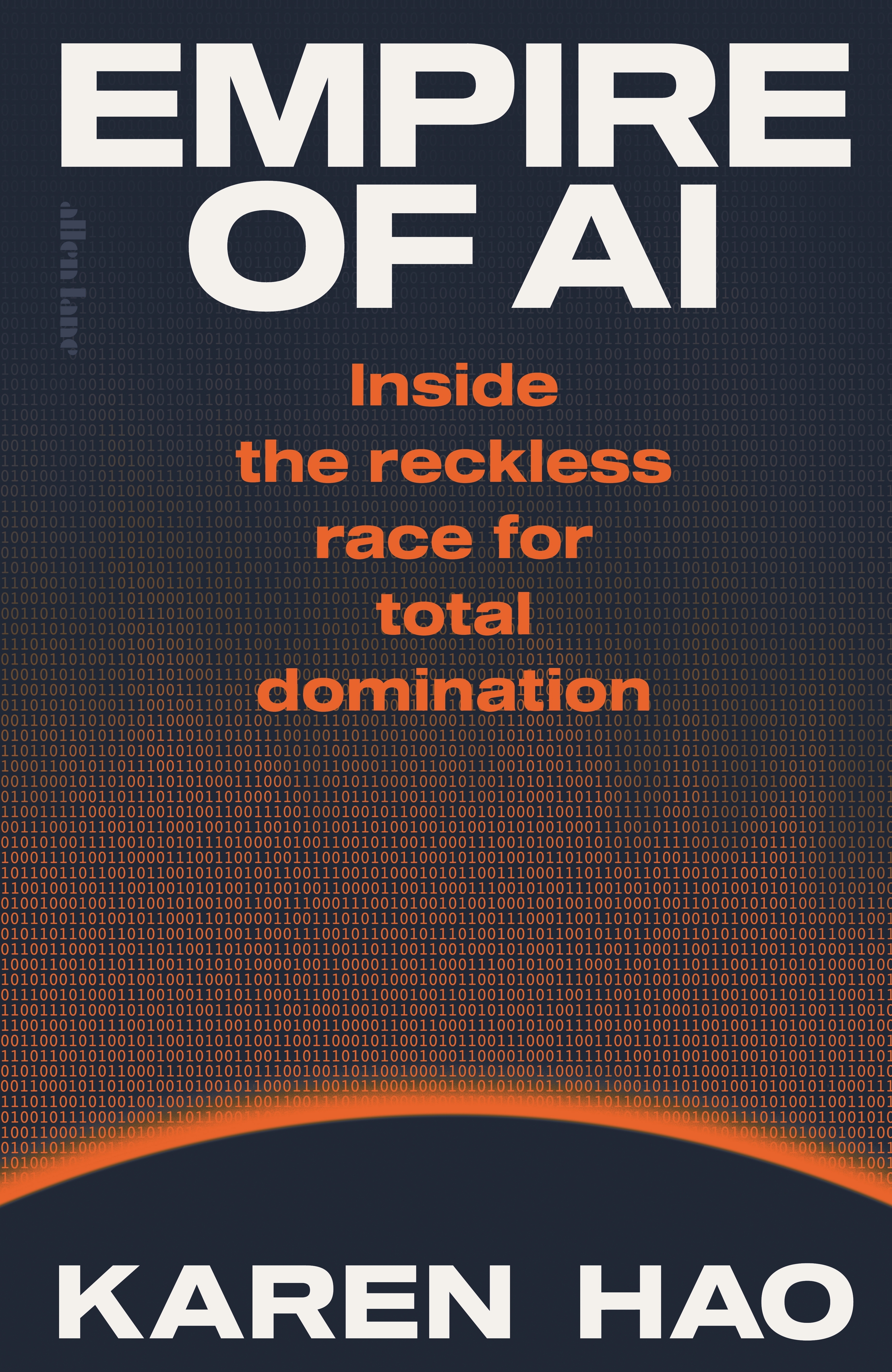
‘AI will kill us/save us: Hype and harm in the new economic order’
Ilya Sutskever was feeling agitated. As Chief Scientist at OpenAI, the company behind the AI models used in ChatGPT and in Microsoft’s products, he was a passionate advocate for the company’s mission of achieving Artificial General Intelligence (AGI) before anybody else. OpenAI defines AGI as ‘highly autonomous systems that outperform humans at most economically valuable work’, the development of which will benefit ‘all of humanity’. OpenAI’s mission, Sutskever believed, gave humanity its best chance of getting to AGI safely. But he worried about failing the mission. He fretted to his colleagues: What if bad actors came after its technology? What if they cut off his hand and slapped it on a palm scanner to access its secrets?
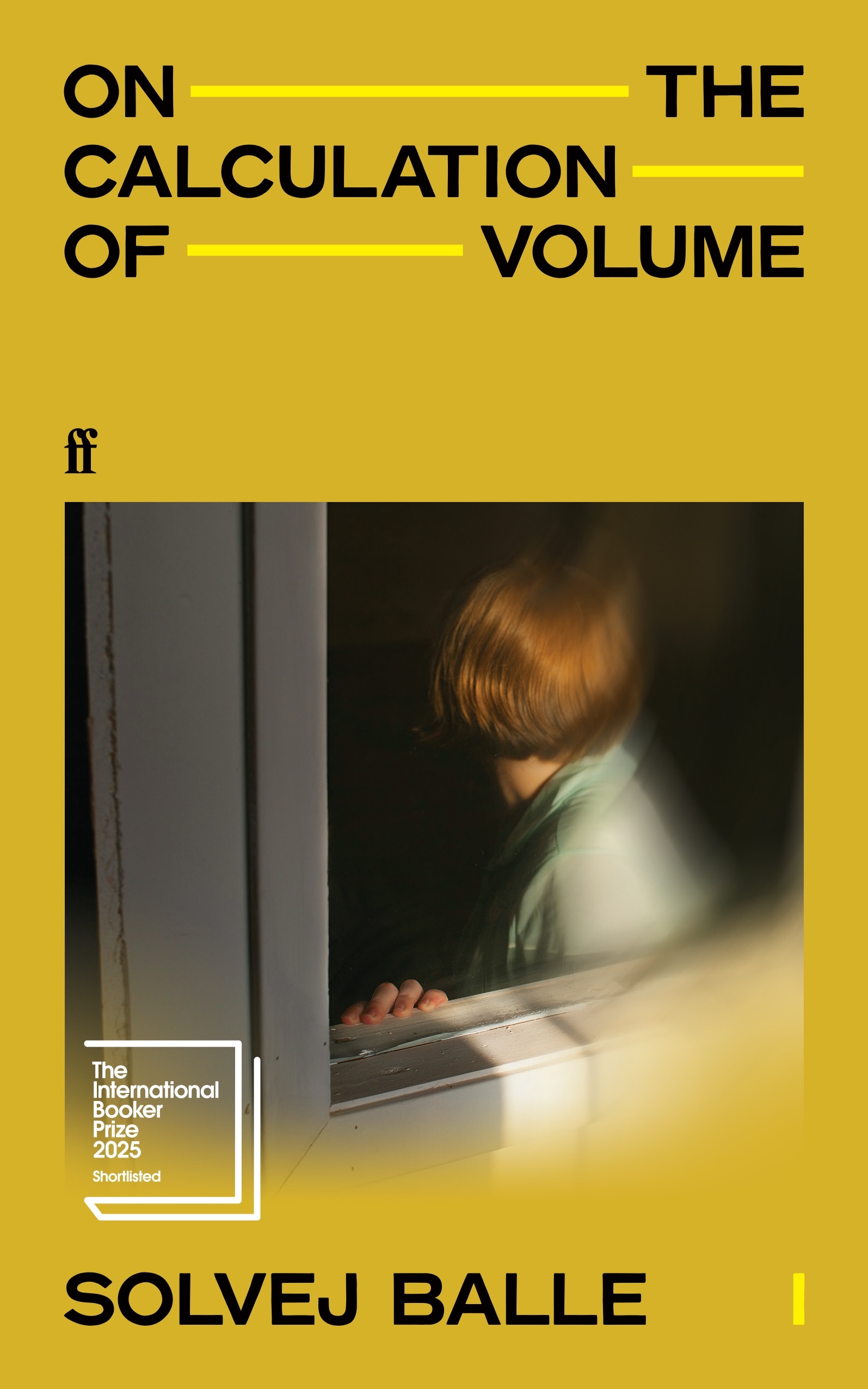
On the Calculation of Volume: Book I by Solvej Balle, translated from Danish by Barbara J. Haveland & On the Calculation of Volume: Book II by Solvej Balle, translated from Danish by Barbara J. Haveland
In a famous thought experiment based on the notion of ‘eternal return’, German philosopher Friedrich Nietzsche asked what it would be like to live the same life over and over again, for eternity. Nietzsche’s intention was to set a kind of test that encourages us to consider whether we are living our best life, the life that makes us happiest.
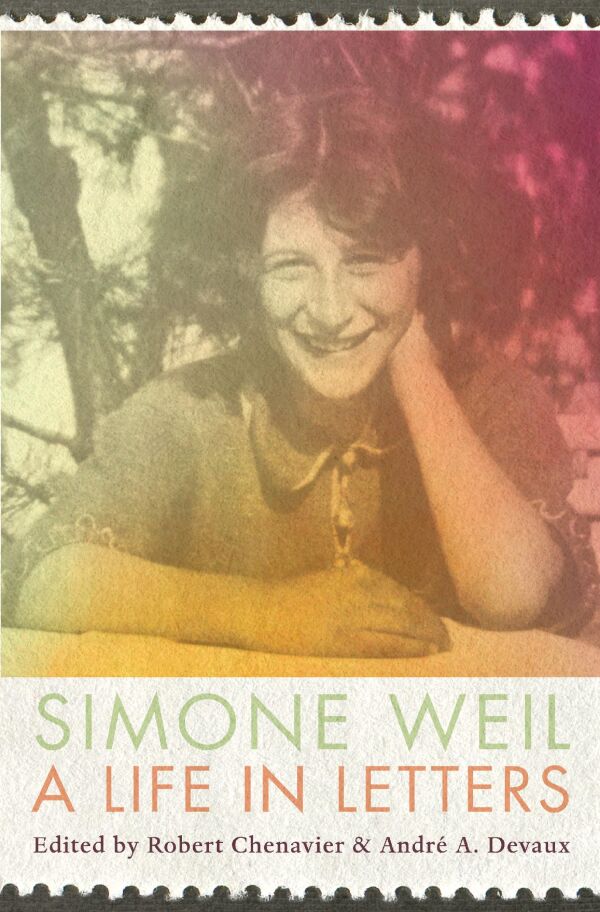
A Life in Letters by Robert Chevanier and André A. Devaux, translated from French by Nicholas Elliott
In his otherwise bleak 1963 novel The Spy Who Came in from the Cold, John le Carré lets himself have a little fun with the character of Elizabeth Gold. She is an idealistic Jewish woman in her mid-twenties who works in a small library in the London neighbourhood of Bayswater. She is also a member of the British Communist Party. For Liz, however, membership is less a matter of ideology than a token of her moral commitment to peace work and the alleviation of poverty. She is disdainful of her local branch, with its petty ambitions to be ‘a decent little club, nice and revolutionary and no fuss’ – unlike her comrades in the German Democratic Republic (GDR), whose determined struggle against the militarism and decadence of the capitalist West she admires from afar.
ABR Arts
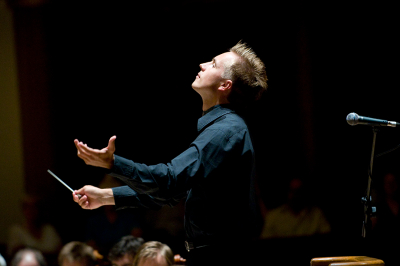
Bruckner and Strauss: A thoughtful performance of works by two Romantic masters
Letter from Santa Fe: 'Marriage of Figaro' and Wagner’s 'Die Walküre' at the Opera House
‘Waiting for Godot: Keanu Reeves and Alex Winter reunite for Beckett’s classic’
Book of the Week
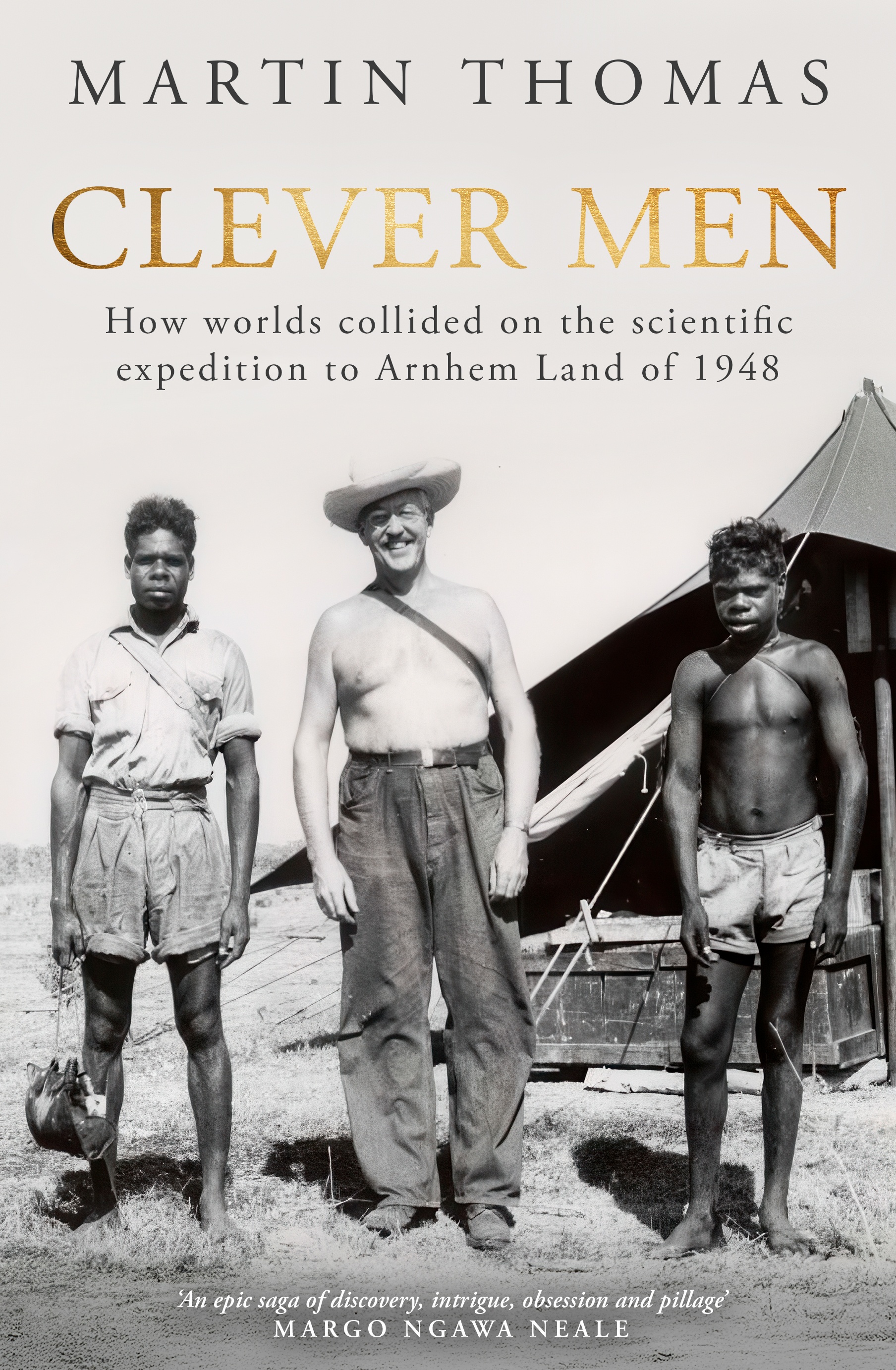
Clever Men: How worlds collided on the scientific expedition to Arnhem Land of 1948 by Martin Thomas
Soon after the conclusion of the 1948 Arnhem Land expedition, its leader, Charles Pearcy Mountford, an ethnologist and filmmaker, was celebrated by the National Geographic Society, a key sponsor of the expedition, along with the Smithsonian Institution in Washington DC and the Commonwealth Department of Information. In presenting Mountford with the Franklin L. Burr Prize and praising his ‘outstanding leadership’, the Society effectively honoured his success in presenting himself as the leader of a team of scientists working together in pursuit of new frontiers of knowledge. But this presentation is best read as theatre. The expedition’s scientific achievements were middling at best and, behind the scenes, the turmoil and disagreement that had characterised the expedition continued to rage.
From the Archive
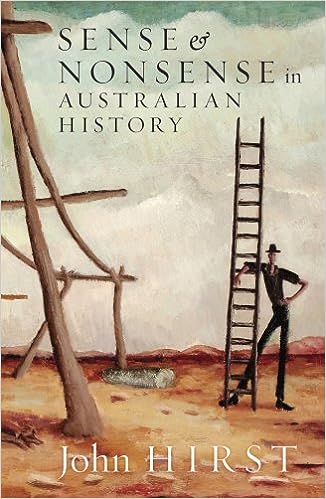
Sense and Nonsense in Australian History by John Hirst
John Hirst is a throwback. I don’t mean in his political views, but in his sense of his duty as an historian. He belongs to a tradition which, in this country, goes back to the 1870s and 1880s, when the Australian colonies began to feel the influence of German ideas about the right relationship between the humanities and the state. Today it is a tradition increasingly hard to maintain. Under this rubric, both historians and public servants are meant to offer critical and constructive argument about present events and the destiny of the nation. Henry Parkes was an historian of sorts, and he was happy to spend government money on the underpinnings of historical scholarship in Australia. The Historical Records of New South Wales was one obvious result, and that effort, in itself, involved close cooperation between bureaucrats and scholars. Alfred Deakin was likewise a man of considerable scholarship (and more sophisticated than Parkes), whose reading shaped his ideas about national destiny, and who nourished a similar outlook at the bureaucratic level.