

Albanese’s ‘Australian Way’
Current Issue
- Events
- Book reviews
- Arts criticism
- Prizes & Fellowships
Sign Up For Our Newsletters
- Events
- Book reviews
- Arts criticism
- Prizes & Fellowships
Sign Up For Our Newsletters
51 Alterities by Keri Glastonbury
The title of Keri Glastonbury’s latest collection of poems, 51 Alterities, evokes the title of 81 Austerities (2012) by the English poet Sam Riviere. Glastonbury’s collection is, according to its author, ‘offered as a loose “antipodean” adaptation’ of 81 Austerities, a collection that was written ‘in response to the impact of austerity measures on the arts and as a provocation on poetry as a contemporary media in the internet age’. Post-internet poetry, taking on as it does the syntax and lexis of internet discourse (especially, but not wholly, that used in social media), has become a dominant style in contemporary Anglophone poetry. When 81 Austerities was reviewed by The Daily Telegraph the headline was ‘Poetry for the Facebook Age’. Such a caption now seems laughably dated, and perhaps a little naïve, suggesting something of the dangers of writing post-internet poetry. A decade is a long time in cyberspace.
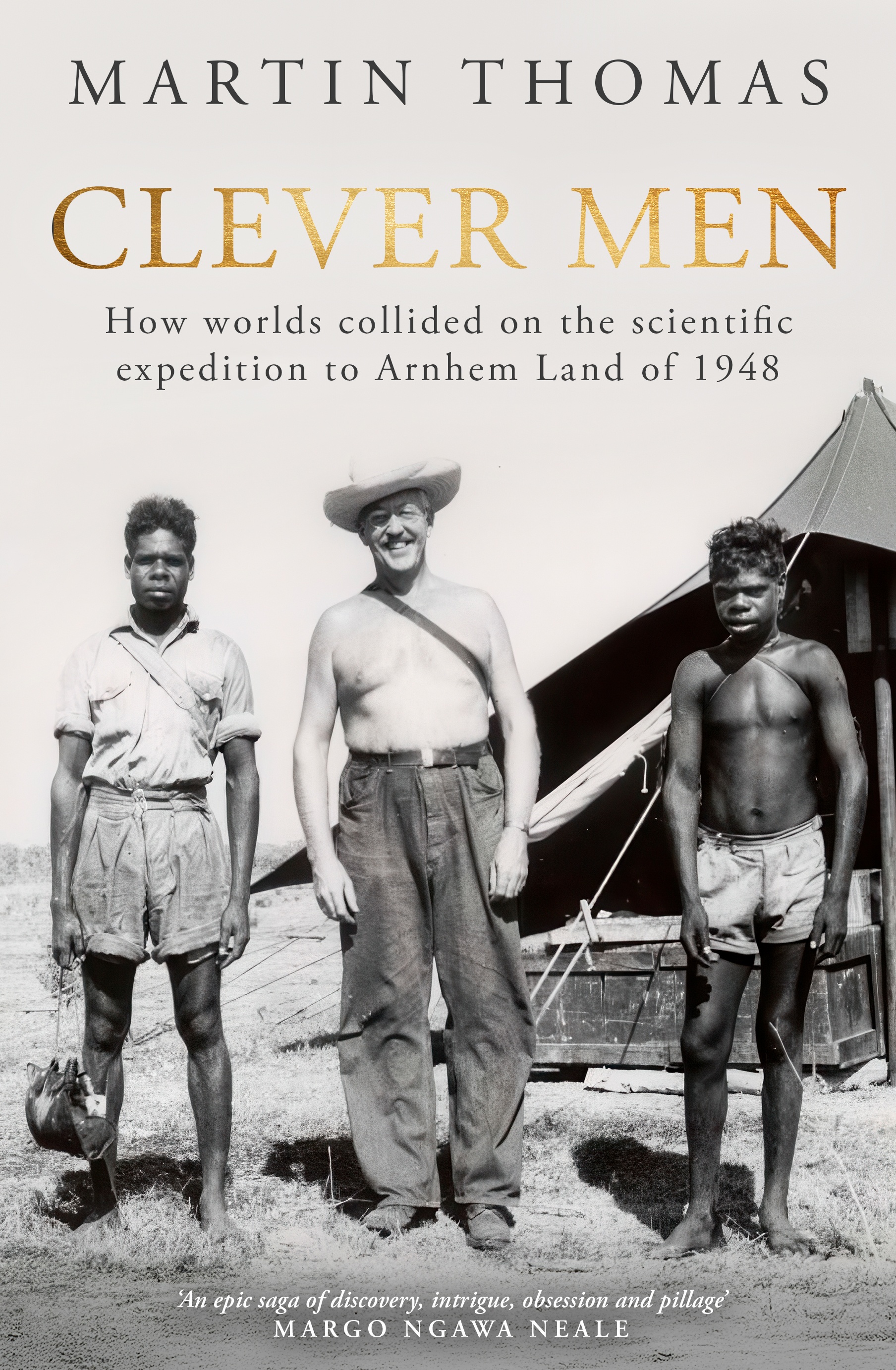
Clever Men: How worlds collided on the scientific expedition to Arnhem Land of 1948 by Martin Thomas
Soon after the conclusion of the 1948 Arnhem Land expedition, its leader, Charles Pearcy Mountford, an ethnologist and filmmaker, was celebrated by the National Geographic Society, a key sponsor of the expedition, along with the Smithsonian Institution in Washington DC and the Commonwealth Department of Information. In presenting Mountford with the Franklin L. Burr Prize and praising his ‘outstanding leadership’, the Society effectively honoured his success in presenting himself as the leader of a team of scientists working together in pursuit of new frontiers of knowledge. But this presentation is best read as theatre. The expedition’s scientific achievements were middling at best and, behind the scenes, the turmoil and disagreement that had characterised the expedition continued to rage.
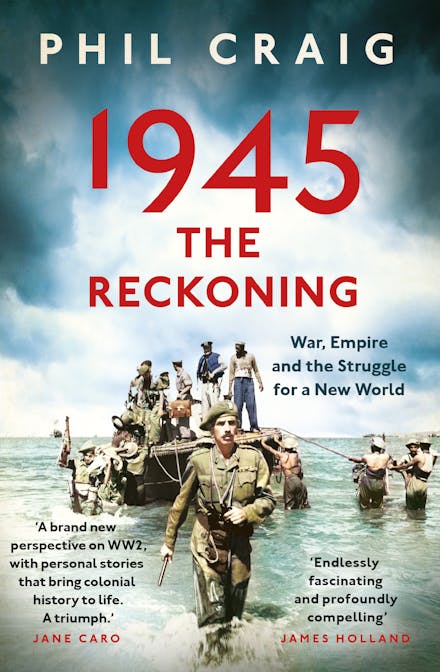
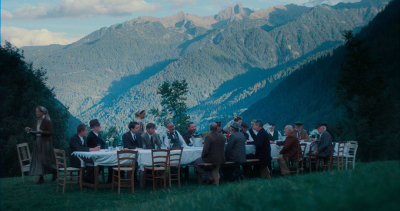
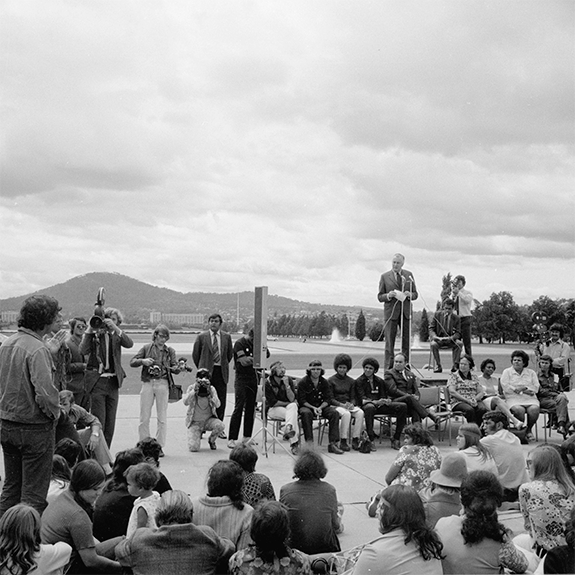
‘Albanese’s ‘Australian Way’: The rise of ‘progressive patriotism’ and its complex past’
‘To the victor belongs the spoils.’ The adage is attributed to William Macy, New York senator and defender of Jacksonian democracy. The aftermath of victory allows one to frame significance, settle scores, and proclaim lessons that will justify and guide a new government.
The Möbius Book by Catherine Lacey
In The Möbius Book, an ingenious merging of fact and fiction by American writer Catherine Lacey, Lacey recalls including in one of her pieces of short fiction a poem about growing up with ‘an angry man in your house … and if one day you find that there is / no angry man in your house – / well, you will go find one and invite him in!’ (The poem appears in Lacey’s stinging short story ‘Cut’, first published in The New Yorker in 2019.)
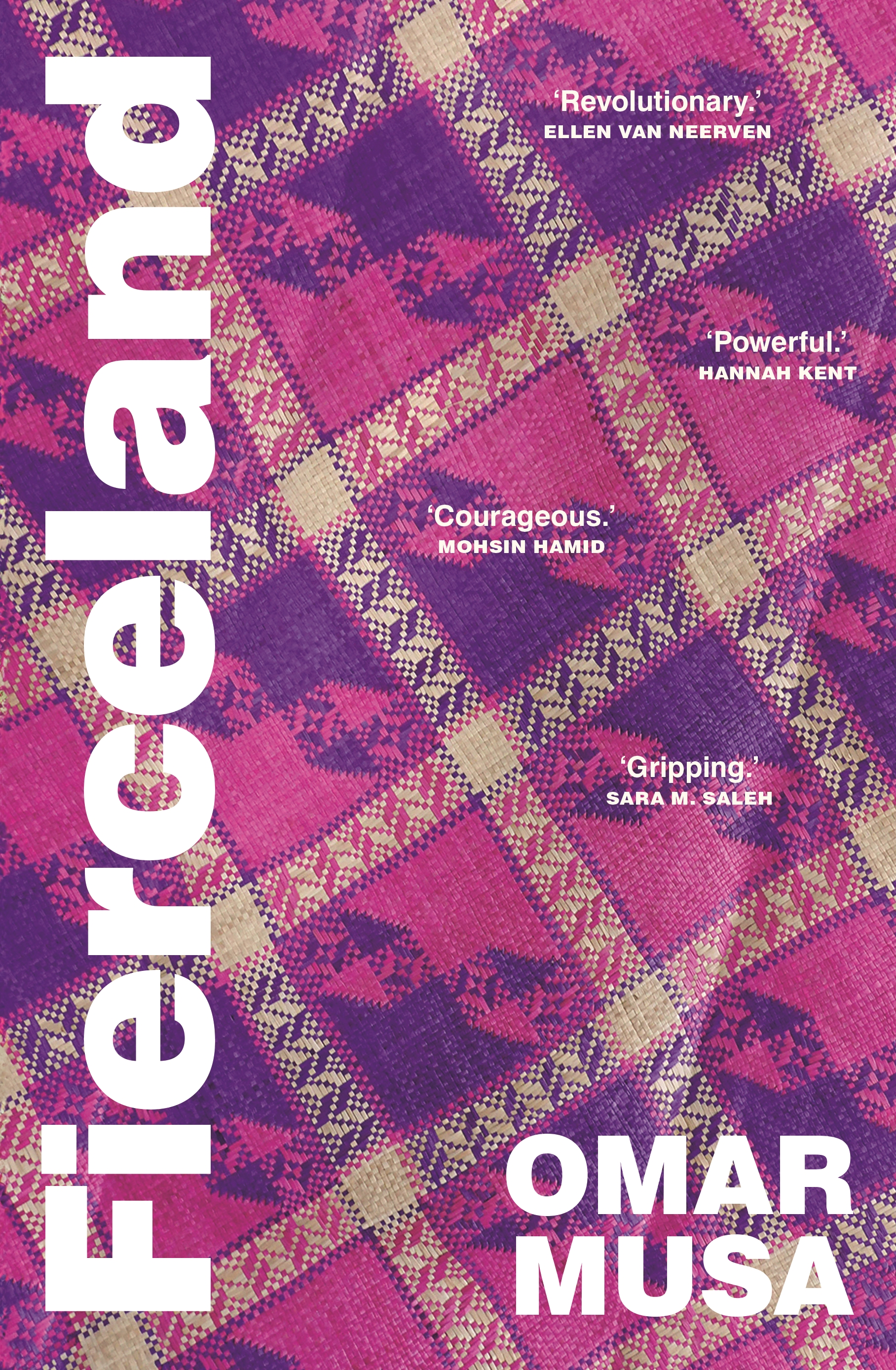
Pissants by Brandon Jack
In The Season, Helen Garner describes a photograph of Australian Football League player Charlie Curnow celebrating a goal: ‘It’s Homeric: all the ugly brutality of a raging Achilles, but also this strange and splendid beauty.’ There is a mythic image in Australian culture of the AFL player doing battle on the football oval with the strength of Hercules or the wit of Odysseus. Brandon Jack’s Pissants, his first novel, is an inversion of this mythopoeia; it is an exposé of football culture, the false pluralism of Australian masculinity, and a deranged form of identity that runs through ‘the club’. It shows the average life of a footballer at the fringes of a team list. Jack, having played for the AFL’s Sydney Swans from 2013 to 2017, has firsthand experience of the (in)famous ‘Bloods Culture’ – one built on a mantra of self-sacrifice, discipline, and unity – and this experience shows throughout the novel.
Science Under Siege: How to fight the five most powerful forces that threaten our world by Michael Mann and Peter Hotez
Two distinguished professors have joined forces to write an impassioned book about the recent, concerted attacks on science. While they both live and work in the United States, where what they describe as the ‘forces of darkness’ are most active and influential, the problem they describe is truly global. Mann is a celebrated climate scientist who has been a leading voice in the field since the 1980s, while Hotez is a virologist who became involved in the public debate about the Covid-19 pandemic. The central argument of the book is that we face existential crises in both human health and the health of our planet. While the best hope of successfully tackling these challenges relies on science, there is now ‘politically and ideologically motivated opposition to science’, threatening both our ability to advance understanding of these complex issues and, equally important, the freedom of scientists to communicate their understanding.
Letters – October 2025
My career began at Australian Book Review, and as such I’ve been prompted to reflect on the importance of publications such as ABR to ensuring a robust critical culture in Australia in the wake of Meanjin’s closure. The decision was announced on September 4 that Meanjin, one of Australia’s longest-running literary journals, would cease to be published by its custodian, Melbourne University Publishing, and that the editor and I would be made redundant.
‘Inconsolable Poem’
But it is the end of the world to River, who’s standing there
thrown by its incomprehensibilities as I play him R.E.M.,
which is otherwise what he needs, total sleep and churning dreams,
not the drums, distortion and irony, he does not feel fine,
‘Weather’
These days, evenings are heavy
with clouds that refuse to crack, to open
a window is let in the night
creatures, which flutter and tumble
into the glow of a phone
ABR Arts
Bruckner and Strauss: A thoughtful performance of works by two Romantic masters
Letter from Santa Fe: 'Marriage of Figaro' and Wagner’s 'Die Walküre' at the Opera House
‘Waiting for Godot: Keanu Reeves and Alex Winter reunite for Beckett’s classic’
Book of the Week
Clever Men: How worlds collided on the scientific expedition to Arnhem Land of 1948 by Martin Thomas
Soon after the conclusion of the 1948 Arnhem Land expedition, its leader, Charles Pearcy Mountford, an ethnologist and filmmaker, was celebrated by the National Geographic Society, a key sponsor of the expedition, along with the Smithsonian Institution in Washington DC and the Commonwealth Department of Information. In presenting Mountford with the Franklin L. Burr Prize and praising his ‘outstanding leadership’, the Society effectively honoured his success in presenting himself as the leader of a team of scientists working together in pursuit of new frontiers of knowledge. But this presentation is best read as theatre. The expedition’s scientific achievements were middling at best and, behind the scenes, the turmoil and disagreement that had characterised the expedition continued to rage.
From the Archive
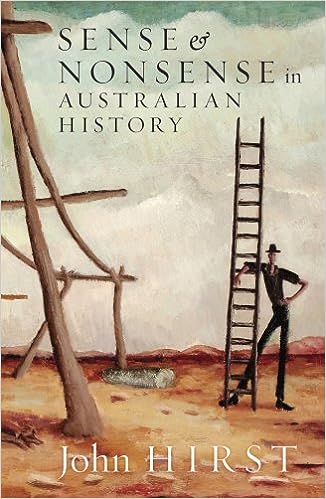
Sense and Nonsense in Australian History by John Hirst
John Hirst is a throwback. I don’t mean in his political views, but in his sense of his duty as an historian. He belongs to a tradition which, in this country, goes back to the 1870s and 1880s, when the Australian colonies began to feel the influence of German ideas about the right relationship between the humanities and the state. Today it is a tradition increasingly hard to maintain. Under this rubric, both historians and public servants are meant to offer critical and constructive argument about present events and the destiny of the nation. Henry Parkes was an historian of sorts, and he was happy to spend government money on the underpinnings of historical scholarship in Australia. The Historical Records of New South Wales was one obvious result, and that effort, in itself, involved close cooperation between bureaucrats and scholars. Alfred Deakin was likewise a man of considerable scholarship (and more sophisticated than Parkes), whose reading shaped his ideas about national destiny, and who nourished a similar outlook at the bureaucratic level.