

Albanese’s ‘Australian Way’
Current Issue
- Events
- Book reviews
- Arts criticism
- Prizes & Fellowships
Sign Up For Our Newsletters
- Events
- Book reviews
- Arts criticism
- Prizes & Fellowships
Sign Up For Our Newsletters
Prove It: A scientific guide for the post-truth era by Elizabeth Finkel
Living alongside the world’s only native black swans, Australians should be more alive to the provisional nature of truth than most. For thousands of years of European history, the ‘fact’ that ‘all swans are white’ was backed up with an overwhelming data set that only the delusional – or a philosopher – would debate. But as Scottish Enlightenment philosopher David Hume pointed out, the difficulty with inductive reasoning is that it can seem incontrovertible all the way up until it is not. But if the truth is always shifting, where do we find solid ground when our lives depend on it? And to what absolutes and experts can we refer in an era of wilful misinformation, institutional mistrust, and anti-expert populism?
Fierceland by Omar Musa
Omar Musa’s first novel, Here Come the Dogs (2014), is a rousing dramatisation of the combustible sense of displacement and dissatisfaction simmering at the underrepresented margins of Australian life. Its protagonists are singular and compelling: each is tender and violent, hopeful and despairing, pitiful and triumphant. They all possess a uniquely hybrid identity, and each is searching for something that is always out of reach.
The Sea in the Metro by Jayne Tuttle
Jayne Tuttle’s The Sea in the Metro is the third book in a trilogy of memoirs about living, working, and becoming a mother in Paris. Like Paris or Die (2019) and My Sweet Guillotine (2022), Tuttle’s latest book applies a sharp scalpel to her own psyche while playing with genre. She explores the brutal realities of giving birth and raising a toddler in a foreign city, the seemingly impossible task of balancing motherhood with paid work, the joys and hardships of striving to be a capital ‘W’ writer while copywriting for cash, and what family might look like in brittle, Parisian culture. Tuttle also examines the complex ramifications of a near-death experience and a hospital birthing trauma on her ongoing physical and mental health – and intimate relationships.
Advances – October 2025
Advances, like many in the literary community, was shocked to hear that Meanjin would be publishing its final issue in December. Australia’s second longest-running literary publication was founded in 1940, in Brisbane, where meanjin derives from the Yuggera word for a place in the river where trade and cultural exchange has taken place for thousands of years.
Our Story: Aboriginal Chinese people in Australia edited by Zhou Xiaoping
It is deeply sobering to be writing about the depth of the history of multicultural Australia only days after rallies against immigration have been held and in the midst of a palpable and disturbing negative response to non-white immigration. There are echoes of the shameful twentieth-century White Australia policy. Far from being a recent phenomenon, multiculturalism has been an integral aspect of Australian society since European settlement in the late eighteenth century. This collection, edited by the artist Zhou Xiaoping, is the outcome of a three-year research project and is the companion monograph for Our Story: Aboriginal Chinese people in Australia, a free, ground-breaking exhibition currently at the National Museum of Australia in Canberra that will run until late January 2026.
‘AI will kill us/save us: Hype and harm in the new economic order’
Ilya Sutskever was feeling agitated. As Chief Scientist at OpenAI, the company behind the AI models used in ChatGPT and in Microsoft’s products, he was a passionate advocate for the company’s mission of achieving Artificial General Intelligence (AGI) before anybody else. OpenAI defines AGI as ‘highly autonomous systems that outperform humans at most economically valuable work’, the development of which will benefit ‘all of humanity’. OpenAI’s mission, Sutskever believed, gave humanity its best chance of getting to AGI safely. But he worried about failing the mission. He fretted to his colleagues: What if bad actors came after its technology? What if they cut off his hand and slapped it on a palm scanner to access its secrets?
Poet of the Month with Ellen van Neerven
Ellen van Neerven is a writer and editor of Mununjali and Dutch heritage. Their books include Heat and Light (2014), Comfort Food (2016), Throat (2020), and Personal Score (2023). Ellen’s first book, Heat and Light, was the recipient of the David Unaipon Award, the Dobbie Literary Award, and the NSW Premier’s Literary Awards Indigenous Writers’ Prize. Ellen’s second book, Comfort Food, was shortlisted for the NSW Premier’s Literary Awards Kenneth Slessor Prize and highly commended in the 2016 Wesley Michel Wright Prize. They live and write on unceded Yagera and Turrbal dhagun.
Pissants by Brandon Jack
In The Season, Helen Garner describes a photograph of Australian Football League player Charlie Curnow celebrating a goal: ‘It’s Homeric: all the ugly brutality of a raging Achilles, but also this strange and splendid beauty.’ There is a mythic image in Australian culture of the AFL player doing battle on the football oval with the strength of Hercules or the wit of Odysseus. Brandon Jack’s Pissants, his first novel, is an inversion of this mythopoeia; it is an exposé of football culture, the false pluralism of Australian masculinity, and a deranged form of identity that runs through ‘the club’. It shows the average life of a footballer at the fringes of a team list. Jack, having played for the AFL’s Sydney Swans from 2013 to 2017, has firsthand experience of the (in)famous ‘Bloods Culture’ – one built on a mantra of self-sacrifice, discipline, and unity – and this experience shows throughout the novel.
‘Weather’
These days, evenings are heavy
with clouds that refuse to crack, to open
a window is let in the night
creatures, which flutter and tumble
into the glow of a phone
ABR Arts
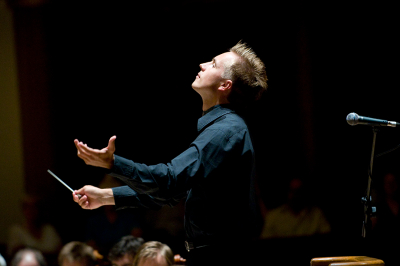
Bruckner and Strauss: A thoughtful performance of works by two Romantic masters
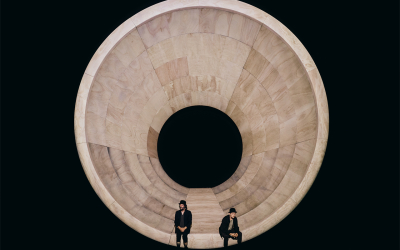
Letter from Santa Fe: 'Marriage of Figaro' and Wagner’s 'Die Walküre' at the Opera House
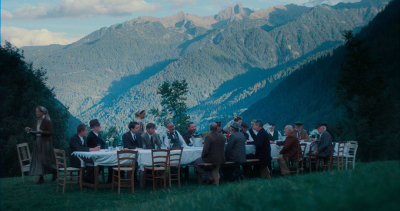
‘Waiting for Godot: Keanu Reeves and Alex Winter reunite for Beckett’s classic’
Book of the Week
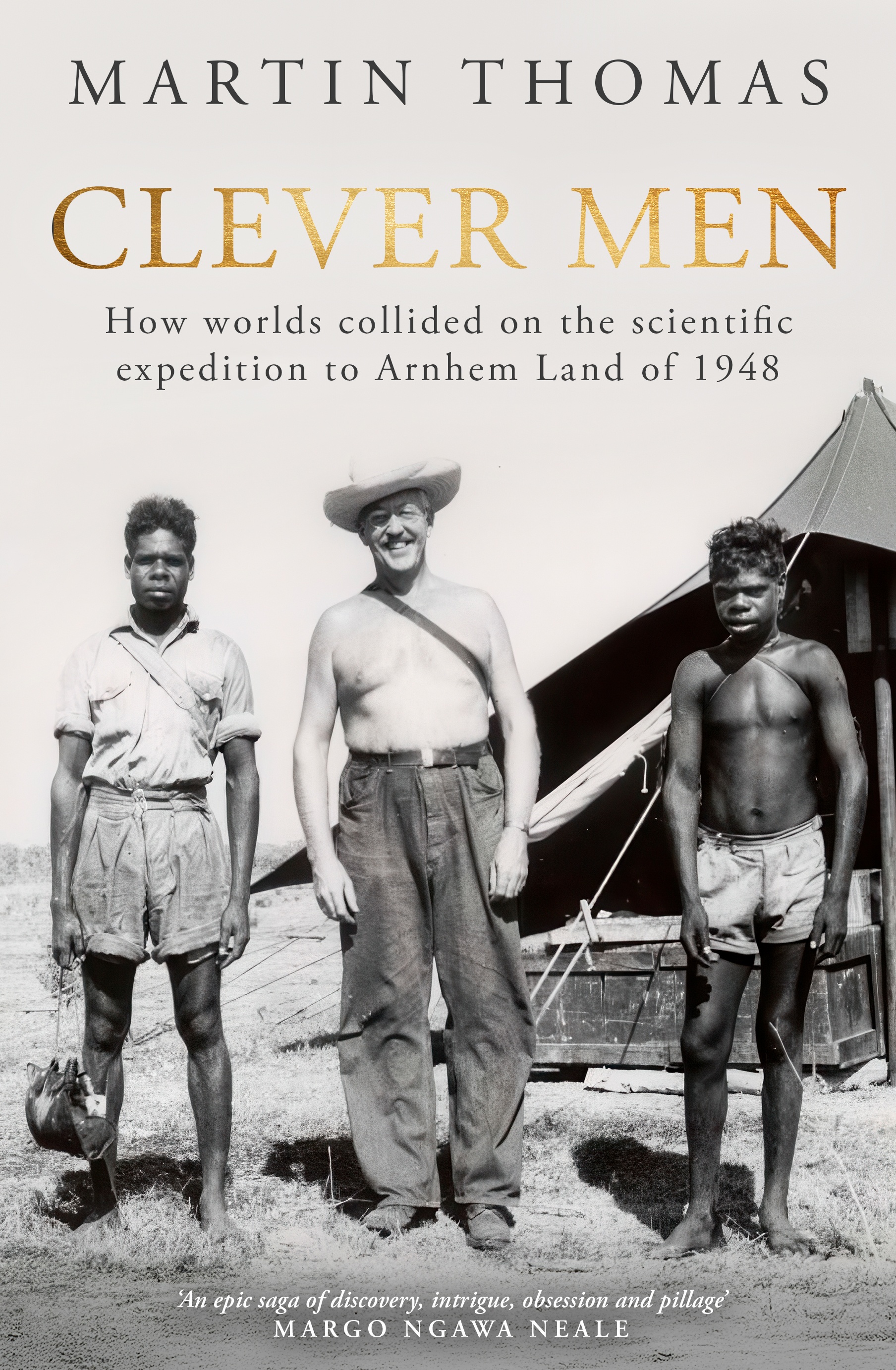
Clever Men: How worlds collided on the scientific expedition to Arnhem Land of 1948 by Martin Thomas
Soon after the conclusion of the 1948 Arnhem Land expedition, its leader, Charles Pearcy Mountford, an ethnologist and filmmaker, was celebrated by the National Geographic Society, a key sponsor of the expedition, along with the Smithsonian Institution in Washington DC and the Commonwealth Department of Information. In presenting Mountford with the Franklin L. Burr Prize and praising his ‘outstanding leadership’, the Society effectively honoured his success in presenting himself as the leader of a team of scientists working together in pursuit of new frontiers of knowledge. But this presentation is best read as theatre. The expedition’s scientific achievements were middling at best and, behind the scenes, the turmoil and disagreement that had characterised the expedition continued to rage.
From the Archive
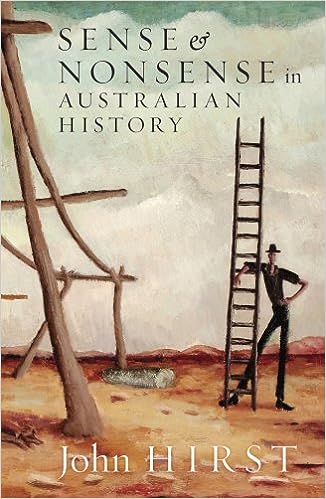
Sense and Nonsense in Australian History by John Hirst
John Hirst is a throwback. I don’t mean in his political views, but in his sense of his duty as an historian. He belongs to a tradition which, in this country, goes back to the 1870s and 1880s, when the Australian colonies began to feel the influence of German ideas about the right relationship between the humanities and the state. Today it is a tradition increasingly hard to maintain. Under this rubric, both historians and public servants are meant to offer critical and constructive argument about present events and the destiny of the nation. Henry Parkes was an historian of sorts, and he was happy to spend government money on the underpinnings of historical scholarship in Australia. The Historical Records of New South Wales was one obvious result, and that effort, in itself, involved close cooperation between bureaucrats and scholars. Alfred Deakin was likewise a man of considerable scholarship (and more sophisticated than Parkes), whose reading shaped his ideas about national destiny, and who nourished a similar outlook at the bureaucratic level.