

Albanese’s ‘Australian Way’
Current Issue
- Events
- Book reviews
- Arts criticism
- Prizes & Fellowships
Sign Up For Our Newsletters
- Events
- Book reviews
- Arts criticism
- Prizes & Fellowships
Sign Up For Our Newsletters
Our Story: Aboriginal Chinese people in Australia edited by Zhou Xiaoping
It is deeply sobering to be writing about the depth of the history of multicultural Australia only days after rallies against immigration have been held and in the midst of a palpable and disturbing negative response to non-white immigration. There are echoes of the shameful twentieth-century White Australia policy. Far from being a recent phenomenon, multiculturalism has been an integral aspect of Australian society since European settlement in the late eighteenth century. This collection, edited by the artist Zhou Xiaoping, is the outcome of a three-year research project and is the companion monograph for Our Story: Aboriginal Chinese people in Australia, a free, ground-breaking exhibition currently at the National Museum of Australia in Canberra that will run until late January 2026.
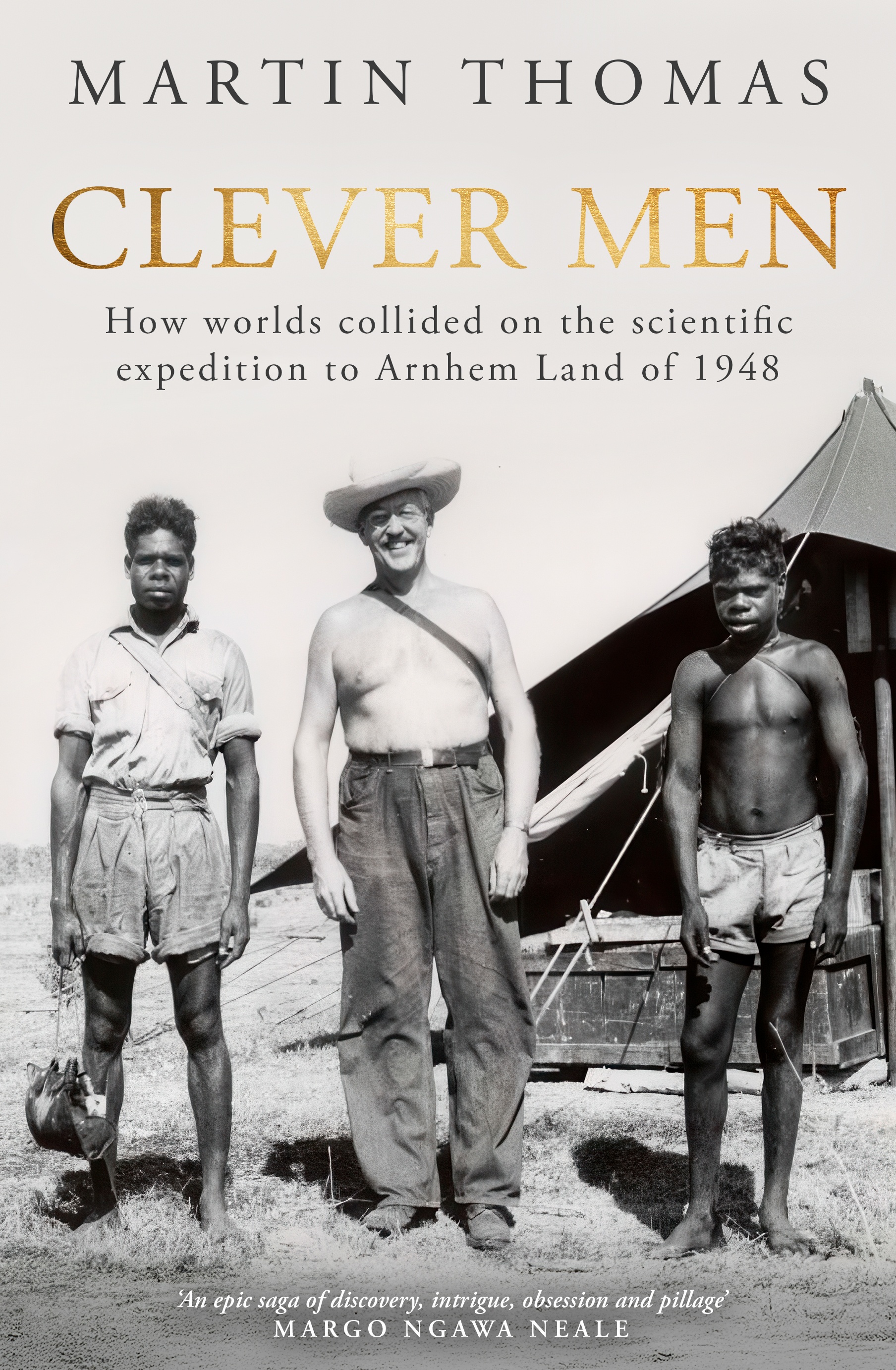
Clever Men: How worlds collided on the scientific expedition to Arnhem Land of 1948 by Martin Thomas
Soon after the conclusion of the 1948 Arnhem Land expedition, its leader, Charles Pearcy Mountford, an ethnologist and filmmaker, was celebrated by the National Geographic Society, a key sponsor of the expedition, along with the Smithsonian Institution in Washington DC and the Commonwealth Department of Information. In presenting Mountford with the Franklin L. Burr Prize and praising his ‘outstanding leadership’, the Society effectively honoured his success in presenting himself as the leader of a team of scientists working together in pursuit of new frontiers of knowledge. But this presentation is best read as theatre. The expedition’s scientific achievements were middling at best and, behind the scenes, the turmoil and disagreement that had characterised the expedition continued to rage.
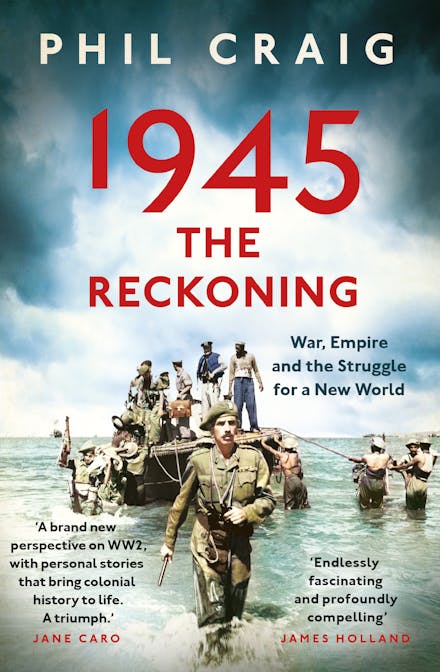
1945: The Reckoning: War, empire and the struggle for a new world by Phil Craig
A wise scholar once advised me against using absolutes in historical writing. The first reason is functional. When you resort to words such as ‘everyone’, ‘everything’, and ‘nobody’, you invite trouble; most of the time you can find an exception. The second reason is more important. The use of such words can betray an approach that packages the messy past too neatly, where there is little room for nuance and even less for uncertainty. Confidence doesn’t necessarily produce the best results.
Prove It: A scientific guide for the post-truth era by Elizabeth Finkel
Living alongside the world’s only native black swans, Australians should be more alive to the provisional nature of truth than most. For thousands of years of European history, the ‘fact’ that ‘all swans are white’ was backed up with an overwhelming data set that only the delusional – or a philosopher – would debate. But as Scottish Enlightenment philosopher David Hume pointed out, the difficulty with inductive reasoning is that it can seem incontrovertible all the way up until it is not. But if the truth is always shifting, where do we find solid ground when our lives depend on it? And to what absolutes and experts can we refer in an era of wilful misinformation, institutional mistrust, and anti-expert populism?
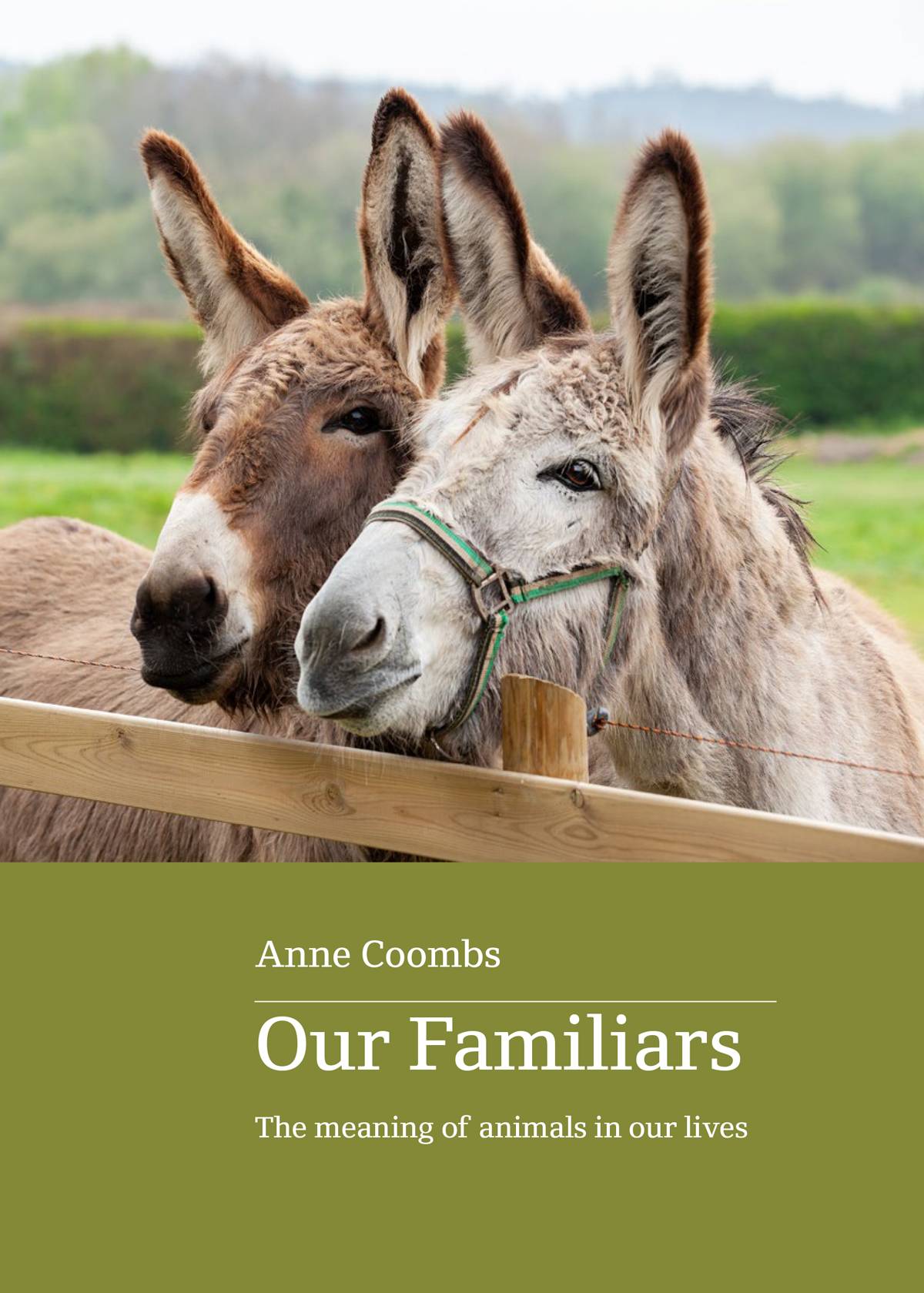
Our Familiars: The meaning of animals in our lives by Anne Coombs
The unbelievable lacework of it all – the patterns and linkages, the flickerings of knowledge and mystery, the astonishing shapes – is what Anne Coombs’s Our Familiars: The meaning of animals in our lives explores. This is a family book; specifically, a multi-species family book. Intimacies made between bodies is the soil in which the work is grown. And it comes from a writer who spent a lifetime thinking about, writing for, and working towards companionship, co-operation, and the safety of others. It is a posthumous publication too; a work fed and raised by Coombs, but finished, edited, and carried into the world by Susan Varga, Anne’s partner of thirty-three years, and close friend Joyce Morgan. Coombs died in December 2021, not long after the Black Summer fires and the Covid-19 pandemic – a time when all our interdependencies were raging (as they continue to).
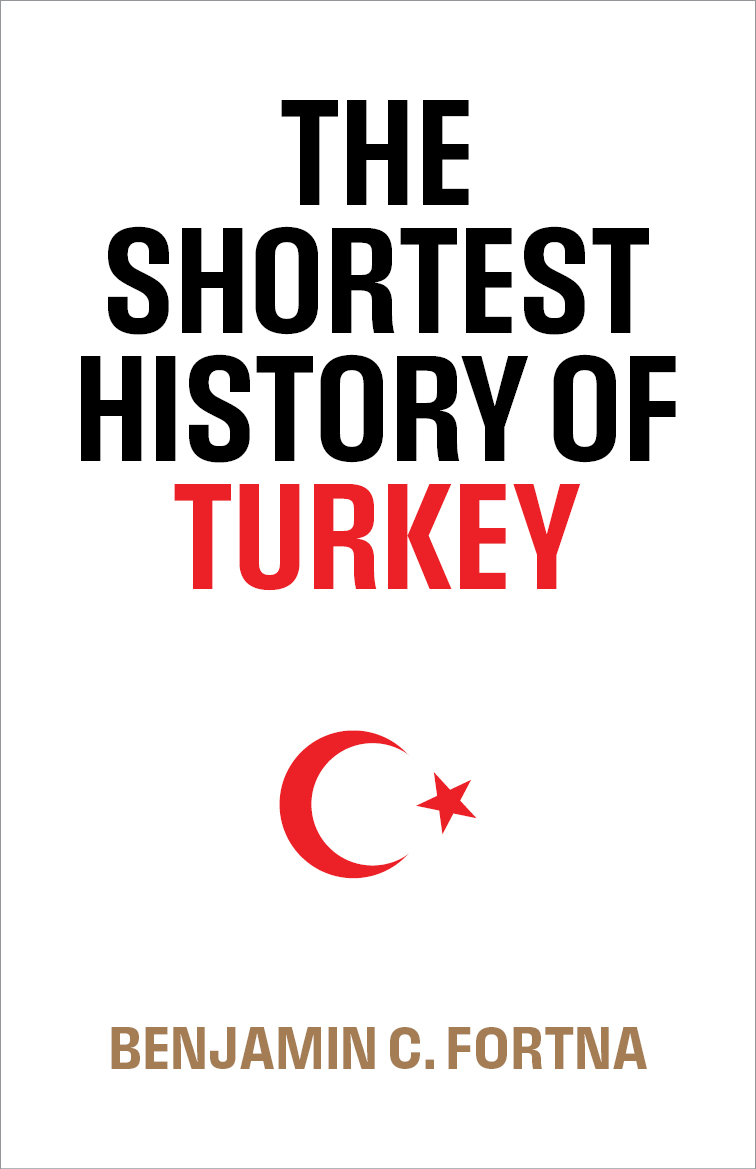
The Shortest History of Turkey by Benjamin C. Fortna
Can a ‘shortest history’ of Turkey, including the expansive history of the Ottoman Empire, work? As well as covering imperial grandeur, it must address complex and sensitive issues such as the Kurdish conflict, the Armenian genocide, Islamism, slavery, and autocracy. Benjamin C. Fortna, a Middle Eastern historian, successfully combines sympathy and interest in Turkey with a candid examination, including of darker aspects of its past.
Advances – October 2025
Advances, like many in the literary community, was shocked to hear that Meanjin would be publishing its final issue in December. Australia’s second longest-running literary publication was founded in 1940, in Brisbane, where meanjin derives from the Yuggera word for a place in the river where trade and cultural exchange has taken place for thousands of years.
Yilkari: A desert suite by Nicolas Rothwell and Alison Nampitjinpa Anderson
Outsiders, mostly white men seeking answers to burning existential questions, have long been ineluctably drawn to Australian deserts. The continental interior, with its deep-time mysteries, has lured not only explorers on fatal quests, but also lone anthropologists, philosophers, and other restless wanderers in search of themselves, burdened with their interrogations and yearnings for higher truth.
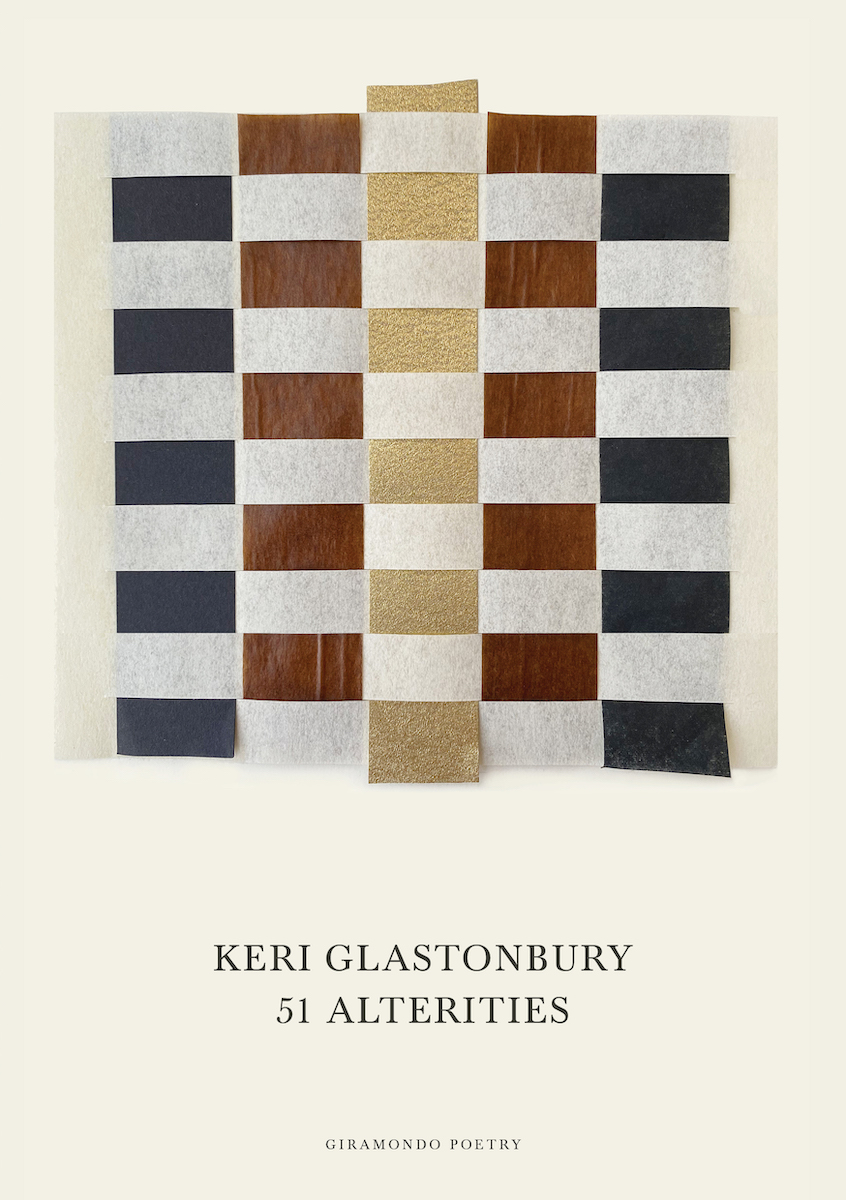
51 Alterities by Keri Glastonbury
The title of Keri Glastonbury’s latest collection of poems, 51 Alterities, evokes the title of 81 Austerities (2012) by the English poet Sam Riviere. Glastonbury’s collection is, according to its author, ‘offered as a loose “antipodean” adaptation’ of 81 Austerities, a collection that was written ‘in response to the impact of austerity measures on the arts and as a provocation on poetry as a contemporary media in the internet age’. Post-internet poetry, taking on as it does the syntax and lexis of internet discourse (especially, but not wholly, that used in social media), has become a dominant style in contemporary Anglophone poetry. When 81 Austerities was reviewed by The Daily Telegraph the headline was ‘Poetry for the Facebook Age’. Such a caption now seems laughably dated, and perhaps a little naïve, suggesting something of the dangers of writing post-internet poetry. A decade is a long time in cyberspace.
ABR Arts
Bruckner and Strauss: A thoughtful performance of works by two Romantic masters
Letter from Santa Fe: 'Marriage of Figaro' and Wagner’s 'Die Walküre' at the Opera House
‘Waiting for Godot: Keanu Reeves and Alex Winter reunite for Beckett’s classic’
Book of the Week
Clever Men: How worlds collided on the scientific expedition to Arnhem Land of 1948 by Martin Thomas
Soon after the conclusion of the 1948 Arnhem Land expedition, its leader, Charles Pearcy Mountford, an ethnologist and filmmaker, was celebrated by the National Geographic Society, a key sponsor of the expedition, along with the Smithsonian Institution in Washington DC and the Commonwealth Department of Information. In presenting Mountford with the Franklin L. Burr Prize and praising his ‘outstanding leadership’, the Society effectively honoured his success in presenting himself as the leader of a team of scientists working together in pursuit of new frontiers of knowledge. But this presentation is best read as theatre. The expedition’s scientific achievements were middling at best and, behind the scenes, the turmoil and disagreement that had characterised the expedition continued to rage.
From the Archive
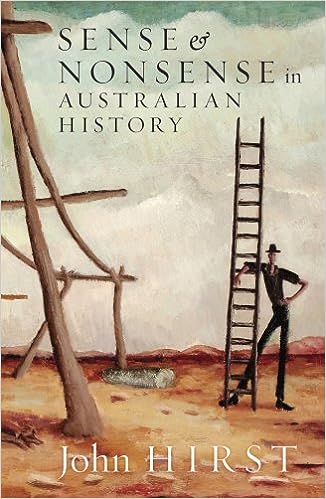
Sense and Nonsense in Australian History by John Hirst
John Hirst is a throwback. I don’t mean in his political views, but in his sense of his duty as an historian. He belongs to a tradition which, in this country, goes back to the 1870s and 1880s, when the Australian colonies began to feel the influence of German ideas about the right relationship between the humanities and the state. Today it is a tradition increasingly hard to maintain. Under this rubric, both historians and public servants are meant to offer critical and constructive argument about present events and the destiny of the nation. Henry Parkes was an historian of sorts, and he was happy to spend government money on the underpinnings of historical scholarship in Australia. The Historical Records of New South Wales was one obvious result, and that effort, in itself, involved close cooperation between bureaucrats and scholars. Alfred Deakin was likewise a man of considerable scholarship (and more sophisticated than Parkes), whose reading shaped his ideas about national destiny, and who nourished a similar outlook at the bureaucratic level.