


- Free Article: No
- Contents Category: Theatre
- Review Article: Yes
- Article Title: Opening Night
- Article Subtitle: A compelling metatheatrical adaptation
- Online Only: No
- Custom Highlight Text:
Although America produced other alternative filmmakers of his generation like Kenneth Anger and Maya Deren, John Cassavetes (1929–89) would have to be considered the doyen of the movement. Directors as diverse as Martin Scorsese, Jim Jarmusch, Peter Bogdanovich, and Pedro Almodóvar have acknowledged his influence. Technically rough though they may sometimes be, Cassavetes’ films have a raw power that, in the words of Amy Taubin, ‘catch you up, turn you around, bore you a little, startle you, and throw you out upset and confused’. Opening Night (1977), a film that was undervalued when it first appeared and is now perhaps somewhat overvalued, is no exception.
- Article Hero Image (920px wide):
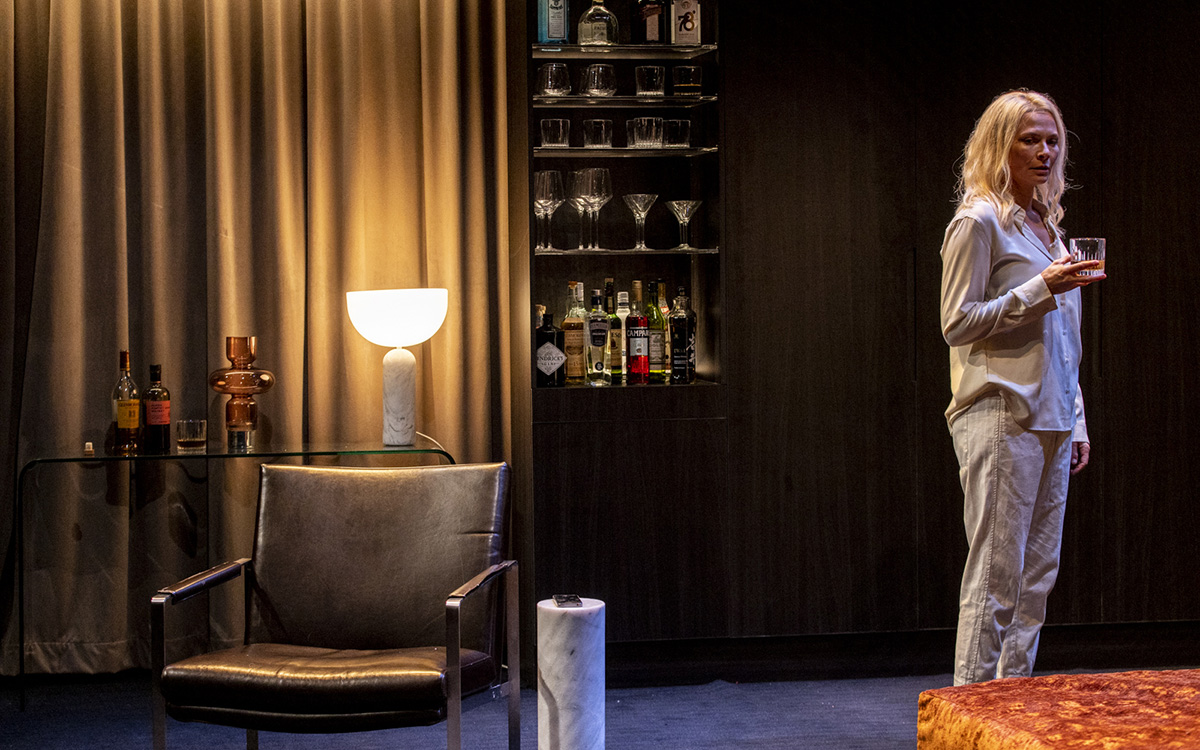
- Article Hero Image Caption: Leeanna Walsman as Myrtle in <em>Opening Night</em> (photograph by Brett Boardman)
- Alt Tag (Article Hero Image): Leeanna Walsman as Myrtle in <em>Opening Night</em> (photograph by Brett Boardman)
Myrtle Gordon, a star who has reached the age where her youthful glamour is no longer something she can depend upon, is struggling with the role of a woman, Virginia, who is in precisely that situation. The accidental death of a young fan completely disorients her, and the film follows the company through their out-of-town try-out as they attempt to rein in their increasingly out-of-control leading lady. Dominated by a fearless performance from Cassavetes’ wife, Gena Rowlands, the early scenes have an edgy authenticity, but the film loses its way when they reach New York, and we are asked to believe that a falling-down drunk Myrtle – a bravura turn by Rowlands – is not merely able to stagger through the play as written but capable of improvising as well. Moreover, the improvisation between her and her co-star, which lasts a full ten minutes and is supposedly ecstatically received by the audience, only proves that they are no Mike Nichols and Elaine May.
In her deft adaptation at Belvoir Street, Carissa Licciardello has taken full advantage of the fact that this theatrical story is now actually taking place in a theatre. In the film, it is always obvious when we are watching the play being rehearsed and when we are behind the scenes, as it were, but, aided by David Fleischer’s deliberately nebulous design and Nick Schlieper’s lighting, Licciardello seamlessly moves us between the play and the play within the play so that we are at first not entirely sure what is being performed and what is for real. This is Cassavetes seen through the lens of Pirandello.
Licciardello has naturally pruned back the cast. In the film, the play, The Second Woman, has a cast the size of which would have daunted a Broadway producer even back in the 1970s. Here it becomes a two-hander. Virginia’s two husbands are melded into one, and the play gains in intensity in the process. If we miss any character in the film, it is perhaps Dorothy, the director Manny’s wife, who, in Zohra Lampert’s performance, adds the wry perspective of an outsider. Of the remaining characters the ghostly Nancy, the dead girl who returns to haunt Myrtle, has undergone the greatest change. In the film, she is an amorphous presence, at first consoling then threatening. In Licciardello’s concept, she has become a spectral Eve Harrington, ready to obliterate her ageing rival. The climactic scene between the two of them is rather bewilderingly played in complete darkness.
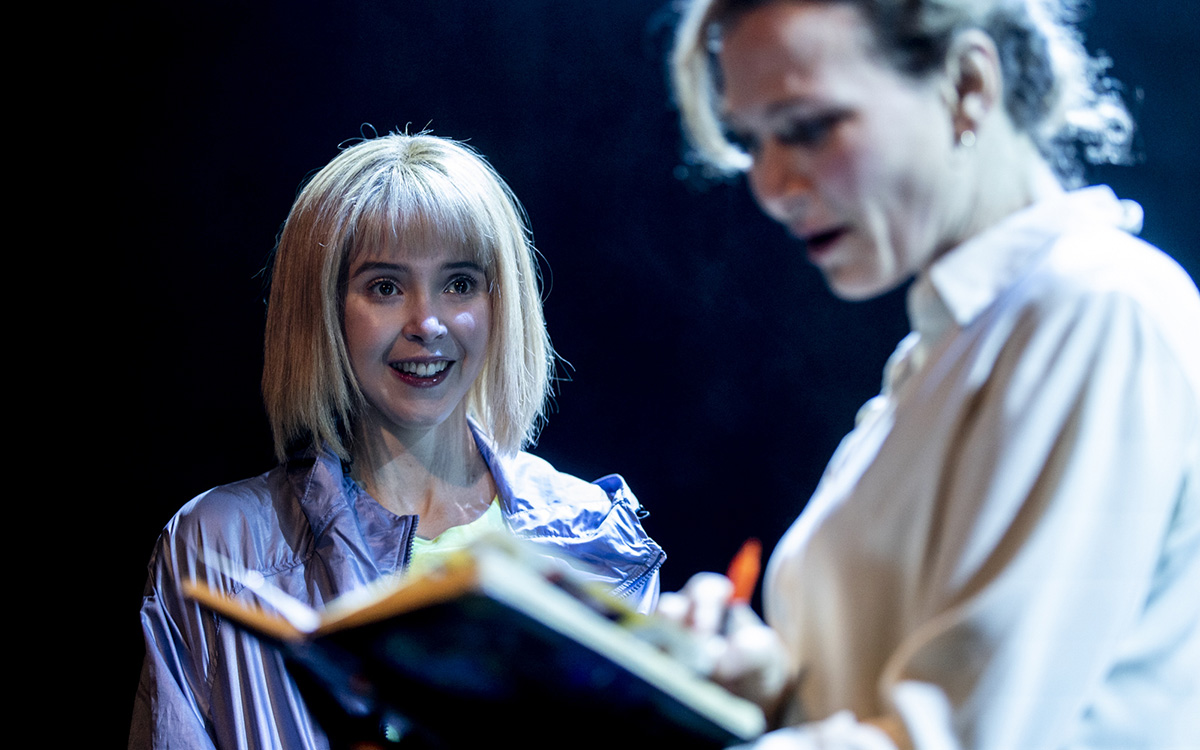 Caitlin Burley as Nancy and Leeanna Walsman as Myrtle in Opening Night (photograph by Brett Boardman)
In spite of a totally undeserved reputation for depending on improvisation from his actors, Cassavetes’ films were in fact tightly scripted. Much of his script remains here, even if some of it emerges from the mouths of different characters. ‘I hate actresses’, an aside by Sarah, The Second Woman’s understandably frustrated author, to the play’s producer in the original, is now firmly directed at the actress in question. The problem, that without Cassavetes’ various subplots the central theme could become rather repetitious, has not entirely been solved. But as the play moves into Myrtle’s complete breakdown, the dramatic temperature rises again, and Licciardello’s ending, though somewhat pat, is a definite improvement on Cassavetes’.
Leeanna Walsman’s Myrtle is a different creature from Rowlands’s. Where Rowlands’s Myrtle is definitely psychotic, Walsman makes her a dedicated artist under immense stress, genuinely trying to cope with a role she finds both threatening and inadequate. In a moment that cuts to the heart of the dilemma, Walsman brusquely answers Sarah’s accusatory demand to know what the play lacks with the single word ‘hope’. She is constantly being moulded by others – by Sarah’s words, by Manny, and by costume designer, Kelly – standing motionless as costumes and wigs are tried out on her. Walsman makes Myrtle’s desperate attempt to hold on to her own reality a fraught and intriguing journey.
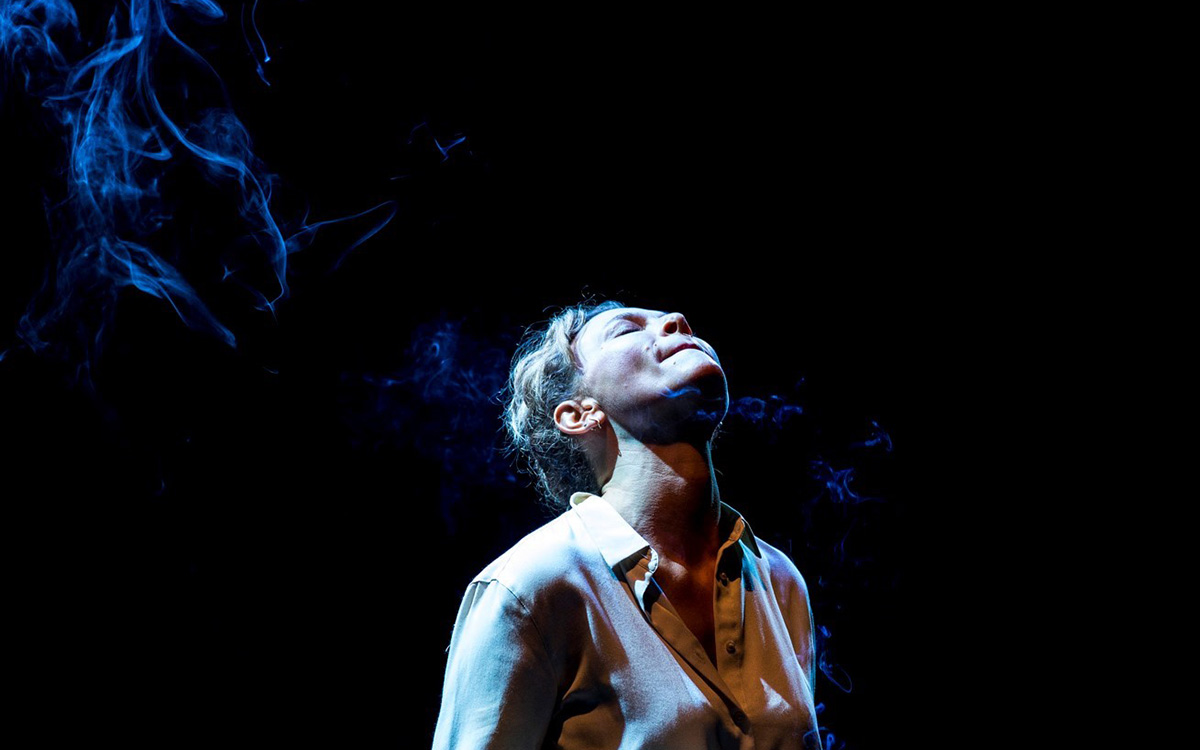 Leeanna Walsman as Myrtle (photograph by Brett Boardman)
As Nancy, Caitlin Burney is both creepy and seductive. Her taunting of Myrtle leads to a result that Margo Channing could only dream of.
As Manny, Luke Mullins must enjoy playing a director whose production is slipping out of control (the actor’s revenge). Certainly, some of Manny’s attempts to assert control caused knowing laughs from the opening night’s audience. But he also brought out Manny’s ambivalent feelings towards Myrtle in scenes between the two of them; these were almost entirely drawn from Cassavetes’ script.
Toni Scanlan’s earthy, formidable, very Australian Sarah echoed Dorothy Hewett, who would have made short shrift of Myrtle. As Marty, Myrtle’s fellow actor, Anthony Harkin presented us with a no-nonsense bloke with little time for unprofessional conduct.
In her adaptation, Licciardello has amplified John Cassavetes’ central theme and turned his film into a compelling piece of theatre.
Opening Night, directed and adapted by Carissa Licciardello, is being performed at the Belvoir St Theatre until 27 March 2022. Performance seen: 2 March.
This review is supported by the Copyright Agency’s Cultural Fund.