


- Free Article: No
- Contents Category: Theatre
- Custom Article Title: Wherever She Wanders
- Review Article: Yes
- Article Title: Wherever She Wanders
- Article Subtitle: The Ormond scandal in the #MeToo age
- Online Only: No
- Custom Highlight Text:
On the evening of Wednesday, 16 October 1991, after the annual Valedictory Dinner at Melbourne University’s august Ormond College, the Master allegedly made unprovoked sexual advances to two female students. These incidents lead to a scandal which rocked the Melbourne establishment, caused the exit of the Master, and became the basis of Helen Garner’s hugely controversial exploration of sexual politics, class, and power, The First Stone (1995).
- Article Hero Image (920px wide):
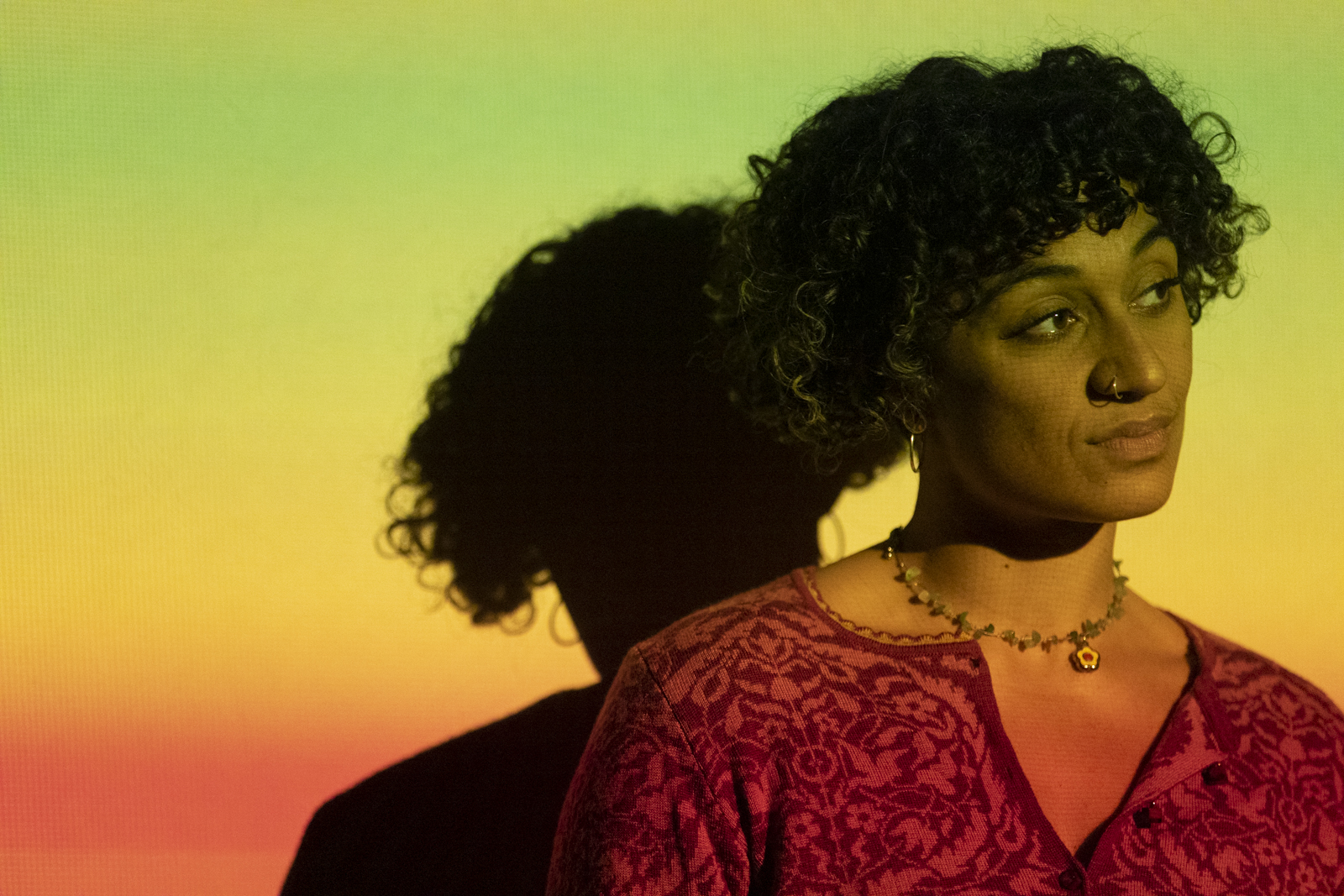
- Article Hero Image Caption: Emily Havea as Nikki Faletau in <em>Wherever She Wanders</em> (photograph by Brett Boardman)
- Alt Tag (Article Hero Image): Emily Havea as Nikki Faletau in Wherever She Wanders (photograph by Brett Boardman)
Kendall Feaver’s compelling, challenging play riffs off and updates Garner’s book. The circumstances may be different, but the clash between feminists of different generations and the fact that all the participants emerge battered by the experience remain the same.
Feaver ups the ante by making the incident at the heart of the play an actual rape. A young fresher, Paige (Julia Robertson), on her first night in college, gets drunk, takes a fellow student to her room, and wakes up in the morning to discover that he has had unprotected sex with her while she was unconscious. At first reluctant to report the incident, she is persuaded to take a stand by a fellow student, Nikki (Emily Havea), and together they start an online campaign.
 Julia Robertson as Paige Hutson in Wherever She Wanders (photograph by Brett Boardman)
The unnamed college has a female ‘Master’, as does Ormond College at present. Jo Mulligan (Fiona Press) came to prominence while still a student after organising a Reclaim the Night protest following the murder of a young woman on campus. It is obviously in her interest to resolve the situation as quickly and quietly as possible, but she also genuinely considers it to be a rite of passage. Students will behave stupidly, learn from their experiences, and move on.
For Nikki, on the other hand, this is an opportunity to attack not merely the outrageously sexist culture of the college, but to encourage other women to speak up, in effect starting up her own #MeToo movement.
Feaver accurately depicts the arcane rituals and ‘traditions’ (a convenient word that covers a lot of murky activities) of college life: the sexually charged drinking songs, the graffiti, the wilful destruction. Garner quotes the Ormond Master admonishing his students after a rowdy party – ‘The Hall’s been raped’ – as though the destruction of property were as much of an outrage as a physical assault.
The overwhelming difference between the events of 1991 and those of the present day is, of course, the development of the internet. Feaver makes the young women avid gamers and cleverly has much of their relationship played out through avatars. For instance, Paige’s elf boy becomes more aggressive towards Nikki’s wizard as the former gradually realises how she is being used by the latter. At first, the young women excitedly monitor the growing number of responses to their site but they soon learn the perils of exposing themselves online. There is a wrenching scene towards the play’s conclusion when an erstwhile friend of Nikki’s wants to show her a post relating to a bet they once made. Nikki immediately tenses up expecting him to present another obscene attack on her. In confronting Paige, the mother of the accused student points out that the internet has now shackled the two of them together for life. Every time someone looks up one, they will find the name of the other. The play’s final image is of the two young women a year later: Paige in her room at her new college, and Nikki, now a budding journalist, sitting on a park bench, each attempting to achieve a moment of peace before the world rushes in and overwhelms them again.
Tessa Leong’s cogent production clearly delineates the complexities of the play. In this she is ably assisted by an exceptionally strong cast. Press’s Jo is a mixture of idealism and hard-bitten scepticism. Hired to diversify the student body, at the play’s start she is attempting to persuade Michael (Tony Cogin), the board chairman and an ex-lover, to set up a multi-faith prayer room. As the scandal develops and Jo finds herself abandoned by the board and reviled by the young women she thought she had spent her life fighting for, Press’s performance builds to a final confrontation with Nikki in which she brutally compares their motives. Press makes Jo’s final exit devastatingly sad.
Havea’s Nikki is at first all twitchy exuberance. An idealist in search of a cause, once she finds one she will ride roughshod over everything and everyone to promote it. Havea shows us that ambitions to become a prominent journalist and spokesperson lurk beneath the ‘warrior for women’. But Havea never lets us forget how young Nikki is, and she makes the most of a revealing moment when Nikki rings home desperately seeking maternal support.
‘Victim’ is a loaded word, and one could make the case that everyone in the play is a victim of sorts. But if there is an ultimate victim it would have to be Paige. Robertson subtly shows her growth from naïve girl to wary young woman who knows she will always be seen by young men as the accuser.
Feaver’s play may come to a bleak conclusion, but the fact that it is out there in Griffin’s fine production enlivens the discourse, and that is surely a move in the right direction.
Wherever She Wanders is showing at the Griffin Theatre Company from 5 November until 11 December 2021. Performance attended: 11 November.
This review is supported by the Copyright Agency’s Cultural Fund.