


- Free Article: No
- Contents Category: Television
- Custom Article Title: My Brilliant Friend: The Story of the Lost Child
- Review Article: Yes
- Article Title: My Brilliant Friend: The Story of the Lost Child
- Article Subtitle: The darkly glittering world of Elena Ferrante’s Naples
- Online Only: No
- Custom Highlight Text: The previous season of My Brilliant Friend (L’amica geniale) ended with a moment of fairytale-like transformation, with the protagonist Elena (Lenù) Greco staring at herself in the mirror of an aeroplane bathroom. She has torpedoed her marriage to run away with the man she always loved. Looking at the glass, she ages decades in the space of a heartbeat: the cherubic, adolescent features of Margherita Mazzucco replaced with the face of Alba Rohrwacher. Her eyes glimmer with a wry intelligence.
- Article Hero Image (920px wide):
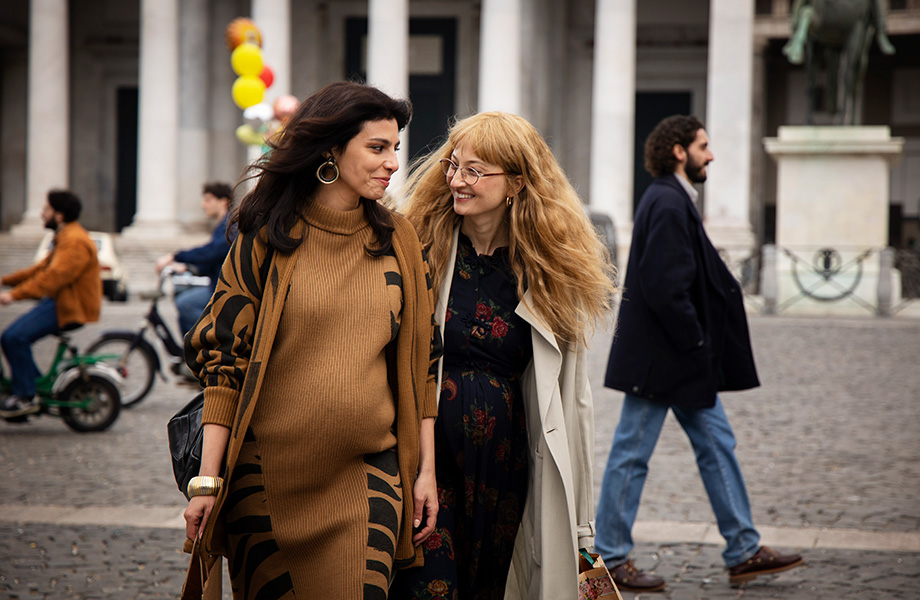
- Article Hero Image Caption: Irene Maiorino as Lila and Alba Rohrwacher as Elena Lenù (courtesy of SBS On Demand)
- Alt Tag (Article Hero Image): Irene Maiorino as Lila and Alba Rohrwacher as Elena Lenù (courtesy of SBS On Demand)
- Production Company: SBS On Demand
The final season of My Brilliant Friend, currently streaming on SBS On Demand, has been adapted from the fourth novel in Ferrante’s Neapolitan sequence, The Story of the Lost Child (2015). It is the longest book in the quartet, and the screenwriters (including Ferrante herself) have delivered a faithful adaptation. The ten episodes cover a huge concatenation of events in Lenù’s life: affairs, betrayals, reunions, earthquakes, births, disappearances, murders. It is addictive, intoxicating television – episodes slide by in a dizzying blur, with soapy twists and frequent cliffhangers. Watching it in a binge captures the compulsive quality of reading Ferrante’s novels.
In the opening scenes, set in 1978, Lenù has been liberated and transformed. She has escaped the Rione Luzzatti, the violent Neapolitan neighbourhood in which she was raised, and entered a world of bourgeois refinement in Florence. Despite many obstacles, she has forged a successful career as a writer. Finding her domestic married life suffocating and dull, she abandons her family upon the reappearance of a magnetic old love, Nino Sarratore. She embraces the headiness of all-consuming passion, an ossessione d’amore.
The early episodes of the season cover Lenù’s affair with Nino; later, she finds herself ineluctably drawn back to the crime-ridden neighbourhood in Naples and its tangled web of interconnected relationships. She re-establishes contact with the feral, unpredictable Rafaella Cerullo (Lila), who is both a friend and a nemesis. Lila has risen in social status through her ownership of a computer company, and she is treated in the stradone with a respect that rivals that of the much-feared Solara brothers. Lenù and Lila become pregnant at the same time, which deepens their already complicated intimacy.
For those seeking lushness, My Brilliant Friend offers many surface pleasures. In past seasons, the show evoked Neorealist directors like Vittorio De Sica in its portrayal of an impoverished 1950s Naples; in Season 4, director Laura Bispuri references Luchino Visconti, whose films operated in historical and melodramatic modes. Here, drabness is replaced with vivid colour. The costumes are sumptuous, the production design immaculate, the actors glossily (later grimly) beautiful.
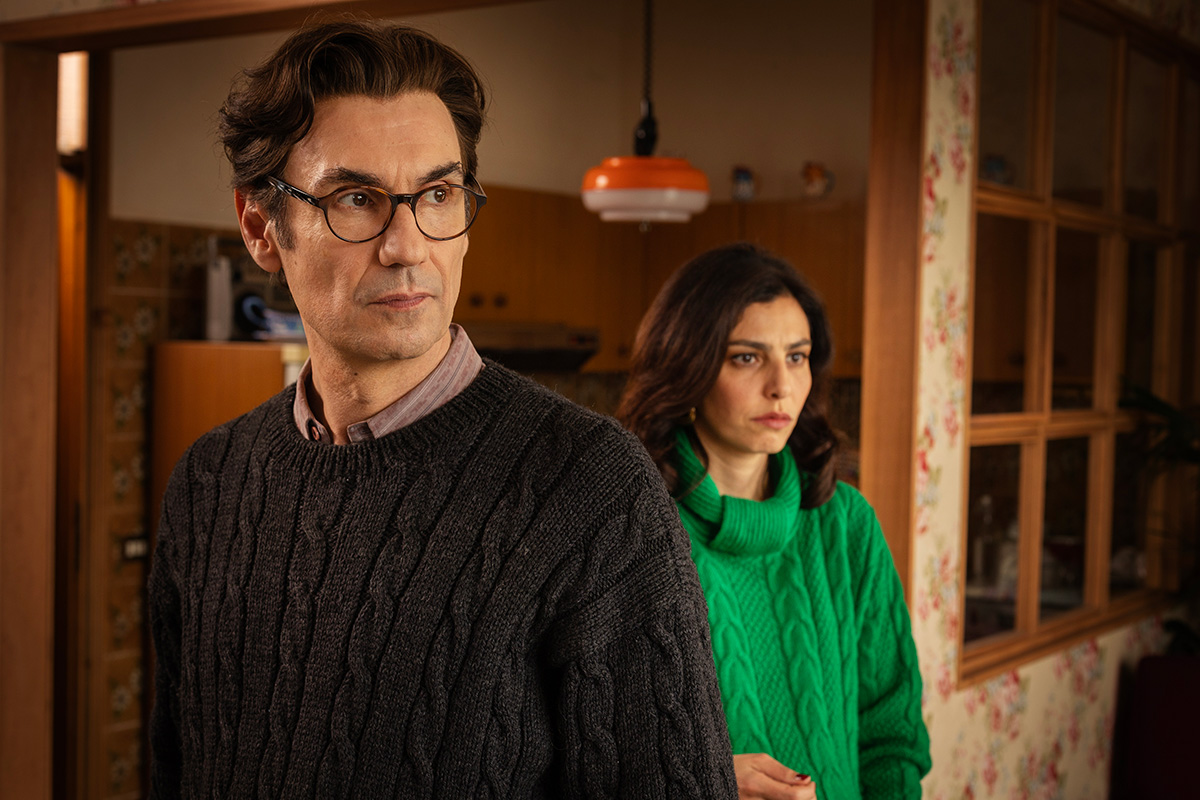 Fabrizio Gifuni as Nino and Irene Maiorino as Lila (courtesy of SBS On Demand)
This season, most of the major characters have been recast. Recasting a television show is a risky proposition: done poorly, it can have disastrous consequences, as with recent seasons of Netflix’s The Crown (the rakish Dominic West as Prince Charles was ludicrous). The younger actors in My Brilliant Friend were frankly a little wooden; recasting them electrifies the show. Alba Rohrwacher, who has narrated the show in voice-over since the beginning, brings warmth and weariness to Elena Greco. She is an actor with a superabundance of charisma. Opposite her is Irene Maiorino as Lenù’s shadow self, Lila Cerullo. Maiorino, who looks uncannily like her predecessor, Gaia Girace, is outstanding in the role – mercurial, charming, terrifying. Fabrizio Gifuni is likewise excellent as the smarmy Nino Sarratore, a professor turned corrupt politician. He is a memorable literary cad, one that would make Wickham and Willoughby blush for shame.
The jewel is the season’s fourth episode, ‘Terremoto’, which follows Lenù and Lila on the day of the 1980 Irpinia earthquake. The historical earthquake was devastating: towns levelled, thousands dead. In Ferrante’s novel, rendered in Ann Goldstein’s fine translation, the earthquake episode is crucial to an understanding of the dynamic between the two women. Escaping the tumult, the two pregnant women take shelter in Lila’s car. Traumatised, Lila reveals to Lenù the depths of her nihilism and dissociation in a long, fragmented speech:
This thing here in my belly is a responsibility that cuts me, scratches me. Loving courses together with hating, and I can’t, I can’t manage to solidify myself around any goodwill. Maestra Oliviero was right, I’m bad, I don’t know how to keep friendship alive … please, please, don’t leave me, or I’ll fall in.
Lenù had always considered Lila to be the ‘brilliant friend’. In this moment, she realises that Lila’s much-admired creativity is an unenviable form of instability, a ‘fiery stream of melting matter’ that contrasts with Lenù’s more secure identity. Touched, she finds a new capacity for empathy for her friend’s many transgressions and betrayals.
A television adaptation cannot replicate Ferrante’s prose – what critic Emily Nussbaum has called the ‘fluid, ticklish bookishness’ of her narrative voice. Other critics have taken recent Ferrante adaptions (such as Netflix’s The Lost Daughter) to task for failing to capture this voice; for creating flat, ‘frictionless’ dramas, beautiful empty vessels. But in ‘Terremoto’, the depiction of the scene in the car is a superb translation of Ferrante: the combination of the intimate close-up shots of Rohrwacher and Maiorino, their stirring performances, the intercutting of flashbacks and the use of voice-over, the omnipresent Max Richter strings. It is a moment of emotional devastation that equals the novel. ‘Terremoto’ is gripping in its evocation of a spiralling disaster.
In the latter half of the season, there is a tonal shift. Passion gives way to tragedy as Lenù is beset by a series of horrors. There is much satisfaction for the audience here: revelations and inversions cast new light on the events of earlier seasons; the lingering strands of earlier plotlines are brought to sudden, surprising conclusions. In the end, the focus remains on Lenù and Lila. Almost mythic in its dimensions, the relationship is both a great platonic love and a slow poisoning.
My Brilliant Friend is a richly satisfying conclusion to a monumental television saga. There are some small nitpicks. The Richter score becomes exhausting. There are signs of bloat, just as every show these days seems to run an episode or two too long. Still, this is a feast well worth attending. There is much to savour in the darkly glittering world of Elena Ferrante’s Naples.
My Brilliant Friend: The Story of the Lost Child (Season 4) is screening on SBS on Demand, HBO, and RAI.