


- Free Article: No
- Contents Category: Music
- Custom Article Title: Schubert and the Viennese Masters
- Review Article: Yes
- Article Title: Schubert and the Viennese Masters
- Article Subtitle: A Woodend offering of Schubert and his influences
- Online Only: No
- Custom Highlight Text:
Since its first iteration in 2005, the annual Woodend Winter Arts Festival has grown to become one of the more successful regional arts events in Victoria. The picturesque town of Woodend is less than an hour away from Melbourne, and now also has a significant and growing population of tree-changers and retirees.
- Article Hero Image (920px wide):
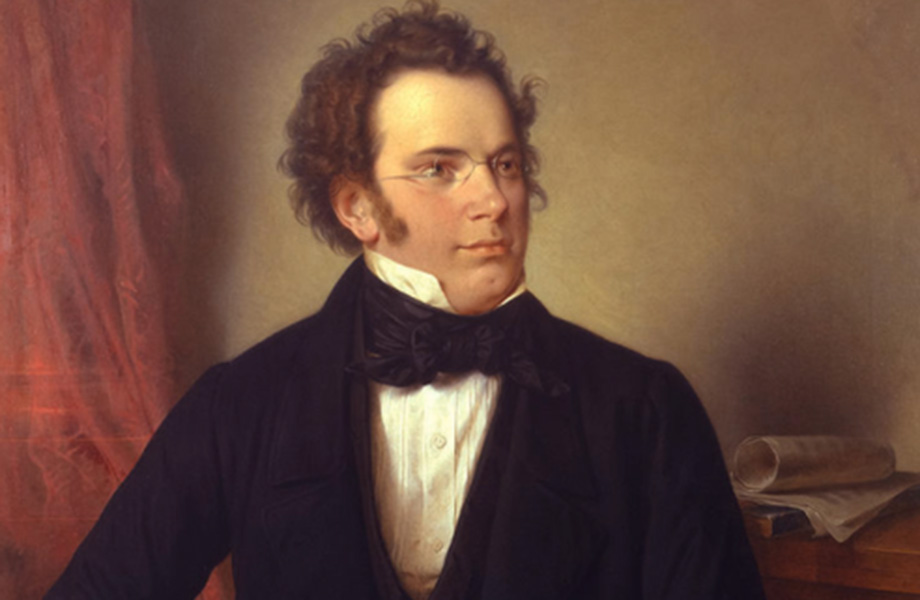
- Article Hero Image Caption: Franz Schubert by Wilhelm August Rieder, 1875 (Wikimedia Commons)
- Alt Tag (Article Hero Image): Franz Schubert by Wilhelm August Rieder, 1875 (Wikimedia Commons)
- Production Company: Woodend Winter Arts Festival
The mid-point of the festival was marked by a lieder recital from London-based tenor Daniel Thomson. Hailing from nearby Kyneton, Thomson trained in Melbourne but today he has a significant career as a soloist and chamber singer across the United Kingdom and Europe. Accompanied by O’Donnell, Thomson presented a seventy-five-minute recital of works drawn from the 1770s to the 1820s, including lieder by Haydn, Mozart, Beethoven, Schubert and lesser-known contemporaries such as Antonio Salieri and Johann Rudolf Zumsteeg.
The program was loosely framed by settings of Stolberg and Hölty poems by Schubert that respectively mark the beginning and end of the day: ‘Morgenlied’ (‘Morning Song’) D.266 and ‘An den Mond’ (‘To the Moon’) D.193. It also drew attention to two contrasting approaches to poetry-setting that typified the form in these early years of its development. The first kind, which ‘Morgenlied’ and the song that followed it, Haydn’s ‘An Thrysis’ (‘To Thrysis’) exemplified, is a kind of elevated folk song. Both poet and composer were keen to connect their ‘art songs’ to a wider vernacular tradition of singing as means of enhancing these work’s claim to emotional (and indeed national) authenticity.
Goethe was especially drawn to such settings, and thus was not at all enamoured by how a young Schubert had set his ‘Erlkönig’ (‘The Erl-king’) D. 328. This now most-famous of lied settings departs from the regular poetic structure of the text in favour of a free-flowing musical-poetic declamation that also allows the performer to differentiate the various ‘voices’ in the poem (narrator, father, son, and the Erl-king). It also has a virtuosic piano accompaniment – here O’Donnell chose a slightly less frenetic (and technically easier) version of it that Schubert himself later made.
Their performance of ‘Erlkönig’, alongside Schubert’s setting of August von Platen’s ‘Du liebst mich nicht’ (‘You love me not’) D. 756, exemplified how, in these kinds of lied settings, the accompaniment is now free to act as both an interrogator and commentator (often ironically). Sudden textural harmonic shifts are also often used to signal a change of address from the singer; in the case of ‘Du liebst mich nicht’ from lamentation to accusation and, ultimately, to resignation.
Two sections of their program were drawn from larger song cycles – Schubert’s Winterreise (‘Gute Nacht’, ‘Der Lindenbaum’, and ‘Der Leiermann’) and Beethoven’s An die ferne Geliebte (‘Auf dem Hügel sitz ich’ spähend’, ‘Es kehret der Maien’, ‘Nimm sie hin denn, diese Lieder’). Unintentionally, however, these drew attention to the problem of excerpting from song-cycles individual songs that otherwise inform, or comment on, one another. Is not the poetic journey of which they form a part central to their meaning? Admittedly, at least one of them, ‘Der Lindenbaum’, is nonetheless famous in its own right, and can also now be found in anthologies of German folk song.
Thomson, who is blessed with a light lyric tenor voice and a keen sense of phrasing, delivered this large, complex program confidently and with razor-sharp intonation and clear diction. There were only a couple of language slips (and there were also some small variants in the texts printed in the program from what the composer set). His voice lacks weight, particularly in the lower register, and consequentially has a limited dynamic and dramatic range. But both he and O’Donnell performed with intelligence and emotional sincerity, and St Ambrose Church Hall proved itself to be a first-class venue for this repertoire.
Schubert and the Viennese Masters (Woodend Winter Arts Festival) was performed on 9 June 2024.