


- Free Article: No
- Custom Article Title: Un Couple
- Review Article: Yes
- Article Title: Un Couple
- Article Subtitle: Reconsidering the marriage of Sophia and Leo Tolstoy
- Online Only: No
- Custom Highlight Text:
Veteran filmmaker, Frederick Wiseman, widely considered the pre-eminent documentarian to emerge from the 1960s, has always said he considers his approach closer to that of a novelist rather than a director.
- Article Hero Image (920px wide):
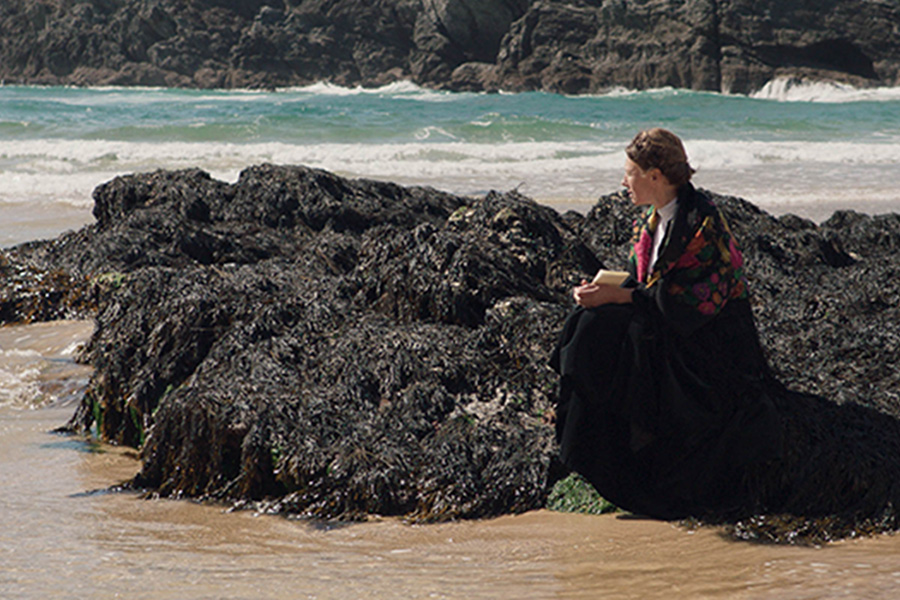
- Article Hero Image Caption: Nathalie Boutefeu as Sophia Tolstoy in Un Couple.
- Alt Tag (Article Hero Image): Nathalie Boutefeu as Sophia Tolstoy in Un Couple.
- Production Company: Melbourne International Film Festival
Yet, at ninety-two, after nearly sixty years of focusing almost exclusively on documentary, Wiseman has made a rare foray into fiction, adapting Sophia Tolstoy’s diaries and letters written to Leo Tolstoy and Leo’s correspondence to his wife for his latest film, Un Couple. Spoken entirely in French and essentially an extended soliloquy, Un Couple provides an insight into the famously tempestuous relationship between the celebrated Russian author and the long-suffering woman who supported him tirelessly for forty-eight years. Yet, while its title may suggest otherwise, it is Sophia who is the sole focus of Wiseman’s film, and it is told entirely from her perspective.
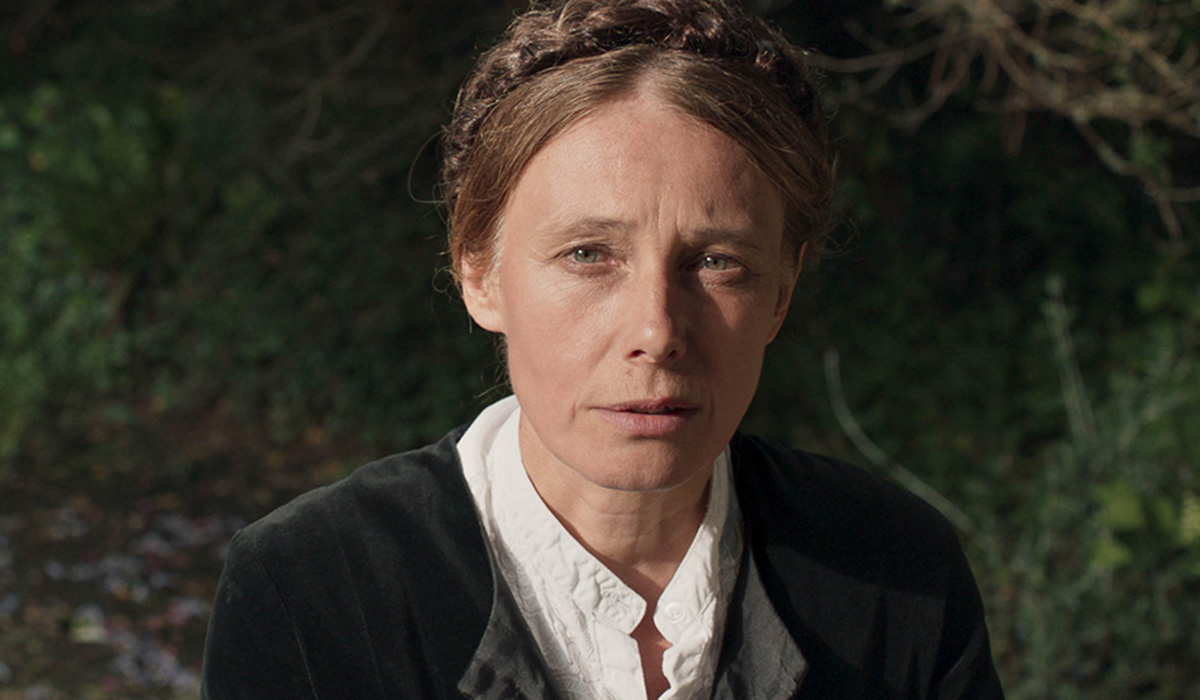 Nathalie Boutefeu as Sophia Tolstoy in Un Couple.
Un Couple is only Wiseman’s third fiction effort since his first film in 1967 and his first in twenty years, following Seraphita’s Diary (1982), which starred Dutch cover girl Apollonia van Ravenstein and explored the personal and professional struggles of a fashion model, and The Last Letter (2002), based on a chapter of Soviet writer Vasily Grossman’s novel Life and Fate, starring eminent French actor and member of the Comédie Française, Catherine Samie.
Un Couple stars French actor Nathalie Boutefeu, who co-writes with Wiseman, and previously worked with him on a theatre production of William Luce’s play about Emily Dickison, The Belle of Amherst. Un Couple follows Sophia as she roams around an unnamed garden by the sea, thirty years into their notoriously stormy union, accusing Leo of abandoning her and their children, of neglecting his familial and marital responsibilities and his vow to her.
As the film highlights, while Sophia was burdened with raising their eight surviving children (they had thirteen in all), along with domestic responsibilities and menial chores, as well as single-handedly acting as his publisher and editor, Leo showed little regard for anyone or anything except himself.
While Boutefeu, in a restrained and affecting performance, roams between cliffs and disparate island landscapes, her readings by are interspersed by Wiseman with close-ups of trees and waves crashing against rocks (he is editor on this as on all his films). In some ways, Un Couple is a stark change of pace for Wiseman. As opposed to his non-fiction films, which are often kaleidoscopic examinations of public institutions and their machinations, and feature hundreds of real people and secondary characters, Un Couple delves into the life of a single person, allowing Wiseman to focus on the rhythms and nuances of his sole performer. Even more unusually for Wiseman, Un Couple has a clear air of intimacy and romanticism emanating from the performance of Boutefeu, which sweeps through the film, and which also marks somewhat of a radical departure for Wiseman.
However, several touches mark it distinctly as part of Wiseman’s oeuvre. There is a striking documentary quality to the way certain seemingly small details are integrated into the film. Repeatedly, Wiseman shows the spectator footage of butterflies and lizards, spiders and ants, eating each other, visual extensions of Sophia’s pained recitations. Yet, the flowing vitality of these images provide a sharp contrast to the lacerating jabs and accusations Sophia makes against Leo, in which she lays bare his dereliction of their children, his obligations, her own needs, and, perhaps worst of all, his selfishness and failure as both a father and husband. The cutaways serve another purpose, too: they are visual breathers for the audience. Just as he draws attention to the minutest details in his documentaries, Wiseman does the same here. Throughout the film, these shots, like Sophia’s monologues, vacillate between tenderness, beauty and violence.
Utilising the same low-key, understated method he has honed over decades, Wiseman characteristically opts not to move the camera, nor adopts ostentatious tracking shots. Each carefully designed sequence photographed by long-time Wiseman cinematographer John Davey is a fixed shot, alternately fixated on the mesmeric performance of Boutefeu, or her surroundings, yet never detracting from her work.
Complementing the film’s typically pared-back and considered photographic approach, it has no score, merely a few naturalistic ambiences. There are gentle sounds of insects and waves at times, but these too are sparse and never intrusive, fading in and out, augmenting the intensity of Boutefeu’s anguished recitations.
While at just over an hour long, Un Couple might at first seem modest in scope compared to Wiseman’s recent documentaries, which often run between three and four hours, its concerns and stylistic ambitions are just as weighty and lofty.
Viewers with a basic knowledge of Leo Tolstoy’s life will know he married the rather inexperienced and naïve Sophia when she was eighteen, whereas he was a worldly man of thirty-four who had travelled the world, had affairs, and fathered an illegitimate child. Un Couple serves as a potent reminder of the difficulties and the personal toll Sophia endured, and the fact that her own needs, as well as her literary ambitions, were sacrificed for his.
While Un Couple is a compelling and bold cinematic statement of its own accord, perhaps its most striking achievement is giving a voice to Sophia and rebutting any notion that she was a footnote in Tolstoy’s life.
With Un Couple, Wiseman examines another institution, perhaps the most imperfect of all – marriage – and suggests that not only was Sophia essential to Tolstoy’s career, but that she was intelligent and her own person, independent of her husband’s achievements, and deserves to be remembered as such.
Un Couple (MIFF) plays until 27 August 2023.