


- Free Article: No
- Contents Category: Music
- Custom Article Title: Membra Jesu Nostri
- Review Article: Yes
- Article Title: Membra Jesu Nostri
- Article Subtitle: Buxtehude’s ‘stairway to heaven’
- Online Only: No
- Custom Highlight Text: It was not so long ago that Dietrich Buxtehude (1637–1707) was best known in classical music circles for the fact that a young J.S. Bach once made a 400-kilometre trek on foot to the North German Hanseatic city of Lübeck to hear him improvise on the organ.
- Article Hero Image (920px wide):

- Production Company: Pinchgut Opera
Although the seven cantatas were unlikely to have been intended to be performed at once, they unquestionably work well together, and have attracted a world-wide resurgence of interest over the past three decades. All seven follow the same formal template, opening with an instrumental sonata and a chorus of biblical text, followed by short arias and vocal ensembles on a ground bass. As if to highlight the erotic aspect to this slow pan of corporal contemplation, two of the seven cantatas (the fourth and sixth) take their biblical quotes from Solomon’s ‘Song of Songs’. Notwithstanding the claim in the background notes that Pinchgut Opera has provided for these welcome Sydney and Melbourne Eastertide Season of performances of Membra Jesu Nostri that Buxtehude was thus ‘leading the way in casting aside the notion that the human body was but a vehicle for the mind’, he was in fact drawing on a long tradition of Christian worship of the wounded body of Christ as a veritable ‘stairway to heaven’. As one medieval theologian described it, such devotion invites us to meditate on Christ the suffering human as the pathway ‘to the ecstatic heights of Christian wisdom’.
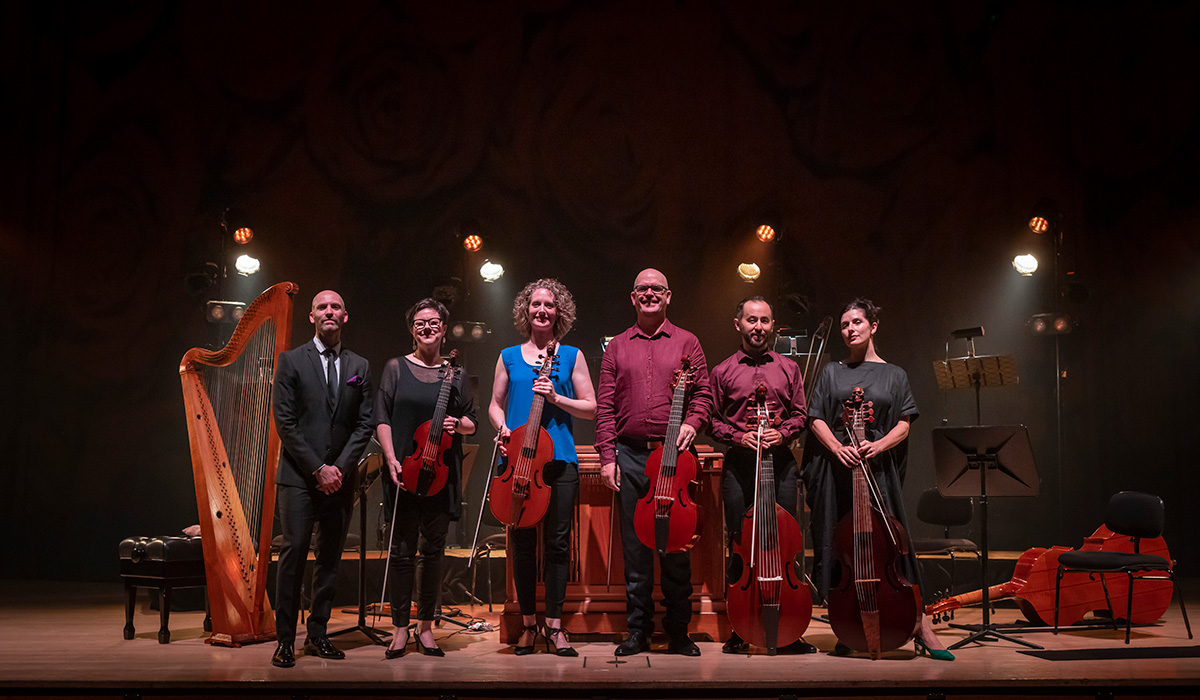
I suspect it is we who are too quick to distinguish mind from body, or eros from caritas, or indeed to dismiss the moral wisdom that can come from contemplating the self-sacrifice of others. To that extent – whether one is Christian or not, religiously minded or not – experiencing Membra Jesu Nostri can be not just a gratifying musical experience but also a genuinely affecting and thought-provoking one as well. Here, Pinchgut, under the expert direction of Erin Helyard, delivered in spades. A well-balanced, well-blended, and well-prepared quintet of soloists – Alexandra Oomens and Lauren Lodge-Campbell (sopranos), Hannah Fraser (mezzo soprano), Louis Hurley (tenor), and Andrew O’Connor (bass) – was sensitively accompanied by members of the Orchestra of the Antipodes, with Helyard on chamber organ. My only quibble was that the continuo harp (performed with consummate skill by Hannah Lane) was favoured by the acoustics of the Melbourne Recital Centre and thus could have been more sparingly deployed. For instance, the extraordinary framing chorus of Cantata VI (Ad Cor / To the Heart), which sets a verse from the ‘Song of Songs’. (Vulnerasti cor meum, soror mea, sponsa / Tho hast ravished my heart, my sister, my spouse) is, to my mind at least, all the more ravishing when set to the barest of accompaniment. This absence of instrumental colour in turn makes the later re-entry of the accompanying quintet of viols all the more dramatic.
Overall, this was Pinchgut at its early-music concert-making best; the audience were treated to intelligent, authoritative, and at times exquisite early music-making. The only major reservation I had was the lack of easy access to a translation of the text. While obvious care had been taken to ensure that the singers had clear diction (and a North German pronunciation of the Latin to boot), without physical access to a program libretto the audience was liable to be little the wiser as to what was actually being sung, or why. Brief projections of a translation before each cantata, and artful photographic images during them, were no substitute for an opportunity to understand the text while it was being delivered. Like its subject matter, the work should be enabled to address both head and heart.
The program also included deft performances by Helyard of two organ fantasies by Buxtehude’s contemporary Johann Pachelbel (1653–1706), which served first to draw the audience into an appropriate affective mode, and then to draw it away from the subject matter of Passiontide to that of the Resurrection and the promise of new life. The concert concluded with a performance of Buxtehude’s setting of Psalm 114, Laudate pueri Dominum, the scoring of which (two solo sopranos accompanied by a consort of viols) also gently alluded to the music which preceded it.
Membra Jesu Nostri (Pinchgut Opera) was performed at the City Recital Hall (Sydney) on 1 and 2 April and at the Melbourne Recital Hall on 4 April 2023. Performance attended: 4 April.