


- Free Article: Yes
- Contents Category: Music
- Custom Article Title: Zenith of Life
- Review Article: Yes
- Article Title: Zenith of Life
- Article Subtitle: A ringing start to MSO’s 2023 season
- Online Only: No
- Custom Highlight Text: The Melbourne Symphony Orchestra has a new sponsor – Ryman Healthcare. Perhaps inevitably, the gala concert that opened MSO’s 2023 season on Friday evening was titled ‘Zenith of Life’. Goodness knows we all need more healthcare – not to mention sponsors.
- Article Hero Image (920px wide):
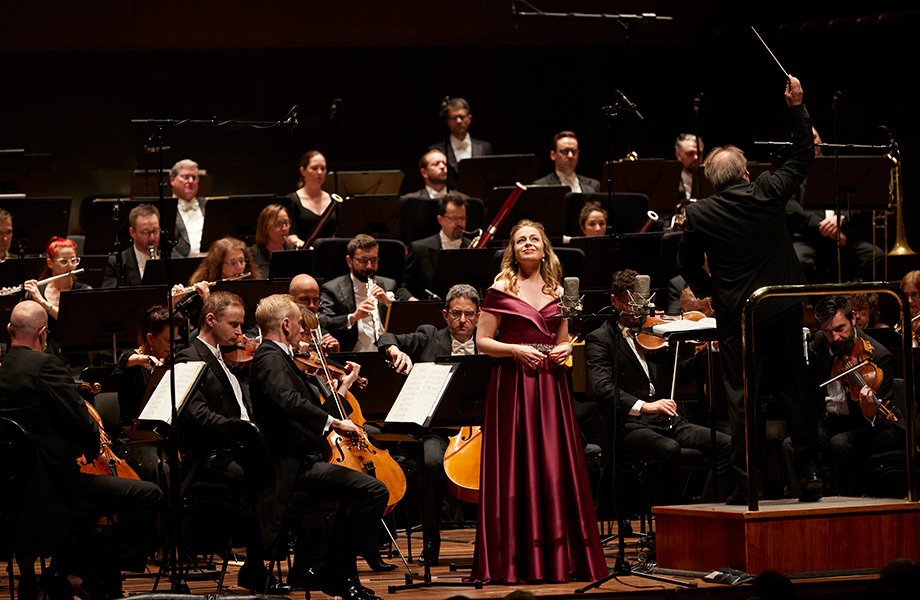
- Article Hero Image Caption: Siobhan Stagg and MSO (photograph by Laura Manariti)
- Alt Tag (Article Hero Image): Siobhan Stagg and MSO (photograph by Laura Manariti)
- Production Company: Melbourne Symphony Orchestra
Waves of sound there were aplenty in this likeable new work, which has a surging, Brucknerian quality, interspersed with contrapuntal shifts. The audience rightly appreciated the new composition. It augurs well for this enterprising composer’s residency.
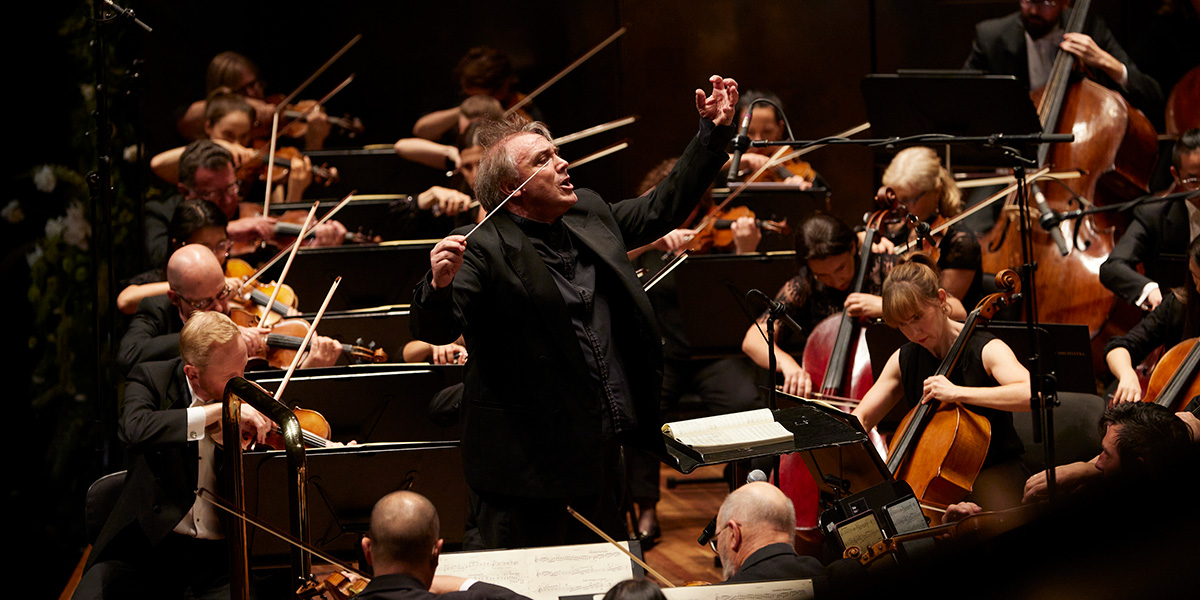 Jaime Martin and MSO (photograph by Laura Manariti)
Siobhan Stagg – returning to Australia as MSO’s 2023 Soloist in Residence – joined the orchestra to perform Richard Strauss’s Four Last Songs, a daunting task for any soprano, accompanied as she is by about one hundred musicians. Some in the audience may have wanted more vocal heft (Jessye Norman, in her magisterial recording of the work with the Leipzig Gewandhaus under Kurt Masur, has much to answer for), but for me this was a deeply refined performance of these autumnal works. No one can match Norman’s sheer vocal plushness: it’s like expecting a second Joan Sutherland at the next eisteddfod. Stagg, in her early thirties, brings intelligence, meticulous musicianship, and superb diction to everything she sings. The highlight was Beim Schlafengehen (On Going to Sleep), the third of the Hermann Hesse settings. Notable here too, during this valedictory song, was Jaime Martin’s careful husbanding of the orchestra and concertmaster Dale Barltrop’s subtle, eloquent obbligato.
Gustav Mahler’s Fifth Symphony has always suited this orchestra. I first heard it with Hiroyuki Iwaki (midway through his epic tenure as chief conductor) on the podium, in 1989. Six years later came Maris Jansons, an unforgettable performance from the great Latvian conductor. Let us hope that Jaime Martin – now in his second year as chief conductor – performs it again, and works through several of the other Mahler symphonies and song-cycles (his rapport with singers is apparent).
This was a luminous performance of Mahler’s long and radically protean symphony, which was written in 1901–2, around the time Mahler met Alma Schindler and married her. The orchestra is slightly smaller than the one for the Third – six horns instead of eight, and three oboes, clarinets, and bassoons. From the outset – the impassioned Funeral March – Martin was in total command. His connection with the players, as with singers, is obvious. Nicolas Fleury’s horn solo in the Scherzo was memorable, and Owen Morris (principal trumpet) was equally fine. The brass and woodwinds were exceptional throughout.
The exquisite Adagietto – sometimes milked – was silken, assured. Best of all was the final movement – monumental in construction and deploying the full orchestra. After the bass drum and cymbal alert, the final gallop home was brilliantly done, eliciting a deserved standing ovation.
Earlier in the week Siobhan Stagg returned to Elisabeth Murdoch Hall at MRC (20 February), where almost five years ago she had given us six Strauss songs with the Tasmanian Symphony Orchestra. Since then, much has happened to this Berlin-based Australian singer. Recently she has added Violetta to her repertoire (NI Opera, Belfast), and she will soon sing Susanna at the Royal Opera House, where her Pamina was acclaimed in 2017.
Stagg’s extensive program was highly individual: six songs by the much too rarely heard Henri Duparc (of which the daringly softly breathed Extase was the highlight); the Australian première of South African composer’s This be Her Verse; and Olivier Messiaen’s Poèmes pour Mi. The nine-part Messiaen cycle, to texts by the composer, was quite unforgettably sung. Alleluia, alleluia indeed! Let us hope that Siobhan Stagg records the cycle very soon.
Melburnians will have another opportunity to hear this brilliant young artist when she performs Debussy’s Ariettes oubliées with the MSO on 2 and 3 March, with Jaime Martin again conducting (to be followed by Strauss’s mighty Alpine Symphony).
Zenith of Life (Melbourne Symphony Orchestra) was performed at Hamer Hall, Arts Centre Melbourne on 24 and 25 February 2023. Performance attended: 24 February.