


- Free Article: No
- Contents Category: Film
- Custom Article Title: Corsage
- Review Article: Yes
- Article Title: Corsage
- Article Subtitle: The fascinating and multi-versioned Sisi
- Online Only: No
- Custom Highlight Text: The Empress Elisabeth is trapped, cinched by the titular garment as tightly as she is stuck in her very public role and a loveless marriage. The audience, too, is held captive, mesmerised by the bold and dynamic performance of Vicky Krieps.
- Article Hero Image (920px wide):
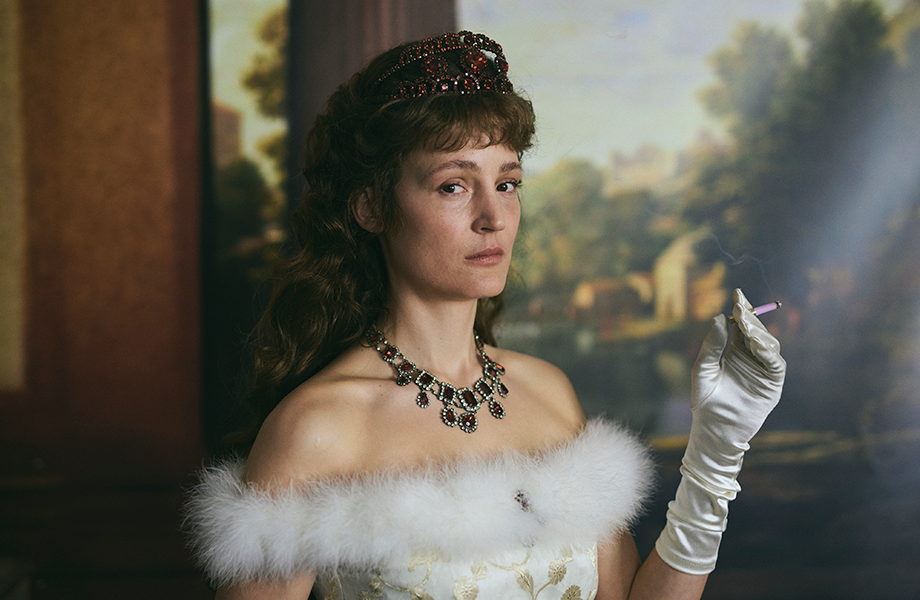
- Article Hero Image Caption: Vicky Krieps as Sisi in Corsage (photograph by Felix Vratny).
- Alt Tag (Article Hero Image): Vicky Krieps as Sisi in Corsage (photograph by Felix Vratny).
- Production Company: Vendetta Films
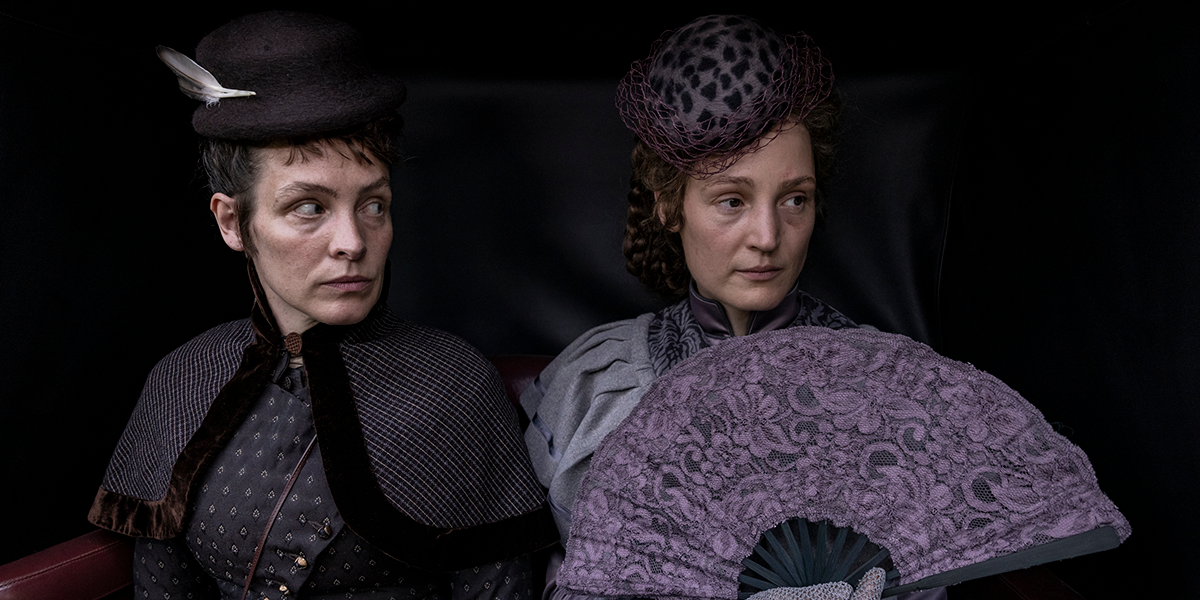 Corsage (photograph by Ricardo Vaz Palma)
Kreutzer’s film produces dramatic friction by rubbing myth and history against contemporary values and concerns. Corsage examines what it means to be seen; everyone wants Elisabeth to fulfil a narrow role but for her complexities to remain invisible. From the opening scene, she is constantly being measured and judged. How long can she hold her breath under water? How much tighter can her impossibly thin waist be laced? Elisabeth’s husband, Kaiser Franz Joseph (Florian Teichtmeister), is frustrated by her persistent independence. He blames Elisabeth for the death of their first-born daughter. Her own children criticise her: Rudolf (Aaron Friesz) accuses her of being childish in flirting with her riding instructor, while the youngest, Valerie (Rosa Hajjaj) is ashamed of her unladylike smoking. In response, she seeks ways of avoiding the public eye. She finds solace in darkness. Veils, masks, and hoods feature heavily.
Kreutzer’s framing of her protagonist is paradoxically both claustrophobic and sparse. The atmosphere is tense, but shots are uncluttered, sounds are elemental – the crackle of a fireplace, the splash of bathwater. The story is unhurried, but Krieps’s compelling performance rewards our full attention. She inspires our sympathy, wielding emotion, tension, and vulnerability. Frequently shot in close-up, Krieps turns amusement into fury or despair with the subtlest shift in expression. Wry comments are dropped with precise comedic timing.
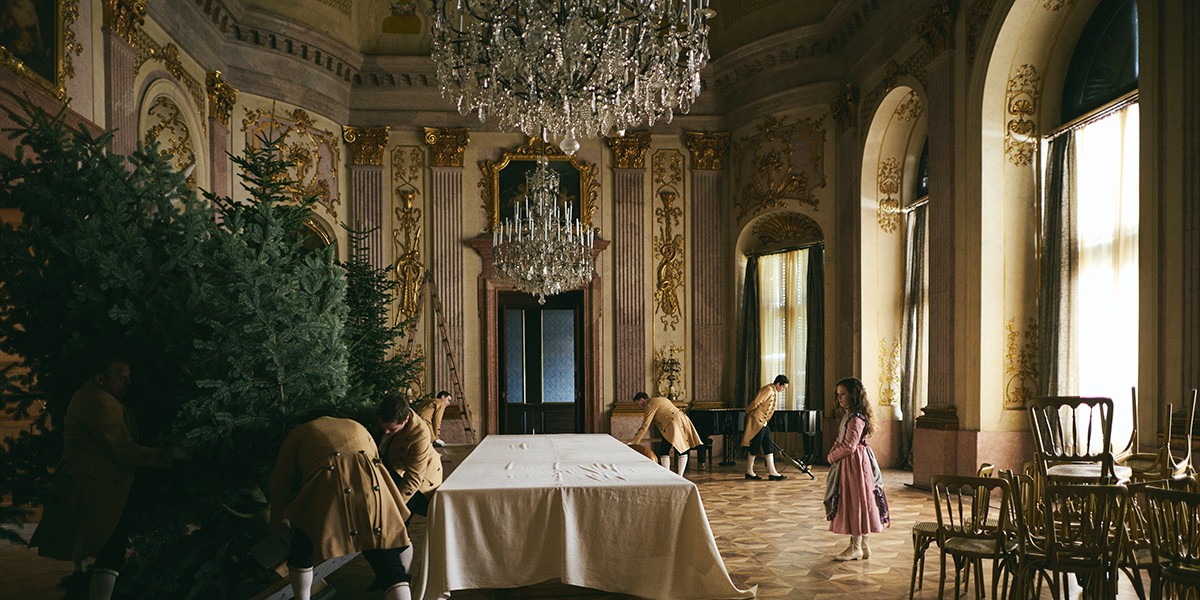 Corsage (photograph by Ricardo Vaz Palma).
Perhaps the film’s most profound beauty lies in allowing the audience to breathe. Despite its depiction of asphyxiating pressure, the film is not without humour or warmth: her belittling nickname ‘FJ’ for the Kaiser, her retorts to the ladies-in-waiting. Companionship with her cousin Ludwig II (Manuel Rubey) brings genuine joy. We glimpse the Elisabeth she could be – intelligent, joyous, and loving. Escaping for a night-time swim with Ludwig is a delight; an aerial shot illuminates their dancing bodies against a black lake. Despite having ensnared her protagonist in melancholy, Kreutzer also gives her subjectivity and a fierce agency.
Fans of period dramas will enjoy the visual pleasures of Corsage’s trip to the past, but there is something not-quite-right about the lavish trappings typical of the genre. Kreutzer’s palaces haven’t been done up for our visit. Certainly, the sets, scenery, and costumes are all richly detailed and visually striking (even the palace dogs have hairstyles), but there is plenty of edge and texture. While the visual scale may be grand, decay and decline eat away within the mise en scène – many rooms seem unfinished, the plaster is peeling, tiles either missing or cracked. Adding to the unease are touches of anachronistic detail: electric wall sockets; a violin strummed like a guitar; a plastic bucket-and-mop hovering at the edge of the frame.
Crucially, the physical decline of her body arouses the greatest fear in Elisabeth. Her doctor helpfully reminds her that, at forty, she is now beyond the average life expectancy of her subjects. The intrusion of anachronisms suggests that we are meant to question whether things have changed. Elisabeth fights determinedly against ageing, through rigorous gymnastics, riding, fencing, and not eating. Suffering from what would now be diagnosed as an eating disorder, she smokes incessantly – no doubt this helps with cravings. The doctor proclaims, ‘Health is a gift from God,’ before prescribing her a new wonder drug: heroin.
Elisabeth’s royal visit to a psychiatric hospital is revealing. The head doctor explains that ‘most of the women here are, by nature, melancholic’. His diagnosis feels understated. We note a certain recognition in Elisabeth’s gaze, as her attention is caught by one patient, who screams in torment, writhing on her bed, fastened tightly and entirely caged by netting. Elisabeth’s own imprisonment may not be so literal, but it is reflected in the reverse-shot, which highlights the netting on her headdress.
We might question the relevance of Elisabeth’s aristocratic suffering for the everyday viewer. Certain parallels come to mind: the role of celebrity or an endless fascination with a dysfunctional royal family. But Corsage’s real strength lies in its ordinariness, dull colours, and restrained pace. We can relate to ordinariness. While the film may seem listless, this allows for reflection and a deeper bond with its subject. What we see is carefully curated – subjective. ‘I don’t think much of photographs,’ Elisabeth states, ‘they claim to be objective, but nothing is ever objective.’ Kreutzer’s intimate film makes no claims to objectivity, and is all the better for it.
Corsage (Vendetta Films), 134 minutes, is on general release from 9 February 2023.