


- Free Article: No
- Contents Category: Theatre
- Custom Article Title: Wittenoom
- Review Article: Yes
- Article Title: Wittenoom
- Article Subtitle: An elegiac work about corporate power
- Online Only: No
- Custom Highlight Text: The degazetted former township of Wittenoom, 1,420 kilometres north-north-east of Perth, stands like a dark shadow on the lungs of Australian mining, less an isolated blight than a synecdoche for the exploitation and avarice of the industry as a whole. It was named by Lang Hancock himself, created in 1947 by his company Australian Blue Asbestos Pty Ltd, and was directly responsible for the death of more than 2,000 people. It is a potent and ghostly setting for Mary Anne Butler’s play of the same name.
- Article Hero Image (920px wide):
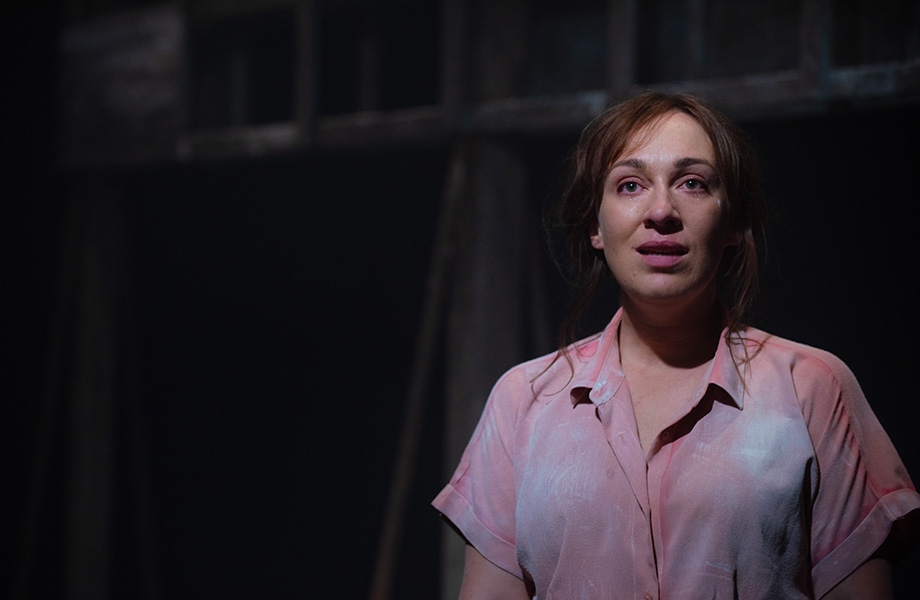
- Article Hero Image Caption: Emily Goddard in Wittenoom (photograph by Jodie Hutchinson).
- Alt Tag (Article Hero Image): Emily Goddard in Wittenoom (photograph by Jodie Hutchinson).
- Production Company: Red Stitch Actors' Theatre
Their lives in the town aren’t exactly desolate, although their joys seem largely dependent on the itinerant workers flown or bused in to work the asbestos mines. Dot puts some of them up in the house, and this brings mother and daughter closer to the issues affecting the miners: the appalling conditions and insufficient ventilation; the lack of protective equipment; and deadliest of all, the particles of asbestos they breathe in all day. But Dot doesn’t need to learn about sickness from the poor souls working in the mines. She is already suffering from the mesothelioma that will kill her.
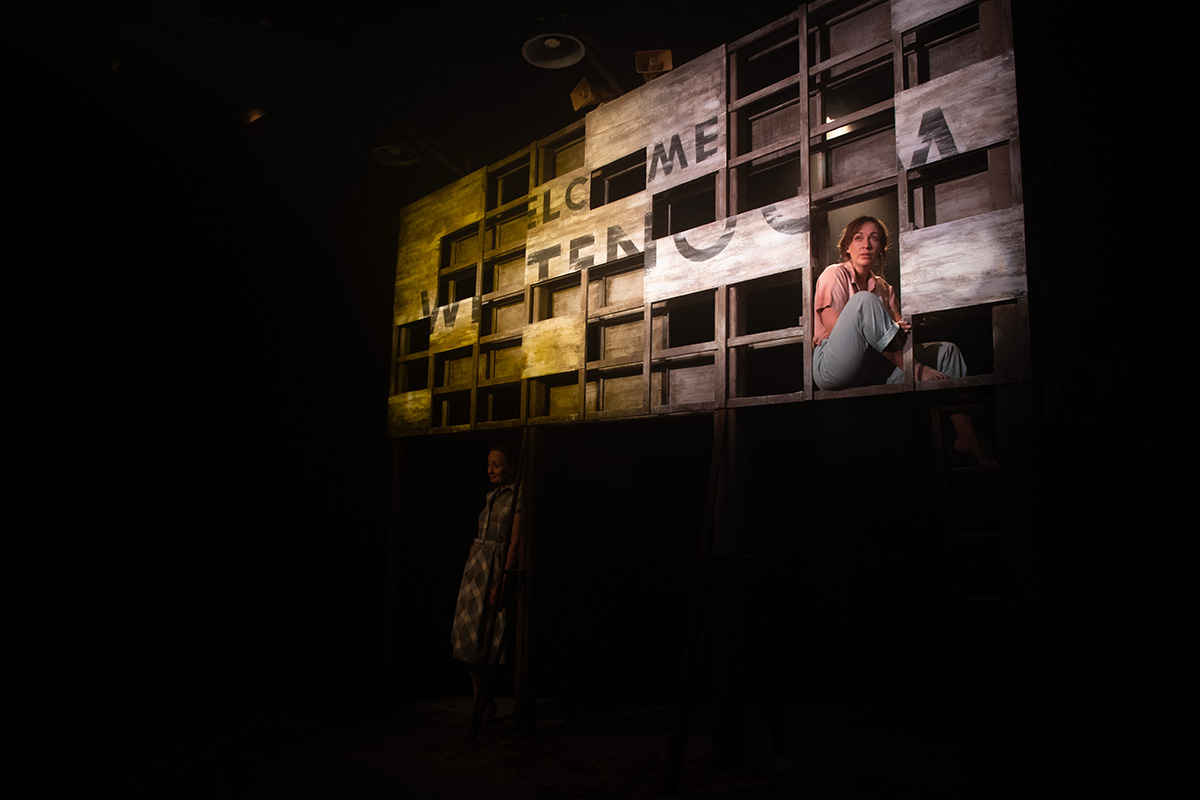 Caroline Lee and Emily Goddard in Wittenoom (photograph by Jodie Hutchinson).
When one of the workers, an older Italian man to whom Pearl relates as a kind of surrogate grandfather, becomes ill and dies, it triggers a belated rage in the workers and the women. Pearl becomes an unlikely union rabble-rouser, a Norma Rae figure, and turns on her mother for moving them into the town in the first place. Butler flirts here with the kind of righteous rancour you see in a polemicist like Clifford Odets, but she isn’t interested enough in the dynamics of agitprop to fully exploit its power. The outcome was utterly abject for the townspeople and the true villain (Hancock himself, who knew the lethal nature of his product before he even built the mine) got off scot-free, so perhaps Butler thought the story lacked the catharsis necessary for such a telling.
The play’s subject is grim, and its dramatic trajectory hopeless, which brings certain challenges Butler and director Susie Dee address but don’t necessarily overcome. One of these is modulation, the need to vary the overarching mood of dread and despondency that blankets the town as surely as the fatal blue dust. The writing shows a fondness for lyrical monologuing over tangibly realised scenes, a tendency to describe rather than substantiate, which means that the play struggles to get a dramatic foothold on the material. Moments of levity – Dot in particular has a sardonic, forthright attitude to life, health, and neighbourhood that can be very funny – puncture the wretchedness, and there are sequences of plaintive self-reflection from both characters that bring poignant texture, but the play’s range feels limited and therefore stifling.
Butler could have leveraged this sense of claustrophobia and entrapment, building a portrait of civic horror to rival Shirley Jackson, but the play’s poetic register – a kind of imagistic symbolism rich in oppositions and metaphor, light on characterisation and interrelationship – reaches for the apocalyptic maximalism of Milton very early on in the piece, leaving it with nowhere to go. The tension that could ratchet up slowly over the course of the play, the slow dawning of the town’s cataclysm, is lost; the language hits a certain note and sustains it throughout.
It is a pity, because there is considerable substance to the story and two excellent actors in Lee and Goddard, able to flesh out characters of rather obtuse motivation. Dot is immensely likeable in her refusal to play nice, her flinty acceptance of an illness that by rights should drive her to a state of apoplexy. Lee gives her a knowing dignity and a refreshing insouciance when it comes to sex. What isn’t so evident is the despair under the surface, that awful, inescapable fear of death’s rapid approach. Goddard does a fine line in wide-eyed wonder and is hauntingly good when tragedy stacks on tragedy, but she struggles with the play’s unconvincing switch into unionist invective. The character seems to age a decade and back again without explanation.
Dee’s direction is solid, although her palpable control over atmosphere – with a memorably baleful sound design by Ian Moorhead, gorgeously supple and evocative lighting by Rachel Burke, and a simple but powerfully realised set from Dann Barber – tends to underline the play’s limited dramatic range. There is an intriguing final pose from the actors that speaks of ghoulishness and surreality; it would have been interesting to see that aspect developed further. Butler’s brilliant ear for contrapuntal rhythm and musicality shines through (she’d make an excellent librettist), but the devastation of the town requires more of a banshee-like scream. As it stands, Wittenoom is a mournful, elegiac work about an aspect of Australian corporate power that should have us pitching our forks and lighting our torches in outrage.
Wittenoom is at the Red Stitch Actors’ Theatre until 19 February 2023. Performance attended: 1 February.