


- Free Article: No
- Contents Category: Film
- Custom Article Title: The Whale
- Review Article: Yes
- Article Title: The Whale
- Article Subtitle: A new film from Darren Aronofsky
- Online Only: No
- Custom Highlight Text: He may shock, horrify, polarise, and disgust but one thing Darren Aronofsky will never do is bore an audience. This is true of the director’s latest feature film, The Whale (2022), which has all the intensity of Black Swan (2010) and fascination of the controversial mother! (2017). Happy to say there’s no gore at all in this surprisingly sympathetic study of man who is morbidly obese, striving to right a wrong he committed in the past.
- Article Hero Image (920px wide):
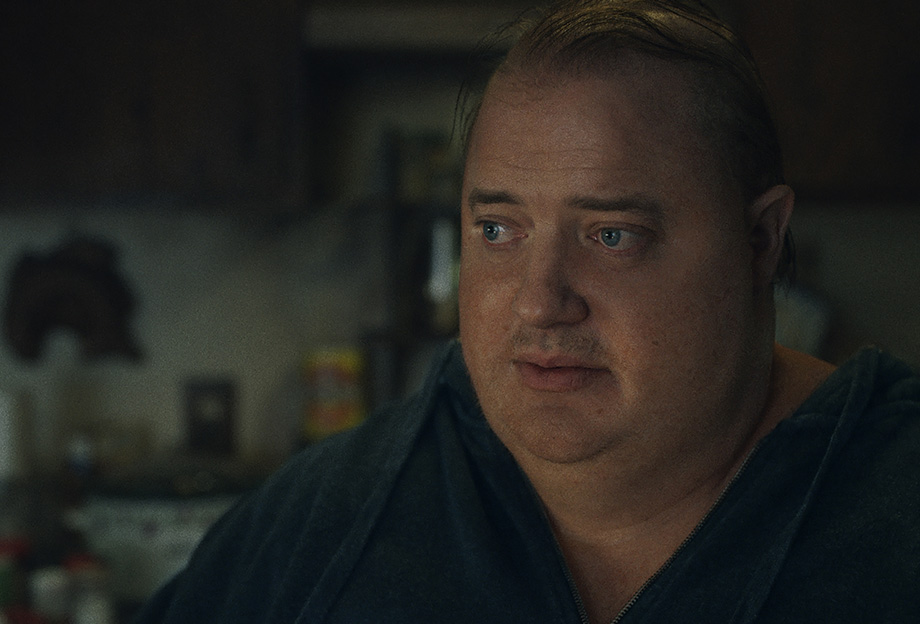
- Article Hero Image Caption: Brendan Fraser as Charlie in The Whale (Madman Entertainment)
- Production Company: Madman Entertainment
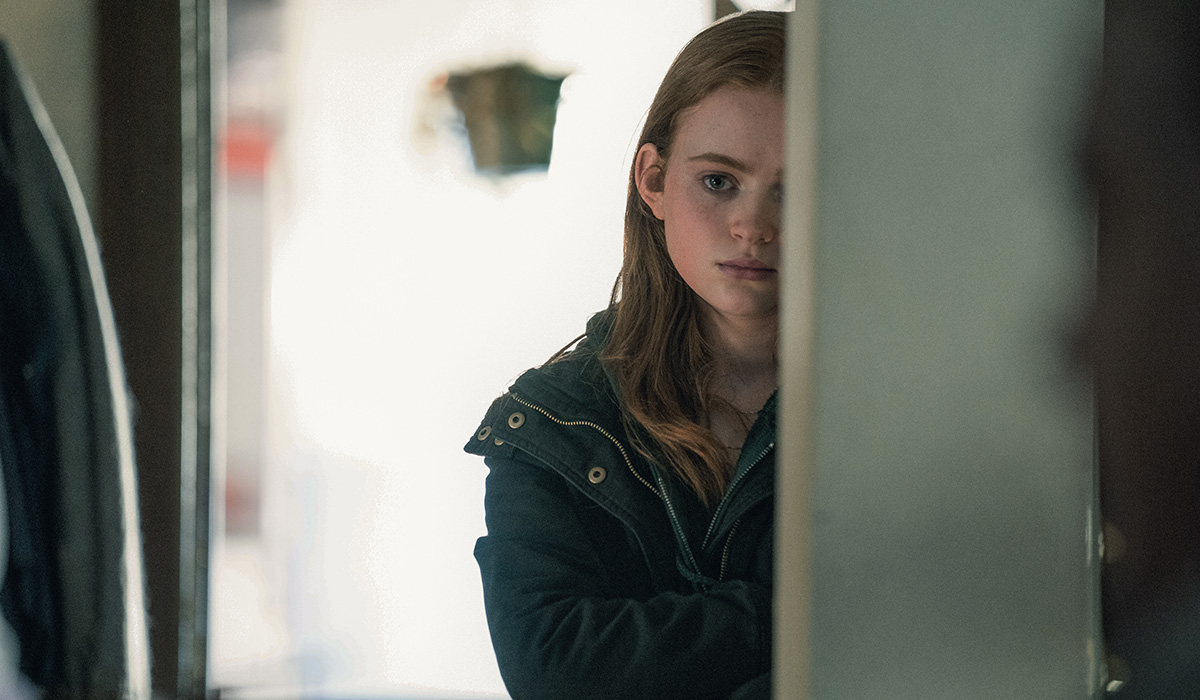 Sadie Sink as Ellie in The Whale (Madman Entertainment)
Charlie is gay. We learn that he left his wife Mary (Samantha Morton) and daughter Ellie (the irrepressible Sadie Sink) eight years before to be with lover, Alan. Alan meets a tragic end, and Charlie’s life has been an act of self-sabotage ever since. He eats for the loss of his lover. He eats out of guilt for his daughter.
We realise, too, that he’s eating his way towards death. His refusal to go to hospital hinges on money he has saved for his daughter, which is a source of frustration for Liz (Hong Chau), his only friend and carer. When Thomas (Ty Simpkins), a representative of the religious cult, New Life, offers salvation through God, Charlie is resolute: ‘I’m not interested in being saved.’
The image of a beached whale comes to mind as we see Charlie not only trapped in his own body but ‘trapped’ in his flat. Keenly self-aware, he believes that he disgusts people – the pizza man beats a hasty retreat when he sees him – and so the flat is the reclusive setting for the entire film. True to its original incarnation as a play by Samuel D. Hunter, who also wrote the screenplay, the action is perfectly ‘staged’ as characters make their entrances and exits through the front door. This adds to the claustrophobic feel, the smallness of the cluttered flat emphasising the bulk of the ‘whale’.
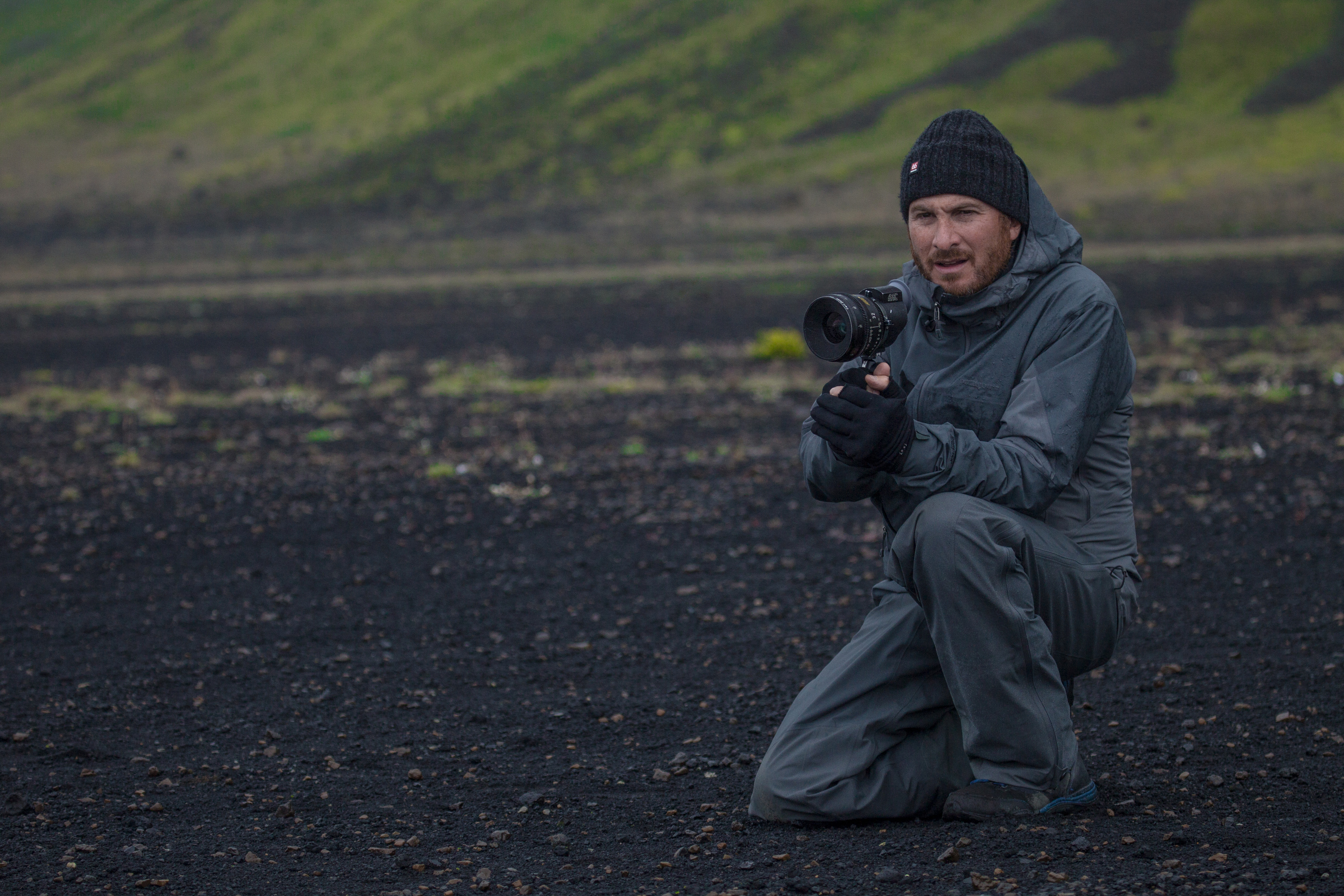 Director Darren Aronofsky (photograph by Niko Tavernise)
Aronofsky chooses a sickly yellow-green palette, reminiscent of Walter White’s living room in Breaking Bad (2008). The poo-yellow fridge, the ugly green walls almost smell of decay. Only Alan’s empty room, the room of love, is frozen in time, clean and serene. Though Charlie’s huge wheelchair prevents his entering Alan’s room (is this paradise?), he greedily gulps in the air. The blue of his T-shirts and blanket further the whale image.
Unlike critic Natalia Keogan of Paste Magazine, I don’t believe The Whale is an exercise in voyeurism or a creepy freak show. Rather, the audience is led to empathise with the character of Charlie. Aronofsky tells it how it is to be big without grossing us out in the style of a Tarantino or Cronenberg. We see the super-human efforts needed to retrieve a dropped object or even get up off the couch when you’re obese. Even the binge session at the pointy end of the drama is treated without sensation.
If Charlie is the likeable, sympathetic character of the story, often apologising, always wanting to improve his daughter’s life, the women who surround him are not. Again, the ‘whale’ is buffeted by opposing forces, just like the whale in the beloved Moby-Dick essay. There is bossy Liz who believes she is the only one who can care for him. There is the ex-wife, Mary (Mother Mary she is not), who has her own grudges. But the true antagonist in this sad little family group is daughter, Ellie.
Ellie provides the major conflict. In the history of modern cinema, it’s hard to think of a character who treats her father so vilely. (Perhaps Bette Davis in Whatever Happened to Baby Jane [1962] is the next best thing.) She abuses, mocks and belittles, her most sadistic action being a demand she knows her father is physically incapable of executing; the result is predictably piteous. This is truly squirm-in-your-seat stuff as are her frequent tongue lashings: ‘I don’t care about you. Fucking die already!’
If Ellie’s character seems extreme, it’s intentional. Aronofsky likes to avoid clichés: there will be no father and child locked in a dewy-eyed embrace here. This is what sets his films apart from Middle American stock and allies his work far more closely with influences such as Roman Polanski. ‘Be original,’ Charlie advises his students of English.
And ‘be honest’. Honesty/fakery, reality/subterfuge, positivity/negativity, spirituality/ religion, and love in all its forms, are constant themes in the film. Though it’s tough to witness, Ellie is being honest in her frustration with her father. Charlie is pleased about this, which explains in part why he never gets angry with his daughter. On the contrary, he finds her and her writing ‘amazing’. But this rosy reaction is infuriating to his ex – ‘Why must you always be so positive?’ – and probably for many filmgoers.
Ellie is the girl who never forgets. And honest Charlie owns the crime of leaving her for his student lover. Ellie loved her father so much that her current ‘hatred’ is therefore proportionate to her love. If Charlie ‘gets’ it, shouldn’t we, the audience?
The honesty theme is neatly linked to storytelling in the film, so that characters ‘confess’ one on one to other characters. This is also the perfect means of exposition. We learn the missing links through story. Liz tells Thomas the story of her brother Alan, the invisible key to the entire plot. Thomas confesses his sins to Ellie. Mary describes life after Charlie. Certainly, the strongest monologue is reserved for the hitherto uncomplaining Charlie, who delivers a devastating diatribe about his size.
The Whale is not an easy film to watch. But it is original, it does have heart, and it will provoke discussion. The ending is beautifully handled. Even if you’re not a fan of heavy cinema, the stellar performance put in by Brendan Fraser makes this a must-see.
The Whale (Madman) runs for 117 minutes and is released nationally on 2 February 2023.