


- Free Article: No
- Contents Category: Music
- Custom Article Title: Australian Youth Orchestra
- Review Article: Yes
- Article Title: Australian Youth Orchestra
- Article Subtitle: A new work from Andrew Ford
- Online Only: No
- Custom Highlight Text:
After a welcome return to something approaching a pre-Covid normal season of training camps and concerts, the Australian Youth Orchestra has finished the year with a grand public concert at the Melbourne Town Hall.
- Article Hero Image (920px wide):
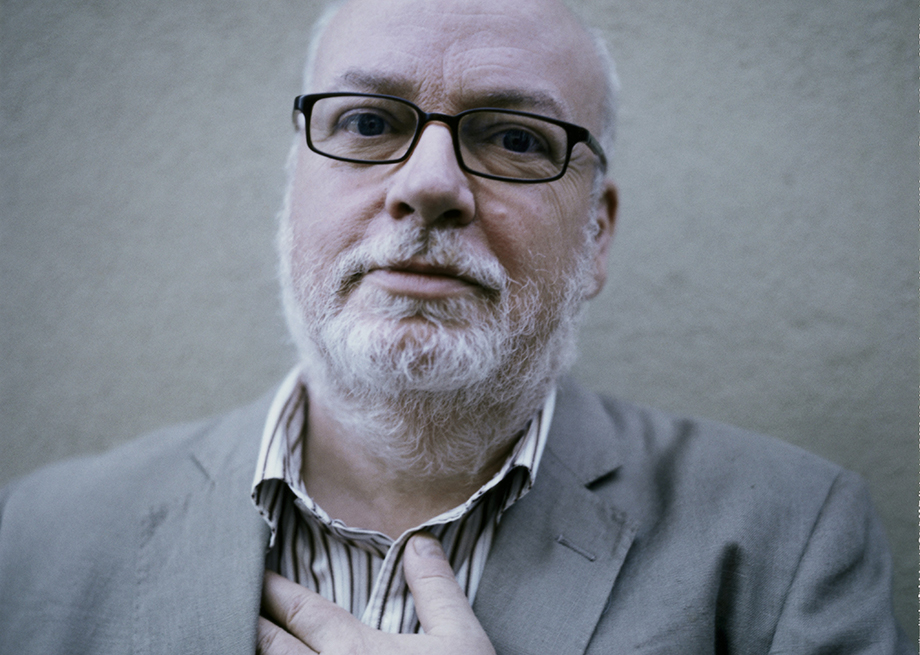
- Article Hero Image Caption: Andrew Ford (photograph by Jim Rolon)
- Alt Tag (Article Hero Image): Andrew Ford (photograph by Jim Rolon)
Pei-Sian gave a confident, technically assured performance of Saint-Saëns’s Cello Concerto No. 1 in A minor (1873). Written in the shadow of France’s humiliating defeat at the hands of the Prussians, it abandons the multi-movement formal patterns common to the Germanic concerto tradition and instead takes the shape of a single rhapsodic statement. Saint-Saëns also anticipated the ‘neo-classical’ aesthetic interests of a later generation of French composers by including an extended evocation of an eighteenth-century minuet. It is thus very much more than just a showpiece for the soloist, although it is certainly that as well. To my taste, Pei-Sian once or twice risked being overly mannerist in his approach (and the orchestra overly tentative in turn). Otherwise, this was an enjoyable account of this important repertoire work.
The first half concluded with an AYO commission (and world première) by composer (and author-broadcaster) Andrew Ford. Appropriately enough, The Meaning of Trees is overtly addressed to youth, and not just the musicians in the orchestra. Ford has noted elsewhere that he normally would have composed an abstract work, but the thought that his generation was bequeathing an ecosystem in crisis led him instead to conceive a kind of apology in sound. Constructed as a series of intensifying soundscapes, the work rises to a climax at which point Ford quotes at length Handel’s famous ‘Largo’, albeit in a transfigured, if not haunted, garb.
The link between Handel and Ford’s underlying theme, of course, is that the Largo was originally an aria from Handel’s opera Xerxes (1738), which is sung by the eponymous Persian King to a plane tree. Handel’s librettist in turn drew inspiration from Herodotus’s account of Xerxes being so struck by the beauty of a tree that he encountered en route to invade Greece that he presented it with jewels and arranged for a guard to remain behind to protect it. Xerxes may not be the model pacifist greenie, but Ford’s evocation is of course more symbolic than literal, a reminder (should we need one) of what is now at stake, not just for the natural environment but for ourselves.
The piece is anchored in a core of complex percussion and timpani parts which were expertly delivered by section leaders and rank-and-file players alike. This kernel of sound was supported by the rest of the orchestra using both extended instrumental techniques and traditional scoring. At its conclusion, the orchestra was literally given voice; all musicians on stage were asked to sing (and sing they did very well), giving the work a suitably spectral apotheosis.
The program concluded with Stravinsky’s original (1911) orchestral suite from the ballet Firebird, composed for Serge Diaghilev’s Ballets Russes in Paris. Firebird was the work that launched the composer onto the international stage as a leading member of the musical avant-garde. Some of it might sound relatively conventional to our ears today, but here can be found most of the modern(ist) musical techniques that would make his The Rite of Spring such a riotous success only two years later. Stravinsky was also a master orchestrator, and Firebird is ideal senior youth orchestral fare. Coorey’s tempos were, however, rather quick (especially in the opening) and prone to shift about, and the instrumental balance across sections of the orchestra was not always well adjusted to the acoustic of the Town Hall. Qualifications notwithstanding, it was nevertheless terrific to hear the suite played with such obvious enthusiasm by this great national ensemble.
The Australian Youth Orchestra performed in the Melbourne Town Hall on 15 December 2022.