


- Free Article: No
- Contents Category: Film
- Review Article: Yes
- Article Title: Three Thousand Years of Longing
- Article Subtitle: A storyteller first and foremost
- Online Only: No
- Custom Highlight Text:
For the casual moviegoer unconcerned by matters of auteurship, it can still come as something of a shock to learn that the person behind the original Mad Max trilogy (1979–85), as well as its decade-defining follow-up, Mad Max: Fury Road (2015), also brought us the madcap animal antics of Babe: Pig in the City (1998) and the all-singing, all-dancing penguin colony of Happy Feet (2006) and Happy Feet 2 (2011). George Miller has one of the most eclectic oeuvres in modern cinema, but all his films are defined by a rich, seemingly limitless vein of imagination, as well as by the technical and aesthetic mastery necessary to mine it. Whether dabbling in live-action or 3D animation – whether wrangling penguins, pigs, or eighteen-wheeler ‘War Rigs’ – Miller is a storyteller first and foremost. It stands to reason that his latest film is a story about stories themselves: where they come from, what they mean to us, and what their place is (if any) in the modern world.
- Article Hero Image (920px wide):
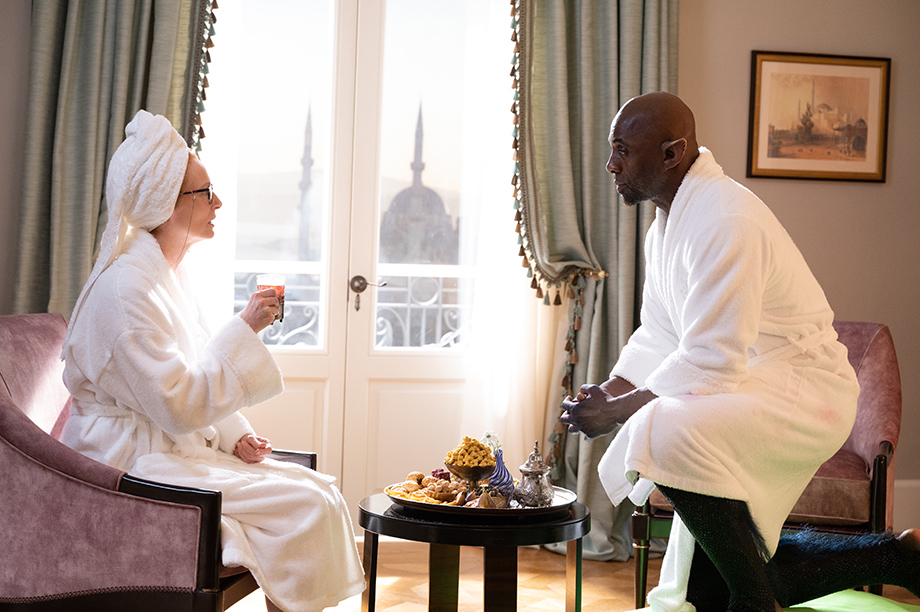
- Article Hero Image Caption: Tilda Swinton and Idris Elba in Three Thousand Years of Longing (Village Roadshow)
Based on a short story by A.S. Byatt and co-written with Augusta Gore, Three Thousand Years of Longing stars Tilda Swinton as Professor Alithea Binney, a scholarly ‘narratologist’ (which this film taught me is indeed a real job) on the lecture circuit in Istanbul. In the backstreets of the Grand Bazaar, she purchases a curious glass bottle as a keepsake, and then later, while attempting to clean it with an electric toothbrush in her hotel bathroom, unleashes a towering, pointy-eared, scaly-legged, heat-emitting Djinn played by Idris Elba. He gives her the spiel we all know so well (three wishes, and no wishing for more wishes), but Alithea, a dedicated anthropologist of such fairy tales, has heard this one before; she knows the rules of the game before he even explains them, and what’s more, she claims to have nothing to wish for. She considers her solitary existence perfectly fulfilling, and doesn’t want to risk it all on some greedy indulgence. She suspects the Djinn to be an ancient trickster, reminding him (and us) that ‘there’s no story about wishing that is not a cautionary tale.’
This puts the Djinn in a tight spot, as he requires all three wishes to be made in order to secure his freedom. To explain his predicament and earn her trust, he shares the three-millennia-long account of his incarceration. As they sit on the end of the bed in Alithea’s hotel room in fluffy white bathrobes, he recounts – and Miller shows us – extracts from this sprawling, fantastical tale, starting with the Queen of Sheba and King Solomon, spanning the rise of the Ottoman Empire and the treachery of Suleiman the Magnificent, right up to a knowledge-hungry woman in nineteenth-century Turkey who forms a special connection with the Djinn.
For someone who stars in another film released this week in which he punches a lion in the head, Elba gives a beautifully gentle and measured performance as the Djinn – just as well, given that three-quarters of the film’s narration falls to him. In that sense, the superb Tilda Swinton feels curiously underutilised in her leading role, and her third-act character decisions landed with a notable hum of uncertainty from my audience. Meanwhile, behind the camera, the great John Seale (in supposedly his final assignment before retiring) captures the ancient vistas and baroque palaces of the Djinn’s tale in crisp and stylish detail – assisted by the rare and remarkable kind of CGI effects that actually enrich the live imagery, rather than distract from it. Miller has always surrounded himself with master craftspeople and artists, and this film is no exception: from Margaret Sixel’s editing to Roger Ford’s production design and Kym Barrett’s costuming, the film is confidently constructed and boldly shot. Experientially, though, Three Thousand Years of Longing never reaches the ecstatic heights that its fairy tale characters proclaim to live and die for.
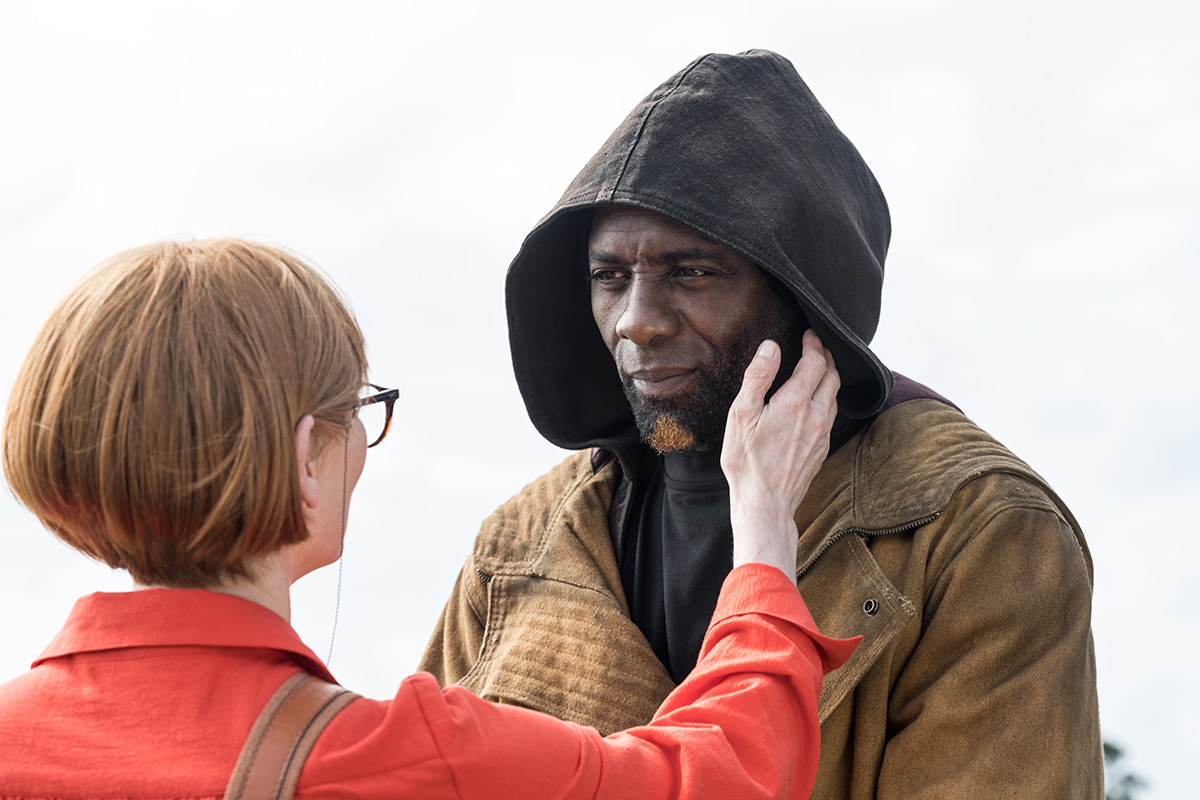 Tilda Swinton and Idris Elba in Three Thousand Years Of Longing (Village Roadshow)
Once the Djinn’s tale is told, the film’s third act cobbles together an uneven thesis suggesting that these grand fables – the sorts of stories Alithea studies for a living – are just that: artefacts to be examined and classified. After leaving the hotel, the Djinn appears highly vulnerable, even fatally allergic, to the electromagnetic frequencies, televisual signals, and general invisible informational clutter of the twenty-first century; if he represents storytelling as a tradition, then he, and it, are shown to be fundamentally incompatible with modern civilisation. Perhaps this is what Miller intended his film to be – not a grand fairy tale itself, but rather an elegy for that ancient mode of communication. If that was his intention, the film’s mood is fitting; Three Thousand Years of Longing, for all its bursts of colour and visual invention, is a deeply sombre piece – hushed, staid, and unexpectedly serious.
The film’s central conceit remains its most compelling: a literal embodiment of stories dropped into a room with a woman who studies them for a living, thus allowing the discourse between mythos and science, between fable and fact, between the old world and the new, to play out. It’s a shame that Three Thousand Years of Longing appears to identify more with the academic than the storyteller in this scenario, holding itself at arm’s length and approaching even its most intoxicating fantasies with a rueful, intellectual eye. George Miller has smuggled a great deal of meaning into his multiplex fare before; even Mad Max: Fury Road touched on a bevy of hot-button issues without once compromising on spectacle or enjoyment. But here, ironically, it’s the other way around; a film about storytelling which puts its thesis first and its own story second.
Three Thousand Years of Longing (Roadshow Entertainment), 108 minutes, is on national release.