


- Free Article: No
- Contents Category: Film
- Review Article: Yes
- Article Title: Sundown
- Article Subtitle: Michel Franco’s ruined paradise
- Online Only: No
- Custom Highlight Text:
Michel Franco’s Sundown opens with a close-up of fish slowly suffocating on a boat deck, the first of many enigmatic interjections that punctuate the film. We begin with a family vacation in Acapulco. The Bennetts, an apparently typical nuclear family, swim, sip margaritas, and joke around on the terrace of their luxury resort suite. They attend a cliff-diving contest at the iconic La Quebrada and dine at an exclusive outdoor restaurant. The atmosphere is one of relaxation, with a hint of uneasiness ...
- Article Hero Image (920px wide):
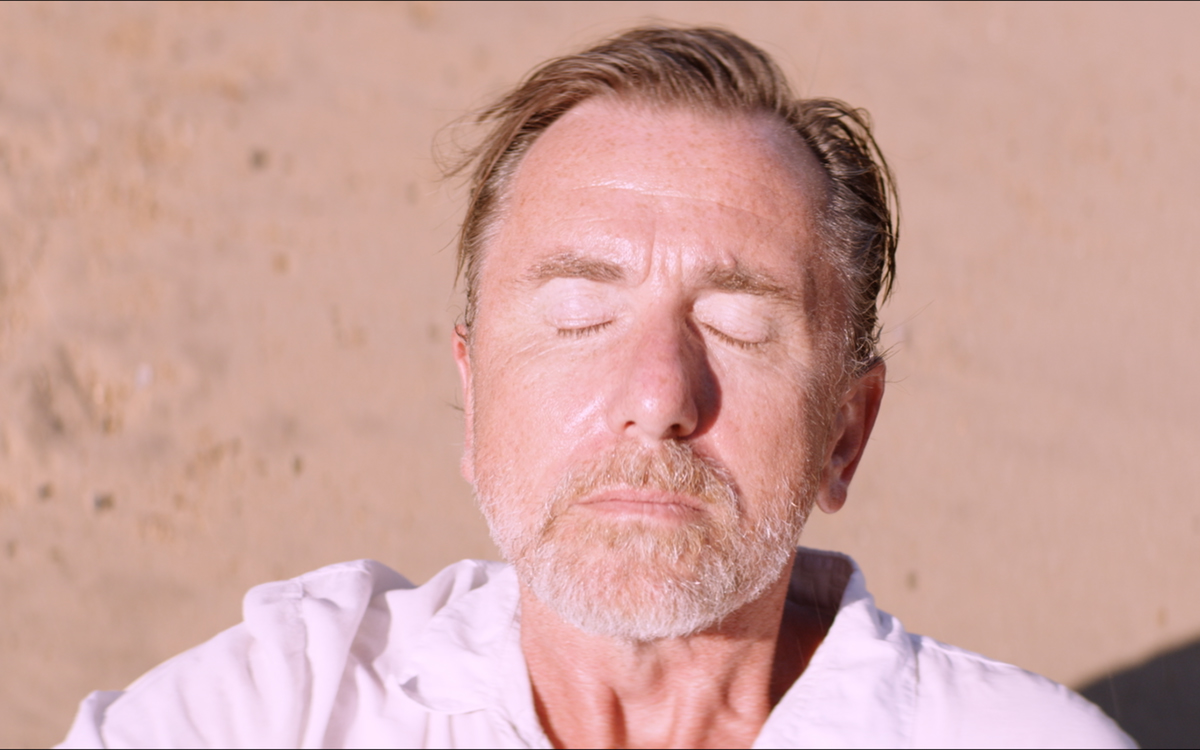
- Article Hero Image Caption: Tim Roth as Neil Bennett in <em>Sundown</em> (photo courtesy of Kismet Movies)
- Alt Tag (Article Hero Image): Tim Roth as Neil Bennett in <em>Sundown</em> (photo courtesy of Kismet Movies)
Sundown is Mexican director Franco’s seventh film. He first made his mark with the family drama After Lucia, which won the Un Certain Regard prize at Cannes in 2012. Franco’s films are often oriented around family and blend drama with subtle elements of thriller or mystery to create an undercurrent of disquiet or apprehension. Franco has described Sundown as being ‘about a specific family’, but it also ‘speaks to larger issues, like economic inequality, breakdown in communications, violence in many forms’. Setting is central to Franco’s films, and Acapulco has for him the feel of a ‘ruined paradise’ ideal for exploring the dynamics of familial and social crises.
The film is a slow burn, and there is a growing sense of menace beneath the colourful holiday mood of an Acapulco beach. The conspicuous absence of tourists marks the place out as potentially unsafe for Neil, who appears indifferent to the risks (Acapulco is considered one of the world’s most dangerous cities). Franco’s decision not to subtitle the Spanish dialogue adds to this feeling as Neil unwittingly consorts with a local gang who peg him, rightly, as a wealthy Brit. The languorous atmosphere is soon punctured with explosions of violence that have little effect on Neil but that will devastate his family. Roth brings his usual devil-may-care charm to Neil, a man who has turned his back on his family’s agribusiness, an empire of factory farms and slaughterhouses that he wants nothing more to do with. There are hints of trauma from his exposure to the violent world of meat production and the profiting from death, associated in the film with the Mexican gang that targets his family.
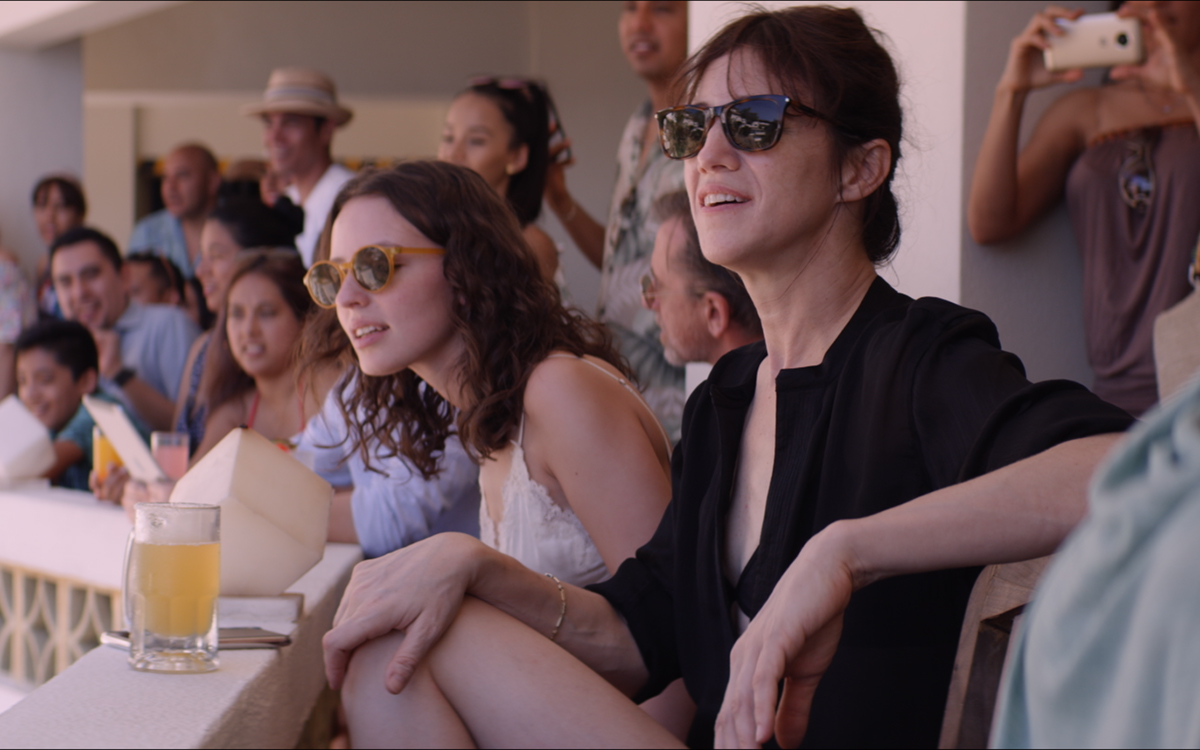 Albertine Kotting McMillan as Alexa Bennett and Charlotte Gainsbourg as Alice Bennett in Sundown (photo courtesy of Kismet Movies)
The film has visual and thematic links to other masterpieces of resignation, such as Antonioni’s The Passenger, Visconti’s Death in Venice, and Mike Figgis’s Leaving Las Vegas. Roth’s character has much in common with the protagonists of these films: his British reserve and politeness evoke Dirk Bogarde, but there are also elements of Jack Nicholson’s swagger and Nicholas Cage’s wet-eyed earnestness. Neil is an existential hero whose actions are dictated not by social convention but by the open acknowledgment that we are free to make our choices according to our conscience or desire. Like Albert Camus’s Meursault, Neil makes his choices under clear skies and a hot sun, with death as the thing that doesn’t end life so much as justify it. Confronted with his choices, Neil never dissimulates. ‘I’m not hiding,’ he tells Alice, when she finds him lazing on the beach; when questioned about his passport, he readily admits that he never lost it. Neil is a character we want to like (thanks largely to Roth’s sympathetic face), whom we can identify with but feel we should deplore. Franco uses plot development to continuously undermine our judgement of Neil’s character, and the central premise becomes the humanist idea that only when we have the full picture can we understand a person and their motivations.
Roth’s fine performance carries the film. This is the third time Franco has worked with Roth, after directing the drama Chronic and producing Gabriel Ripstein’s cartel film 600 Miles (both in 2015). Franco wrote Sundown with Roth specifically in mind, citing their shared sensibilities. Gainsbourg is excellent as the highly strung Alice, on whose shoulders the burden of the family rests. Franco was drawn to Gainsbourg because of her work in Lars von Trier’s Antichrist (2009) and she brings a similar intensity and emotional polarity to the role of Alice. Iazua Larios wonderfully captures the essence of fading beauty as Berenice, the local shopkeeper with whom Neil strikes up a romance.
On the surface, Sundown is a rather simple film with little action to speak of. It is shot on location, mostly in long takes that help create the slow-burn feel. The way Franco reveals crucial details is one of the film’s key strengths; so subtle are these revelations that an inattentive viewer may overlook them. The film is exquisitely shot and visually sublime. Director of photography Yves Cape, a regular collaborator on Franco’s films, renders the burning heat of the sun palpable. There is no soundtrack as such; this is replaced by a carefully orchestrated sound design that includes music played on a radio or by street musicians, the gentle washing in and out of the ocean, and the constant pinging of Neil’s phone, which he either ignores or places in a drawer in his cheap hotel room. Sundown may be as close to perfect as a film can get. The film’s meticulous pacing, striking cinematography, considered sound design, and impeccable casting combine seamlessly to create a film of beauty, violence, and redemption.
Sundown (Kismet Movies), 83 mins, opens in cinemas nationally on 7 July 2022.