


- Free Article: No
- Contents Category: Film
- Review Article: Yes
- Article Title: Everything Went Fine
- Article Subtitle: Death’s intimate challenge
- Online Only: No
- Custom Highlight Text:
When a father asks his daughter to help end his life, is it out of love or perversity? In Everything Went Fine, it is both. François Ozon’s films typically belong to the French tradition of intimiste cinema, melodramas centred on the bourgeois patriarchal family. Everything Went Fine (Tout c’est bien passé, 2021), Ozon’s twentieth feature film, is no exception. This preference for melodrama means that his films predominantly focus on familial relations and French social mores. This does not mean they ignore broader social or political issues ...
- Article Hero Image (920px wide):
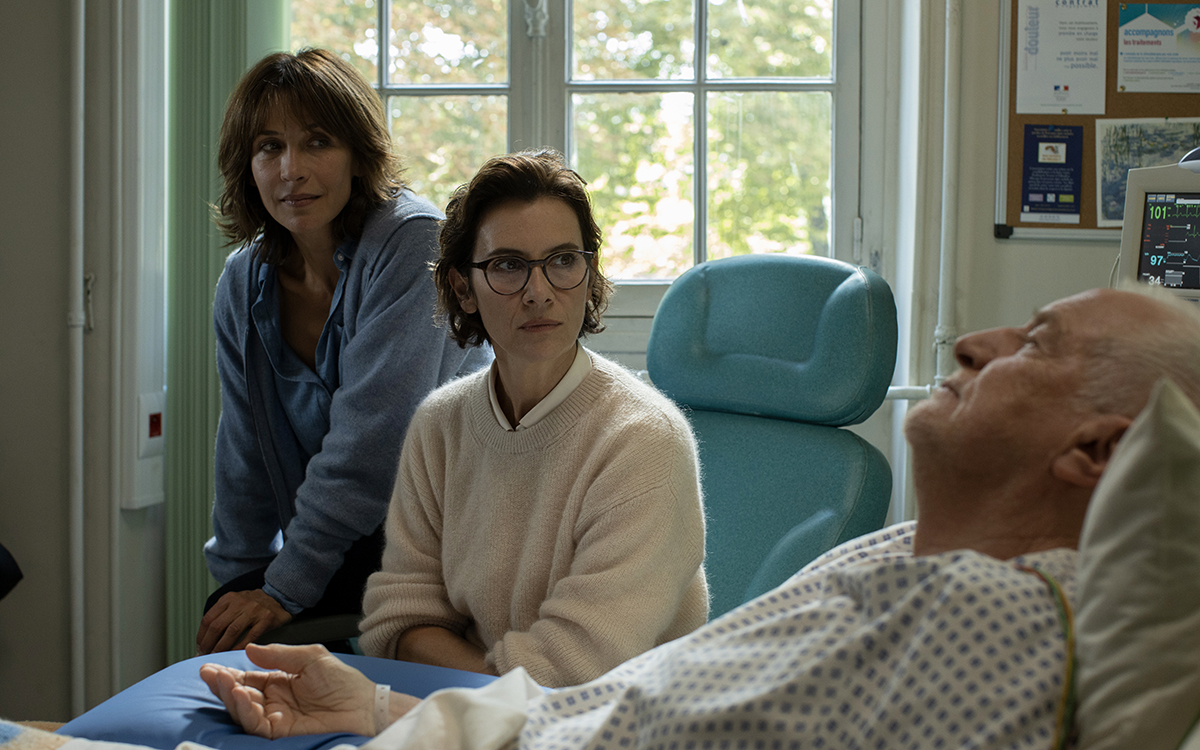
- Article Hero Image Caption: Sophie Marceau, Géraldine Pailhas, and André Dussollier in <em>Everything Went Fine</em> (photo credit: Carole Bethuel)
- Alt Tag (Article Hero Image): Sophie Marceau, Géraldine Pailhas, and André Dussollier in <em>Everything Went Fine</em> (photo credit: Carole Bethuel)
Set in Paris, Everything Went Fine is ostensibly a family drama about André (André Dussollier) who, after suffering a debilitating stroke at the age of eighty-five, asks his daughter Emmanuèle (Sophie Marceau) to help him end his life. She agrees, although France’s tough euthanasia laws mean André must travel to Bern, Switzerland to do so legally. Emmanuèle contacts a right to die association headed by a former judge (a compelling performance by Fassbinder regular Hanna Schygulla) who makes the necessary arrangements. Schygulla’s character, known only as ‘la dame suisse’, is the calm, reasonable centre of the film, the eye of the emotional tempest brought about by André’s request.
Much of the action takes place in the hospital and the hospice to which André is transferred while he recovers and waits for transportation to Bern to be arranged. The hospital scenes are graphically depicted, as are the effects of the stroke on André’s body. Unable to move, barely able to speak, and with a prognosis that, despite the doctors’ optimism, appears bleak, André sweeps aside any objections to his plan with the retort: ‘Surviving is not living.’ Emmanuèle’s initial response seems to be one of humouring her father, waiting for him to change his mind as his condition ever so slightly improves. When André asks to postpone his transportation to Bern so that he can attend his grandson’s music recital, hope is momentarily restored for Emmanuèle and her more retiring sister Pascale (Géraldine Pailhas). This is soon dashed when André confirms his wish not only to go ahead with his decision, but even to expedite it.
The French bourgeoisie is Ozon’s happy hunting ground. It is a world he knows well, from experience. The film is replete with signifiers of moderate luxury: art, classical music, fine dining, and a Patak Phillipe watch that André promises to bequeath his homosexual lover, George (Grégory Gadebois). This does not mean Ozon treats this world uncritically and on more than one occasion the melodrama hovers on the brink of satire or farce, without ever toppling over into it. André is by turns both likeable and deplorable, reasonable and lucid, but also subject to bouts of manipulative histrionics. His relationship with Emmanuèle, revealed through a series of flashbacks, is complicated by the fact that she wasn’t the son he wanted. The ambivalence of their relationship is further demonstrated by Emmanuèle’s remark that ‘he was a terrible father, but I would have liked to have been his friend’. References to the films of Luis Buñuel also provide context for how we are to think about French bourgeois life in Ozon’s film. The subtlety of Ozon’s critique is brought more sharply into focus when towards the end of the film, André muses on how the poor must manage something like this, with the costs it involves. Emmanuèle replies: ‘They just wait to die.’
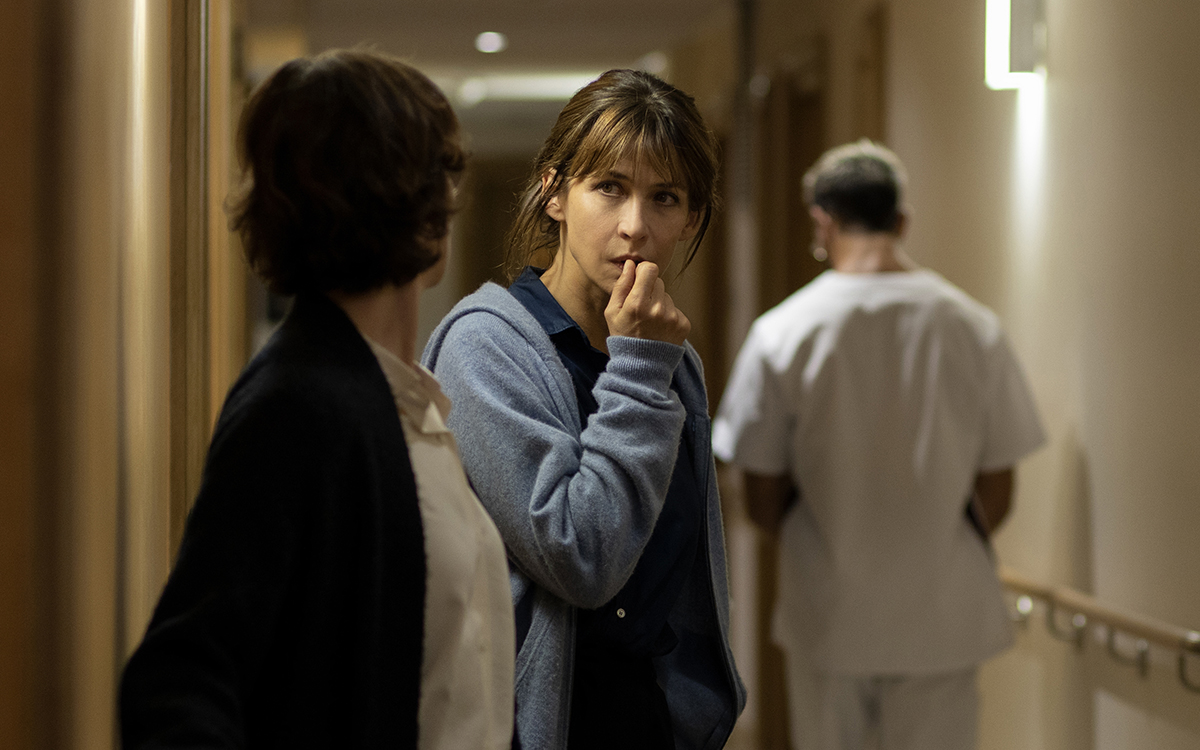 Sophie Marceau in Everything Went Fine (photo credit: Carole Bethuel)
Everything Went Fine, adapted from the novel of the same name by Emmanuèle Bernheim (who collaborated with Ozon on screenplays for Under the Sand, Swimming Pool, 5x2, and Ricky), has what might be called a typical Ozon look: beautifully shot despite the more gruelling hospital scenes, a carefully curated palette, and flawless framing. Performances are excellent: Dussollier brings a pathos and mischievousness to André that infects even those who try to hate him, including his estranged wife with a ‘heart of cement’, played in typical ice-maiden fashion by Ozon staple Charlotte Rampling. Pailhas is perfectly understated as the ‘other’ daughter who grew up in the shadow of her father’s relationship with Emmanuèle. Marceau, however, is the standout, in what might be her finest performance to date. Ozon has found a way to draw out Marceau’s talent as a dramatic actor, hitherto somewhat latent in her filmography. More than anything, it is Marceau’s mobile and expressive face, conveyed through Ozon’s tight framing, that captivates both the camera and the audience, from her furtive sidelong glances to gauge her father’s reactions to her grotesque mockery of his paralysed face in the mirror.
Ozon’s film is in part an attempt to convey the humiliation of lost independence brought about by old age and debilitating illness. André’s refusal to accept the state’s definition of ‘quality of life’ is also the film’s contention that what constitutes ‘living’ is a subjective rather than a bureaucratic matter. Nor are the young and healthy fit to judge the situation of the sick and dying. The film is pro choice without being polemical. André’s determination to die comes from the same place as his will to live: a profound love of life as he understands it.
Everything Went Fine (Palace Nova), 113 minutes, opens on 19 May 2022.