

Albanese’s ‘Australian Way’
Current Issue
- Events
- Book reviews
- Arts criticism
- Prizes & Fellowships
Sign Up For Our Newsletters
- Events
- Book reviews
- Arts criticism
- Prizes & Fellowships
Sign Up For Our Newsletters
Poet of the Month with Ellen van Neerven
Ellen van Neerven is a writer and editor of Mununjali and Dutch heritage. Their books include Heat and Light (2014), Comfort Food (2016), Throat (2020), and Personal Score (2023). Ellen’s first book, Heat and Light, was the recipient of the David Unaipon Award, the Dobbie Literary Award, and the NSW Premier’s Literary Awards Indigenous Writers’ Prize. Ellen’s second book, Comfort Food, was shortlisted for the NSW Premier’s Literary Awards Kenneth Slessor Prize and highly commended in the 2016 Wesley Michel Wright Prize. They live and write on unceded Yagera and Turrbal dhagun.
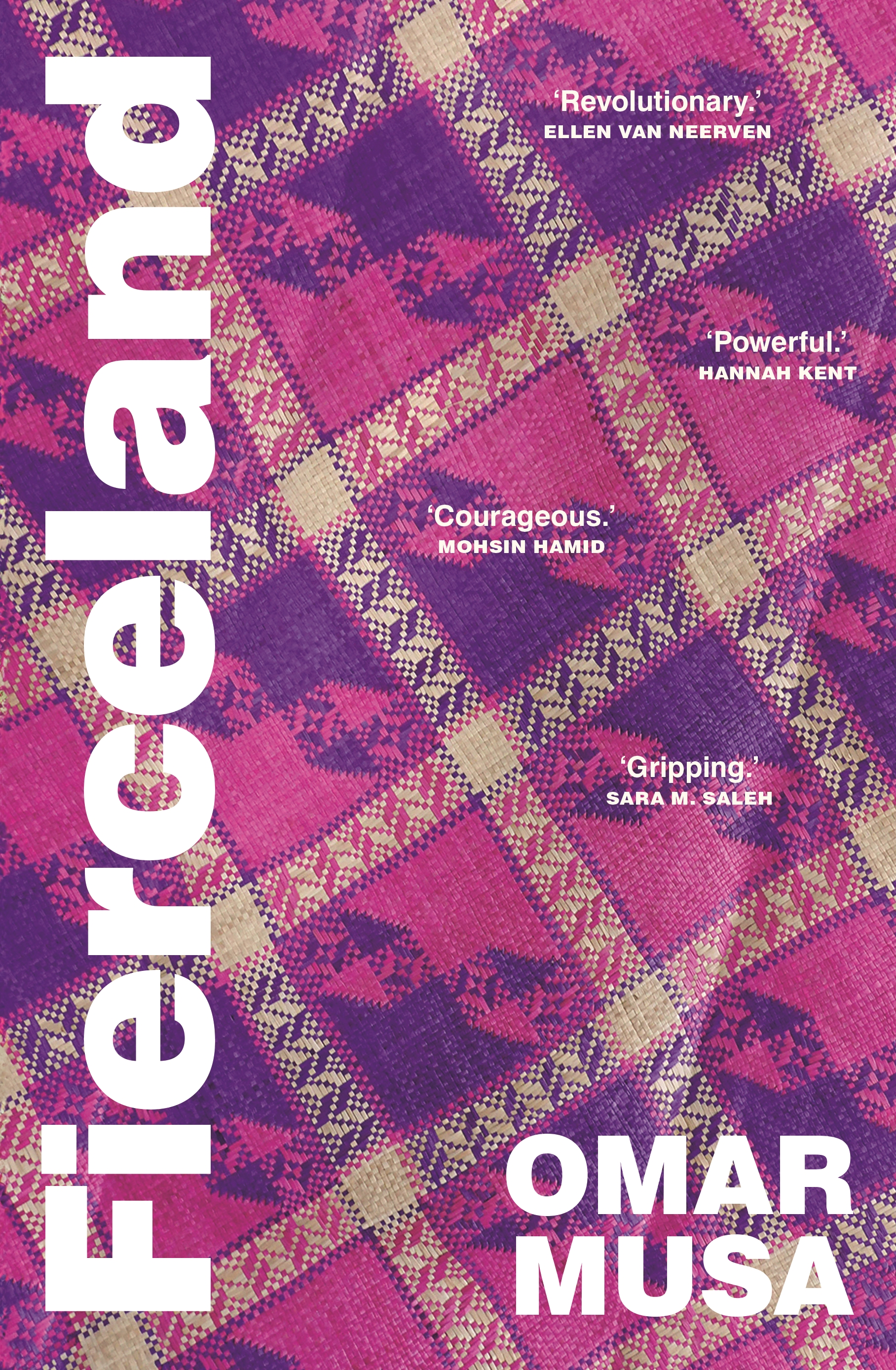
Fierceland by Omar Musa
Omar Musa’s first novel, Here Come the Dogs (2014), is a rousing dramatisation of the combustible sense of displacement and dissatisfaction simmering at the underrepresented margins of Australian life. Its protagonists are singular and compelling: each is tender and violent, hopeful and despairing, pitiful and triumphant. They all possess a uniquely hybrid identity, and each is searching for something that is always out of reach.
Walking Sydney: Fifteen walks with a city’s writers by Belinda Castles
During the walk she takes with Michelle de Kretser along the Cooks River, the bit that snakes between Hurlstone Park and Tempe, Belinda Castles, the author of Walking Sydney, muses on the impact of Sydney’s geography. ‘On the footpath-climb to skirt the golf course,’ she writes, ‘the village-like nature of Sydney makes itself felt, the way suburbs are enclosed and cut off by ridges and valleys, cliffs and rivers, the tentacles of the harbour. A city’s form has an effect on thinking and ways of being.’
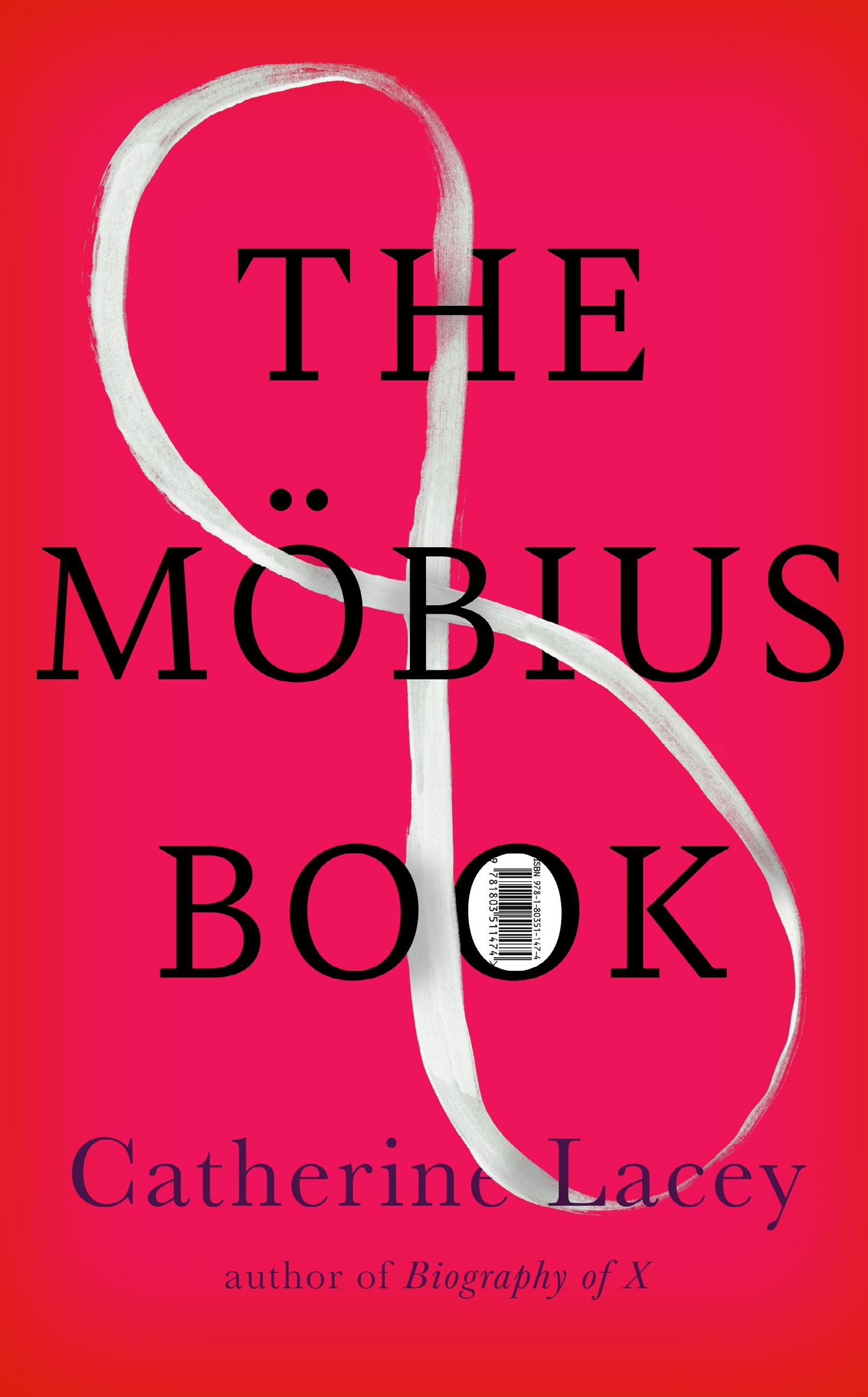
The Leap by Paul Daley
Who should we celebrate, or perhaps fault, for the publishing success of books labelled ‘outback noir’ in Australia over the past decade? Our starting point could be Jane Harper’s bestselling book The Dry (2016). The cornerstone of the genre for the author of The Leap, Paul Daley, is the seminal Kenneth Cook novel, Wake in Fright, first published in 1961. The longevity of the novel owes much to the 1971 feature film of the same name, directed by Ted Kotcheff, remembered for the infamous filming of a visceral Kangaroo shoot and the actor Donald Pleasence playing a most unpleasant lech. The Wolf Creek film franchise also deserves an honourable mention, along with its larrikin psychopathic killer, Mick Taylor, if not the real-life mass murderer, Ivan Milat himself.
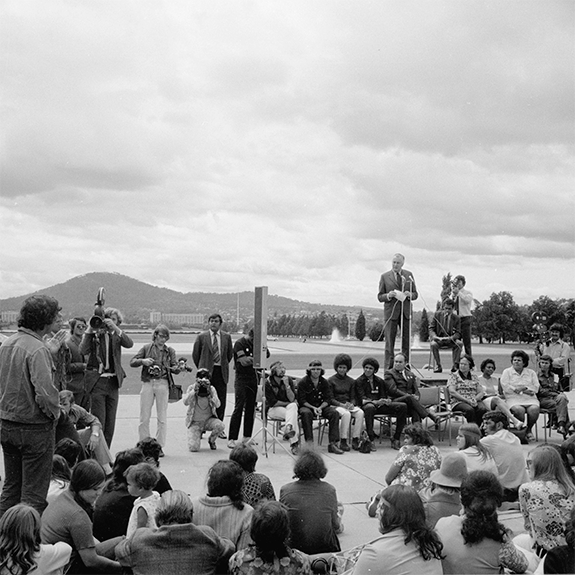
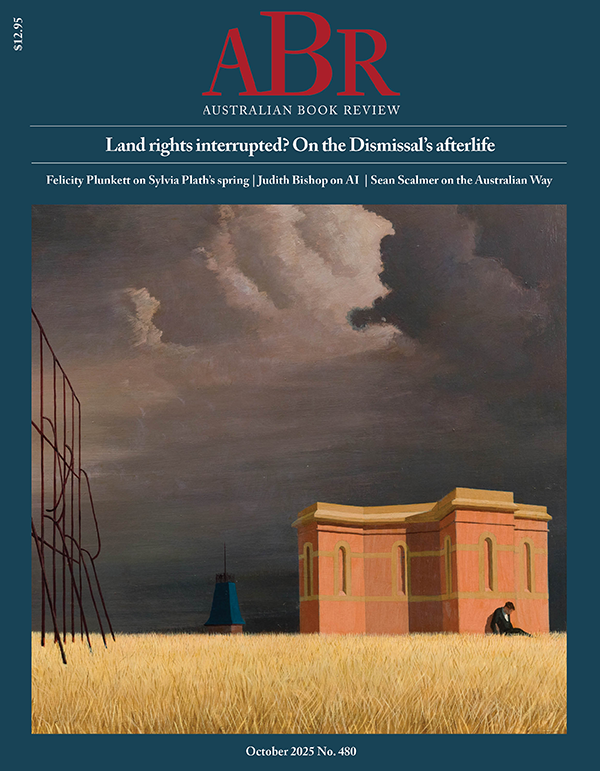
‘Land rights interrupted?: How Whitlam’s dismissal changed the history of First Nations land repossession’
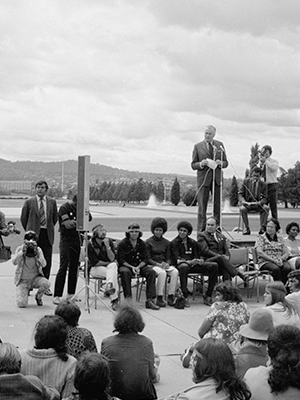
On the steps of Federal Parliament, a scrum assembled. Reporters jostled for position, enraged members of the public shouted over one another, advisers stood with faces drained of composure – even a comedian was caught in the fray. At the centre stood the tall and imposing figure of Prime Minister Gough Whitlam, listening as the governor-general’s official secretary read the proclamation dissolving Parliament. The moment, instantly mythic, would be remembered as ‘the dismissal’ – the most audacious constitutional rupture in Australian history, one that continues to haunt democratic life half a century on.
Apple in China: The capture of the world’s greatest company by Patrick McGee
Apple is one of the world’s largest companies. Its market value reached $3 trillion in January 2022, having grown by more than $700 million per day since August 2011 when Tim Cook took over as Chief Executive Officer after an ailing Steve Jobs resigned. Apple began with Jobs and Steve Wozniak ‘tinkering in a garage’. Iconic products followed including the Mac, the iMac, the iPod, the iPad and, most successful of all, the iPhone. An early slogan aimed to align Apple with ‘the crazy ones. The misfits. The rebels. The troublemakers.’ For a company experiencing huge growth, that image was often at odds with the day-to-day commercial reality.
51 Alterities by Keri Glastonbury
The title of Keri Glastonbury’s latest collection of poems, 51 Alterities, evokes the title of 81 Austerities (2012) by the English poet Sam Riviere. Glastonbury’s collection is, according to its author, ‘offered as a loose “antipodean” adaptation’ of 81 Austerities, a collection that was written ‘in response to the impact of austerity measures on the arts and as a provocation on poetry as a contemporary media in the internet age’. Post-internet poetry, taking on as it does the syntax and lexis of internet discourse (especially, but not wholly, that used in social media), has become a dominant style in contemporary Anglophone poetry. When 81 Austerities was reviewed by The Daily Telegraph the headline was ‘Poetry for the Facebook Age’. Such a caption now seems laughably dated, and perhaps a little naïve, suggesting something of the dangers of writing post-internet poetry. A decade is a long time in cyberspace.
The Sea in the Metro by Jayne Tuttle
Jayne Tuttle’s The Sea in the Metro is the third book in a trilogy of memoirs about living, working, and becoming a mother in Paris. Like Paris or Die (2019) and My Sweet Guillotine (2022), Tuttle’s latest book applies a sharp scalpel to her own psyche while playing with genre. She explores the brutal realities of giving birth and raising a toddler in a foreign city, the seemingly impossible task of balancing motherhood with paid work, the joys and hardships of striving to be a capital ‘W’ writer while copywriting for cash, and what family might look like in brittle, Parisian culture. Tuttle also examines the complex ramifications of a near-death experience and a hospital birthing trauma on her ongoing physical and mental health – and intimate relationships.
Arborescence by Rhett Davis
The death of the white male novelist, lately the subject of a fistful of literary think-pieces, has been greatly exaggerated. Yet it is a truth widely acknowledged that such authors now lack much of the cultural cachet that they once brazenly wielded. The challenge for these writers has been to transmute themselves into narrative subjects more palatable to the sensibilities of a shifting readership. Some continue to doggedly write self-adjacent fictions; others have willed a kind of metamorphosis, their subjectivities transposed or otherwise suppressed. Then there are those that try to do both. In the case of Rhett Davis’s Arborescence, this results in a novel with a striking elevator pitch: it is about people turning into trees.
ABR Arts
Bruckner and Strauss: A thoughtful performance of works by two Romantic masters
Letter from Santa Fe: 'Marriage of Figaro' and Wagner’s 'Die Walküre' at the Opera House
‘Waiting for Godot: Keanu Reeves and Alex Winter reunite for Beckett’s classic’
Book of the Week
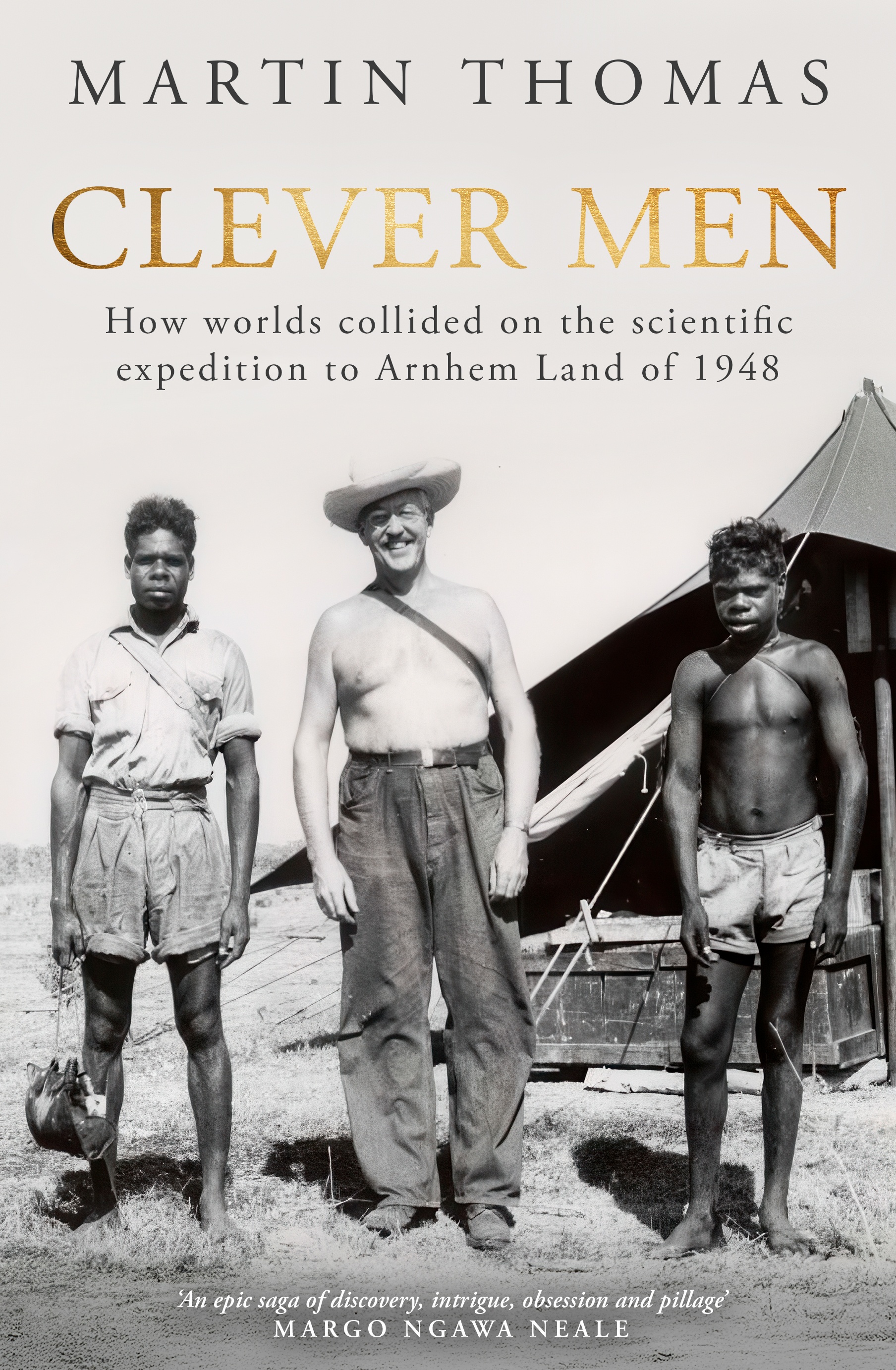
Clever Men: How worlds collided on the scientific expedition to Arnhem Land of 1948 by Martin Thomas
Soon after the conclusion of the 1948 Arnhem Land expedition, its leader, Charles Pearcy Mountford, an ethnologist and filmmaker, was celebrated by the National Geographic Society, a key sponsor of the expedition, along with the Smithsonian Institution in Washington DC and the Commonwealth Department of Information. In presenting Mountford with the Franklin L. Burr Prize and praising his ‘outstanding leadership’, the Society effectively honoured his success in presenting himself as the leader of a team of scientists working together in pursuit of new frontiers of knowledge. But this presentation is best read as theatre. The expedition’s scientific achievements were middling at best and, behind the scenes, the turmoil and disagreement that had characterised the expedition continued to rage.
From the Archive
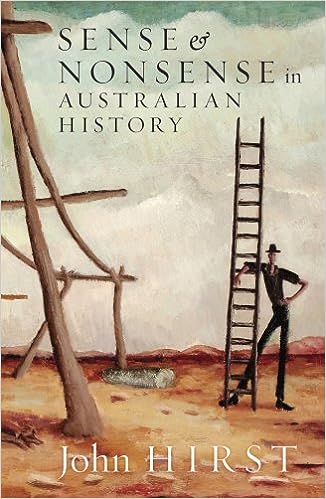
Sense and Nonsense in Australian History by John Hirst
John Hirst is a throwback. I don’t mean in his political views, but in his sense of his duty as an historian. He belongs to a tradition which, in this country, goes back to the 1870s and 1880s, when the Australian colonies began to feel the influence of German ideas about the right relationship between the humanities and the state. Today it is a tradition increasingly hard to maintain. Under this rubric, both historians and public servants are meant to offer critical and constructive argument about present events and the destiny of the nation. Henry Parkes was an historian of sorts, and he was happy to spend government money on the underpinnings of historical scholarship in Australia. The Historical Records of New South Wales was one obvious result, and that effort, in itself, involved close cooperation between bureaucrats and scholars. Alfred Deakin was likewise a man of considerable scholarship (and more sophisticated than Parkes), whose reading shaped his ideas about national destiny, and who nourished a similar outlook at the bureaucratic level.